
Global markets are entering a more fragile stretch
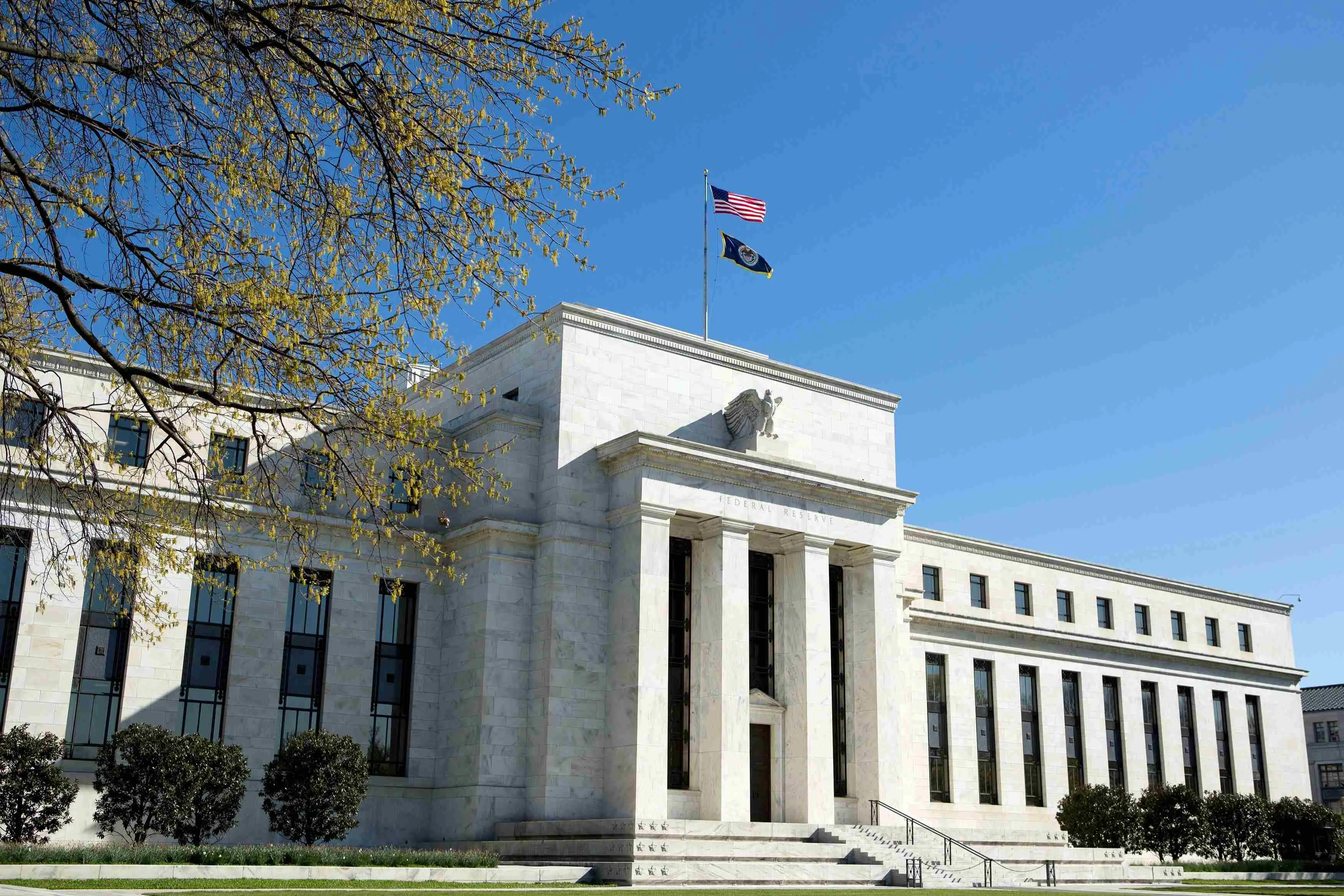
Global financial markets appear calm on the surface, but pressure is building underneath, according to a Wallstreetcn report. Yie-Hsin Hung, chief executive of State Street Investment Management, told the Financial Times this week that new Federal Reserve Chair Warsh has intentionally reduced forward guidance, leaving markets with less clarity on the policy path. In her words, "this will introduce volatility and uncertainty."
At the same time, the yen fell past 162 against the U.S. dollar this week, touching its weakest level in nearly 40 years and putting carry-trade risks back in focus. Vincent Mortier, chief investment officer at Amundi, said investors should diversify as much as possible and hedge broadly.
Volatility measures are also flashing a less comfortable message than headline indexes suggest. The VIX remains low, but internal market stress has risen to one of the highest levels in recent years. UBS derivatives strategists said their "Turbu-lens" fragility indicator now stands at 0.9 on a scale from -1 to 1, the highest reading since mid-September 2025. Historically, readings like that have often come before a sharp move higher in the VIX. The timing matters: second-quarter earnings season is opening with profit expectations running at 24%, raising the downside if results miss.
Warsh's communication shift is adding policy uncertainty
For markets, one of the biggest unknowns is the Fed's new leadership.
The report said Warsh has narrowed both the scope and frequency of external communication since taking office, while offering less guidance on the next move in monetary policy. The Financial Times, citing analysts, said that approach can be defended on macroprudential grounds. Managing market expectations is not the Fed's core job, and a more streamlined, coordinated communication style may have benefits.
Still, the picture becomes harder to read when that shift overlaps with Warsh's reform ambitions and continued instability around Iran. Rising oil prices have revived inflation concerns and pushed bonds into a visible pullback this week. Investors are struggling to judge whether Warsh would respond to the recent modest but meaningful increase in oil prices, and they also lack a clear read on his broader policy bias. Bond yields are now close to 4.6%, adding pressure to equity valuations.
The yen is back near a critical level
The yen is once again emerging as a possible trigger point for global markets.
USD/JPY moved above 162 this week, leaving the Japanese currency at its weakest level in 40 years. Markets are betting that Japanese authorities will tolerate relatively high inflation while staying cautious on rate hikes.
The report outlined two main channels for systemic risk. One is direct intervention. If Japanese authorities move to support the yen, they may need to sell dollar assets, especially U.S. Treasuries, which could ripple through global bond markets. The second is carry positioning. Large positions still appear to be in place where investors borrow cheaply in yen and buy other global assets. If the yen rebounds sharply, those trades could be forced to unwind, with spillovers that are hard to map in advance.
The Bank of England also said this week that leveraged money, meaning borrowed funds, has been a major driver of the recent rise in global equities, and that the size of those positions has grown rapidly.
Low VIX does not mean low fragility
Barclays strategist Emmanuel Cau described the current phase for U.S. equities as a "dangerous summer window," arguing that stress is building below apparently stable benchmarks. A team led by Barclays strategist Anshul Gupta said the recent drop in the VIX has coincided with a calendar period when seasonal volatility usually compresses, calling it a "brief sweet spot" with limited durability.
UBS strategist Maxwell Grinacoff's team pointed to a wide gap between index volatility and single-stock volatility. They said current single-stock volatility is now more than three times index volatility. In their view, that spread is likely to narrow over the summer, and either a repricing in monetary policy or a geopolitical shock could trigger a sharp jump in index-level volatility. If systematic strategies add leverage more aggressively, the fragility indicator "could truly reach +1."
Thin summer liquidity adds another layer. The report noted that during the Northern Hemisphere summer, senior traders and investors often step away, volumes shrink, liquidity falls and bid-ask spreads widen. In that setting, stocks, bonds and currencies can swing sharply even without major new information. It pointed to the summer of 2024 as an example: a modest disappointment in U.S. inflation data hit the dollar, lifted the yen, pressured technology stocks and sent Japanese equities down 12% in a single day, while markets briefly circulated expectations of an emergency Fed rate cut.
Earnings season opens with high expectations
Against that macro backdrop, earnings season is starting with little room for disappointment.
Analysts expect second-quarter earnings growth of 24% for S&P 500 companies and 12% for the STOXX Europe 600. The report said one unusual feature this time is that analysts kept raising forecasts even into the reporting period. Stronger confidence also means a larger adjustment could follow if actual results fall short.
Technology is a key area to watch. Barclays estimated that Apple, Meta, Amazon, Alphabet, Microsoft and NVIDIA have together lost about $2 trillion in market value since October last year. The report also said NVIDIA, with a market capitalization of $5 trillion, is now trading at a price-to-earnings ratio close to that of Hershey, a sign that enthusiasm around the chipmaker has cooled.
Gold and oil have also turned in ways many investors did not expect. After a strong start to 2026, gold has just posted its biggest monthly drop since 2008, falling more than 11%. Oil prices have also moved lower despite repeated warnings from energy specialists. Taken together, the report said, these reversals show that market consensus is breaking down and that established narratives are losing reliability.
On hedging, the report said index-level protection may be less effective during earnings season because stock-specific divergence and sector rotation could continue. Maxwell Grinacoff said that "single-stock options may offer a better tactical opportunity." Mortier offered a broader recommendation: diversify risk as much as possible and hedge comprehensively so that "you can relax on holiday all summer, which is a good goal."