

GMGN will hold the final of its Global Championship on Nov. 16 during Solana Breakpoint in London. Thousands of traders have completed the online qualification rounds, leaving seven finalists to compete live. The winner will receive a custom Aston Martin Vantage.

Base, Solana Mobile and Hello Moon are listed among the event’s sponsors. Rill Wallet and Tenon are the new names on that list. Both will make their first public appearance at the event as Silver Sponsors, while GMGN integrates their wallet and infrastructure services into its platform.
Rill brings embedded self-custody to GMGN
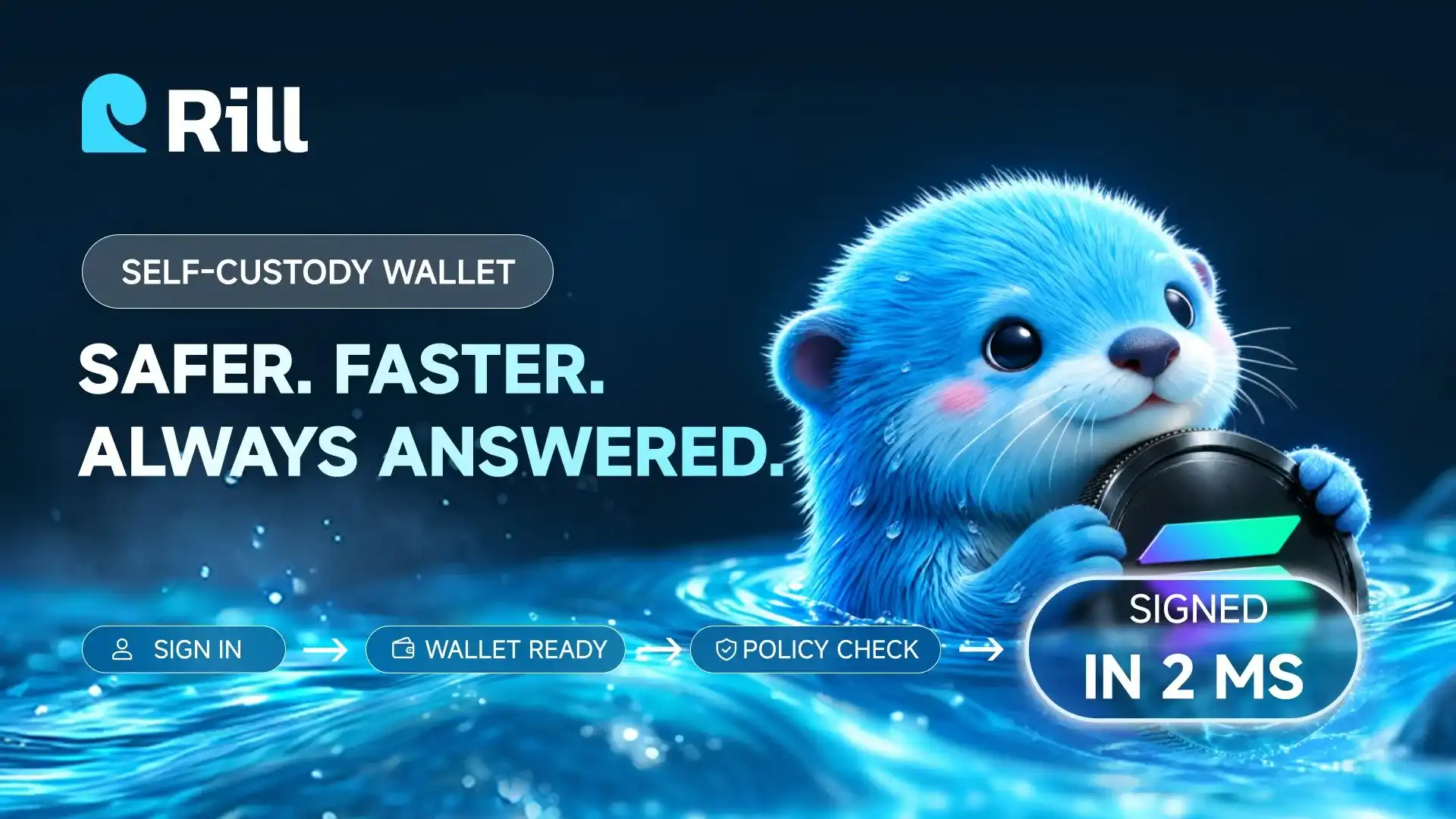
Rill will provide wallet capabilities for GMGN. Users will receive a self-custodial wallet when they log in, and every transaction will go through a policy check before signing. The checks are intended to reduce the risk of abnormal actions and unauthorized transactions.
Rill reports a median signing time of 2 milliseconds and a 99.99% availability SLA. Exporting a private key requires approval from both the user and the platform’s server, so stolen login credentials alone cannot move the funds. Policy rules run before each signature and can block transactions based on the method, chain or amount.
The setup allows GMGN to retain a self-custodial model while applying controls to parts of the transaction process. Users are not left to make every decision on their own, and the platform does not have to hand all decisions to an automated system.
Tenon handles cross-chain transfers and fiat access
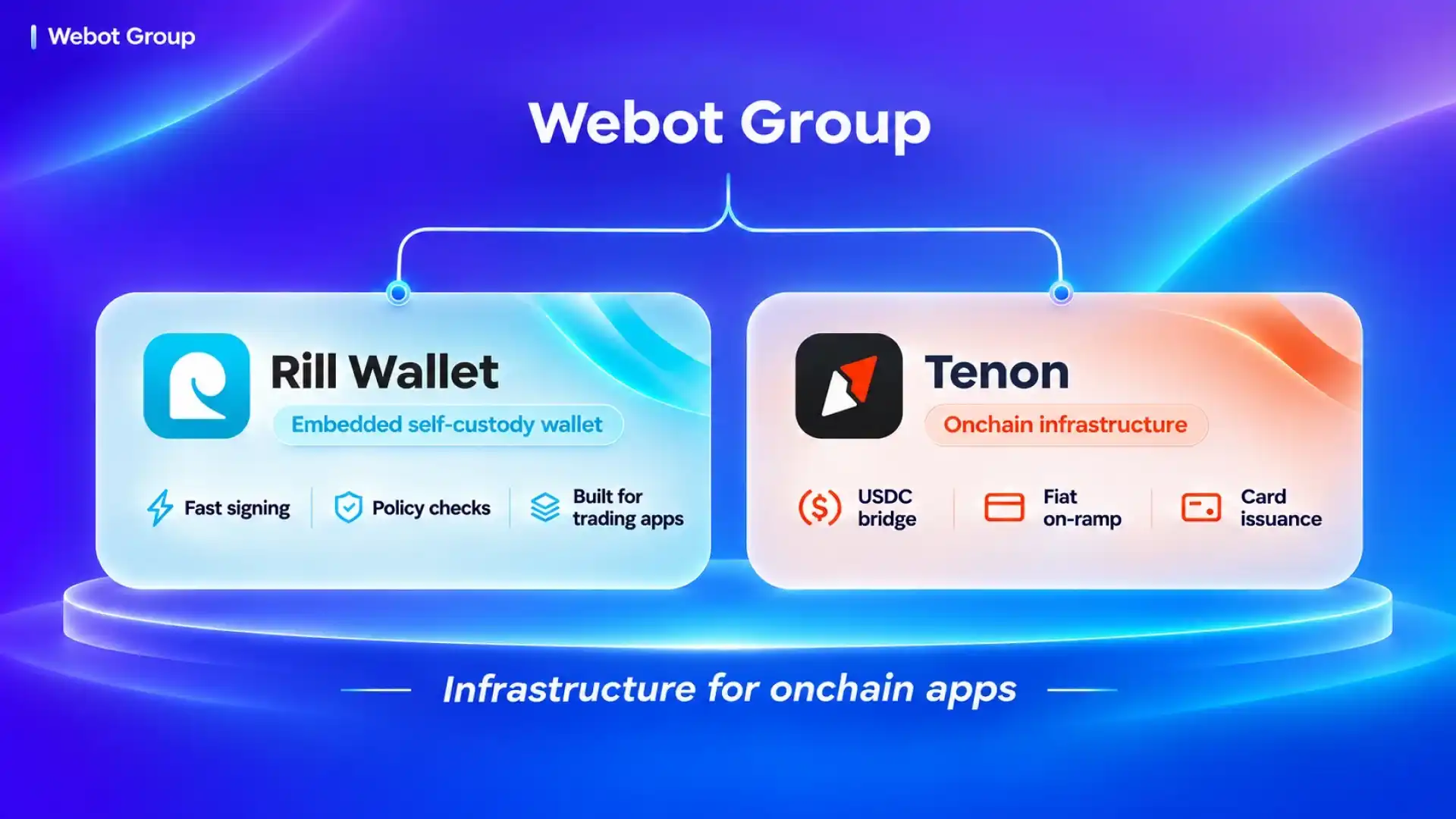
Tenon will serve as the underlying infrastructure provider. Its services support cross-chain USDC transfers, as well as crypto purchases through Apple Pay, Google Pay or bank cards. Tenon also acts as an upstream card issuer, allowing other institutions to launch cards under their own brands.
Tenon’s bridge settles USDC transfers in about 30 seconds on average. Its fiat on-ramp handles KYC, risk controls and chargebacks, so the platform does not need to manage those processes itself. That gives GMGN access to fiat deposits, withdrawals and payment functions without applying separately for local fiat licenses or card-issuing permissions.
Both Rill and Tenon are built as embedded products rather than standalone consumer applications. Users do not need to download another wallet or move repeatedly between separate products.
Webot positions the products for on-chain applications
Rill and Tenon are products of Webot Group. The group says compliance is becoming a baseline requirement for businesses that handle real users and real funds, rather than a point of differentiation. It also says most practical activity is moving on-chain.
Webot Group holds licenses in multiple US states and authorization under the European Union’s MiCA framework. Those approvals provide the regulatory foundation for its fiat access and card services, meaning a platform using the services does not need to apply for those licenses separately. The group says Rill and Tenon were designed for on-chain applications, not as extensions of a centralized exchange.
The London event will be the first public appearance for both brands. For Webot Group, it represents a move into on-chain infrastructure built on its existing compliance base. The group also says the growing interest from licensed institutions in on-chain ecosystems shows that the direction of on-chain development is becoming a broader consensus rather than a view held only by on-chain teams.



