
Goldman note centers on USDC’s widening role
Goldman Sachs published a July 5 management meeting note on Circle Internet Group (CRCL.US), the issuer of USDC, framing stablecoins as infrastructure rather than a tool confined to crypto markets.

According to the note, Circle said USDC is moving from crypto trading into cross-border payments, consumer e-commerce, capital markets settlement, and AI agent payments. Goldman kept a Neutral rating on Circle and set a $96 price target. Based on the $64.62 share price cited in the source text, that suggests about 48.6% upside.
Circle says stablecoin growth is no longer tracking crypto cycles
Circle management said stablecoin growth has decoupled from moves in the broader crypto market. Over the past several quarters, the firm said, crypto trading volumes and prices declined while stablecoin market value and transaction volumes kept rising.
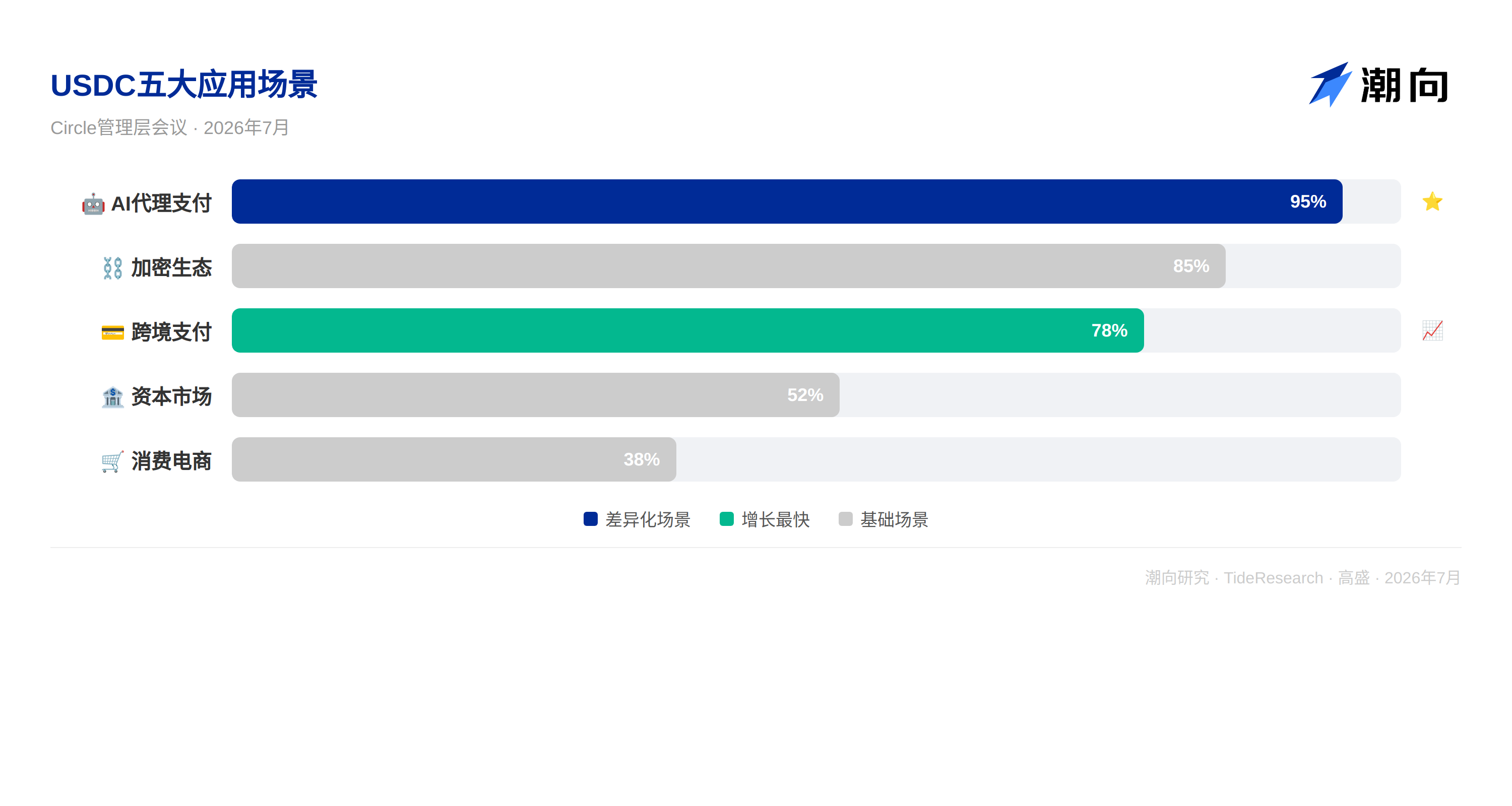
Circle broke USDC use cases into five layers, spanning crypto-native activity through AI agent payments.
- Crypto remains USDC’s base market. Circle cited partnerships with fast-growing platforms including Hyperliquid to expand liquidity.
- Cross-border payments and treasury management are currently the fastest-growing segments. Circle said instant settlement and low transaction costs are changing traditional bilateral payment flows.
- In emerging markets, the company pointed to strong demand for dollar stablecoins and described the trend as “digital dollarization,” with users turning to USDC instead of local currencies or unreliable banking systems.
- In e-commerce, Stripe and Shopify have started supporting USDC payments, allowing users to check out directly with the stablecoin.
- Stablecoin-linked credit cards are also gaining traction, letting users hold and spend stablecoins.
On capital markets, Circle said USDC has potential as both collateral and a settlement currency for derivatives. The note said the Commodity Futures Trading Commission recently approved futures commission merchants to treat certain stablecoins as readily convertible collateral, which Circle sees as an important policy catalyst. The company also linked USDC’s role to the growth of tokenized real-world assets, where stablecoins can act as cash settlement tools on-chain.
AI agent payments stand out in Circle’s pitch
Circle put special weight on AI agent payments. Management said AI agents are starting to carry out economic activity on their own, and that x402 is currently the leading protocol for agent payments. USDC accounts for about 99% of all transactions on that protocol, according to the meeting note.
The company argued that AI agents need atomic settlement and very low transaction costs, making stablecoins a suitable payment rail. Circle’s Agentic Stack is aimed at that market and is designed to preserve USDC’s lead in AI-related economic activity.
Network effects are presented as USDC’s moat
Management described stablecoins as a classic network-effects business. Circle said the USDC network functions as public internet financial infrastructure that can be accessed by individuals, companies, and developers.
It pointed to three competitive strengths:
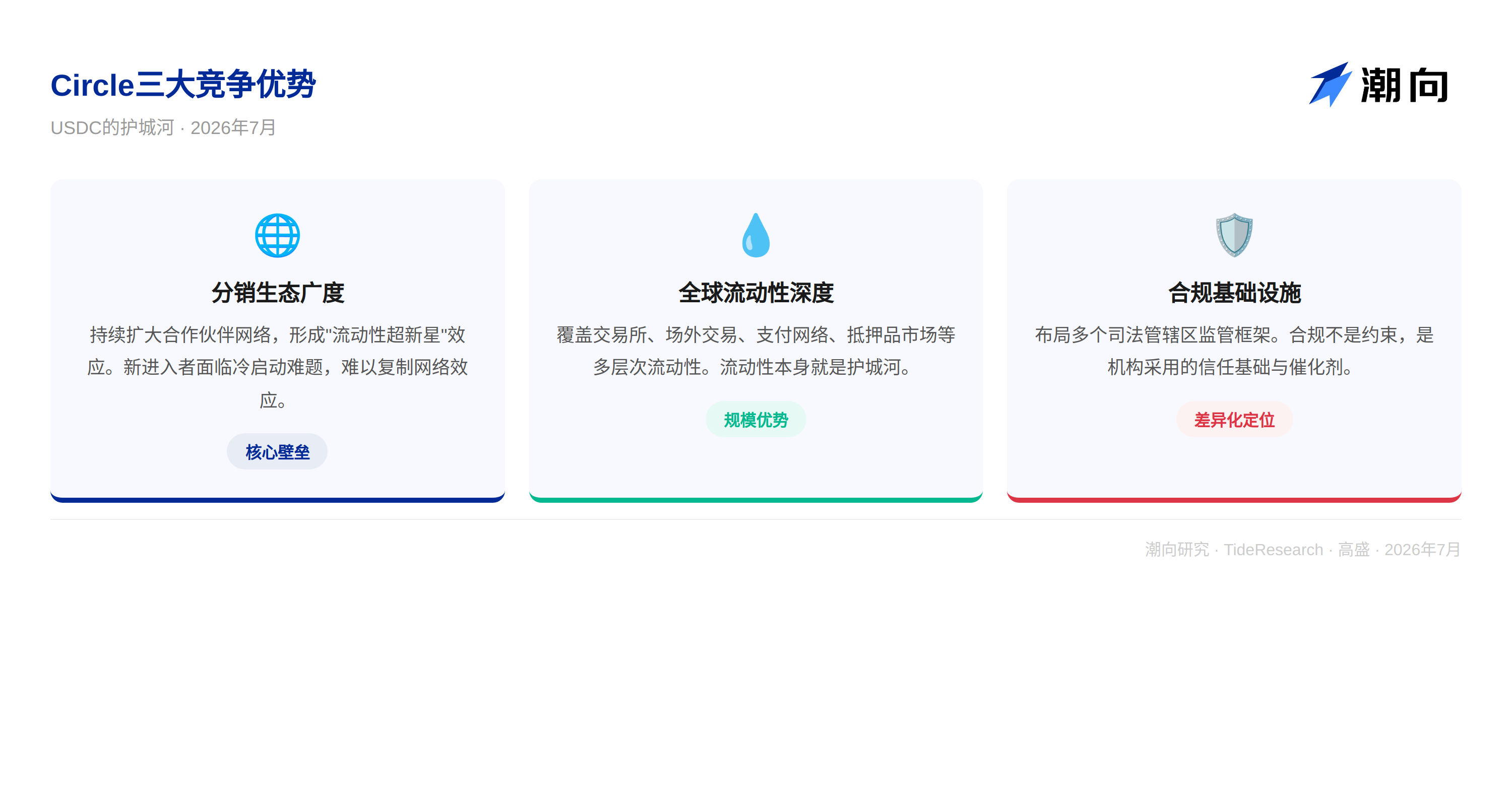
- Broad distribution and platform reach. Circle said it keeps adding partners to strengthen liquidity, creating what it called a “liquidity supernova” effect. In its view, new entrants struggle to reproduce that because of a cold-start problem.
- Global liquidity depth. Circle said USDC has deep liquidity across exchanges, OTC markets, payment networks, and collateral markets.
- Compliance infrastructure. The company said its regulatory positioning across multiple jurisdictions is a driver of institutional adoption, not a constraint.
Circle divided competition into two groups: tokenized deposits issued by banks, and new stablecoin rivals. It said more stablecoins are likely to enter the market, but argued they lack the network effects Circle has built over more than a decade.
Circle draws a structural line between stablecoins and tokenized deposits
Circle said the difference between stablecoins and tokenized deposits is structural. In its framing, stablecoins belong to an open internet financial system where liquidity can move across platforms, while tokenized deposits are an extension of the banking system and remain tied to a single bank or consortium environment.
It also highlighted credit risk. Circle described stablecoins as fully reserved digital cash with no credit risk, while tokenized deposits remain bank liabilities and therefore carry bank credit exposure.
Three products support a broader platform strategy
Circle also outlined three strategic products that show a wider ambition than stablecoin issuance alone.
- Arc, a self-developed Layer 1 blockchain positioned as an integrated financial operating system intended to improve liquidity and interoperability, with a focus on attracting traditional financial institutions.
- Circle Payments Network, or CPN, a cross-border payments product that uses blockchain settlement to make transfers faster and more efficient. Management said institutional adoption is growing.
- Agentic Stack, the company’s product line for AI agents and AI-related payments.
Circle says regulation could act as a catalyst
On regulation, Circle pushed back on the view that new rules would limit its business model. Management said that if the CLARITY Act market structure bill passes, it would be a catalyst for USDC growth rather than a restriction.
Circle gave three reasons: the bill would allow issuers to keep using revenue-sharing to incentivize distribution, it could unlock more institutional crypto adoption, and it would encourage usage-based rewards instead of passive holding, which in turn could lift active USDC use.
Goldman stays Neutral as valuation questions remain
Goldman’s rating on Circle is Neutral. The source text also said the meeting note shows Circle is trying to turn USDC from a crypto trading instrument into internet financial infrastructure, while debate remains over the durability of its moat, its position against USDT, and the trade-offs tied to its compliance-heavy approach.
The same source text noted that Goldman’s $96 target implies a 35x price-to-earnings multiple, while Circle’s earnings remain highly dependent on interest income from reserve assets. If rates fall, profits could come under pressure. It also stated that ratings, price targets, earnings forecasts, and related judgments cited in the article reflect the broker’s analysts rather than investment advice.