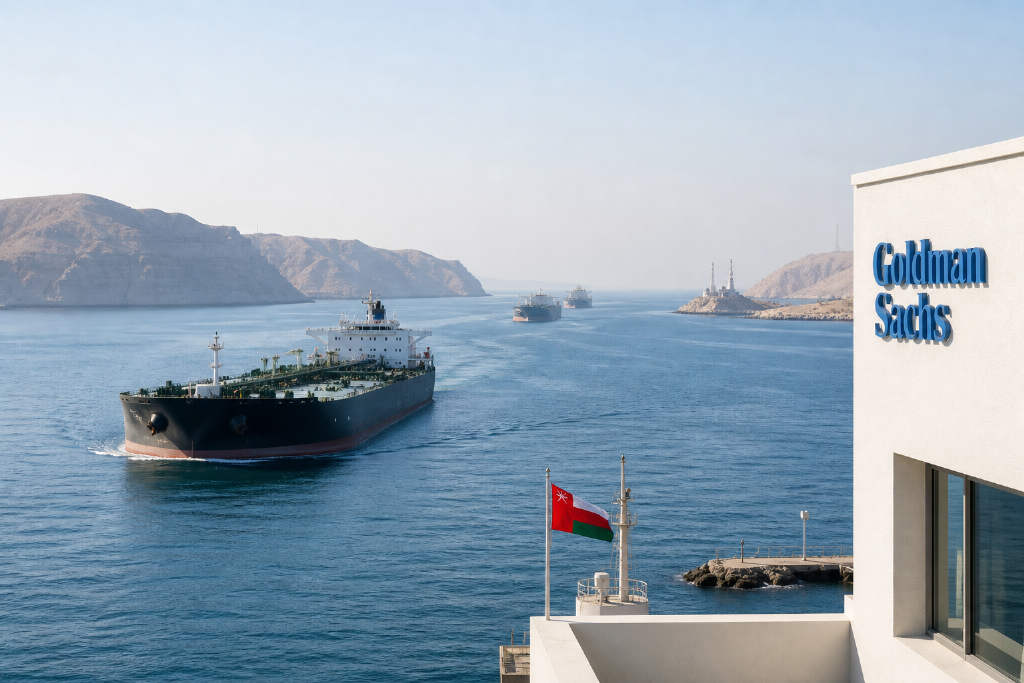
Goldman Sachs said on Aug. 28 that oil exports from the Persian Gulf have recovered to roughly two-thirds of their pre-war level. According to analysts including Daan Struyven, higher traffic through the Strait of Hormuz has lifted combined crude and refined product exports from the region to 15 million to 16 million barrels a day. That is still 7 million to 8 million barrels a day below pre-conflict levels, but well above the March low of 5 million to 6 million barrels a day. The bank added that oil moved specifically through the Strait of Hormuz may now be close to the 8 million to 10 million barrels a day estimated by U.S. officials. Goldman also said growing use of disabled vessel-tracking signals by specialized carriers, along with more ship-to-ship transfers, suggests producers and shippers are adjusting to the Middle East conflict. Even so, it noted that shipments of liquefied natural gas and refined products remain low. In a scenario of continued supply disruption, Goldman said it still sees more upside in European natural gas prices and forward refined product prices than in crude.
Goldman Sachs said on Aug. 28 that oil exports from the Persian Gulf have recovered to about two-thirds of their pre-war level.
Analysts including Daan Struyven said higher traffic through the Strait of Hormuz has pushed total regional exports of crude oil and petroleum products to 15 million to 16 million barrels per day. That remains 7 million to 8 million barrels per day below pre-conflict levels, but far above the March low of 5 million to 6 million barrels per day.
Oil volumes shipped through the Strait of Hormuz alone may now be nearing the 8 million to 10 million barrels per day estimated by U.S. officials.
Goldman said, 「An increase in the number of specialized carriers sailing with vessel-tracking signals switched off, along with a rise in ship-to-ship transfer activity, suggests that producers and carriers are adapting to the Middle East conflict.」
The bank also said that while large volumes of oil are leaving the Persian Gulf, shipments of liquefied natural gas and refined products remain low.
Goldman added, 「In a scenario of continued supply disruption, we still see greater upside in European natural gas prices and forward refined product prices than in crude.」
This article was originally published by Bit.Fan. For more cryptocurrency news and market insights, visit www.bit.fan. Disclaimer:
The market information, project data, and third-party content displayed on this platform are for industry information sharing only and do not constitute any form of investment advice or return commitment.
Cryptocurrency trading carries high risks. Users should fully assess their risk tolerance and make independent decisions. All profits, losses, and legal responsibilities are borne by the users themselves.