
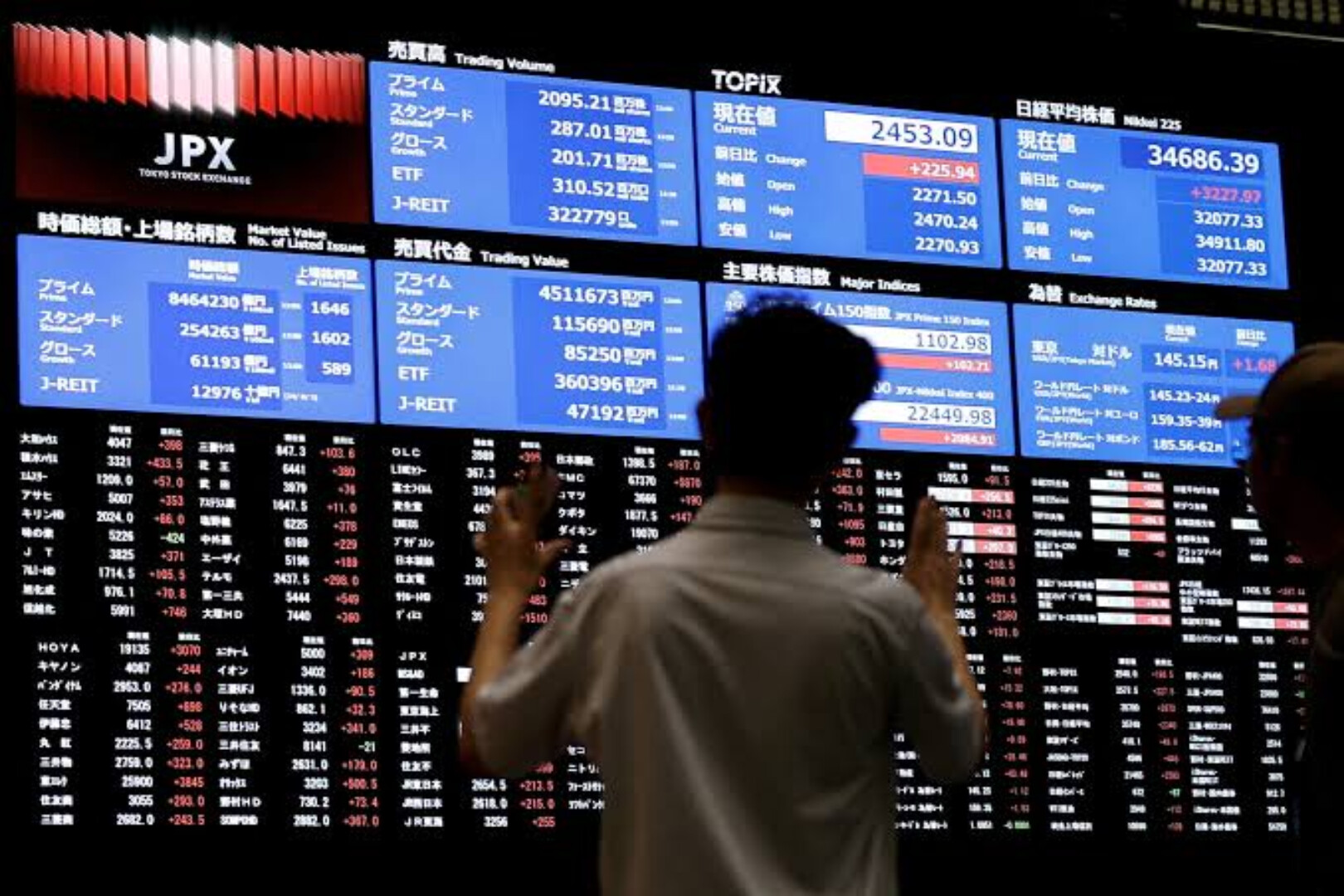
Japanese equities may be less exposed to a sudden yen-driven crash than they were in August 2024, but Goldman Sachs says the market has become more fragile in another way: positioning is now even more crowded.
According to Bruce Kirk of Goldman Sachs’ Japan equity strategy team, cited by Zhufeng Trading Desk, the macro backdrop facing the yen is fundamentally different from what investors saw two years ago. The conditions that could trigger a rapid appreciation in the Japanese currency have weakened. At the same time, foreign net buying, hedge fund allocations and retail margin balances have all moved above, or materially above, their July 2024 levels. In Goldman’s view, the odds of an FX-led air pocket have fallen, yet a shock tied to the AI narrative or geopolitics could hit Japanese stocks harder than the 2024 episode did.
Speed, not the absolute level of the yen, is the real issue
The report’s core argument is that market stress does not come from where the yen starts or ends, but from how fast it moves. From January to March 2025, USD/JPY fell gradually from 158 to 147, while TOPIX rose 5% over the same period. That stands in contrast to July 2024, when the yen strengthened 11% in just three weeks and set off a chain reaction across the market.
Goldman says investors have barely priced in the risk of a sudden yen rally. One-month implied volatility in USD/JPY remains relatively low. If an unexpected move does hit, the damage could be amplified precisely because the market is not prepared for it.
What really broke in 2024 was the stop-loss chain
Goldman argues that the August 2024 drawdown cannot be explained simply by saying a stronger yen hurt exporters’ earnings. The internal mechanics were more complicated and more violent.
The first phase ran from July 11 to the end of July 2024. A softer-than-expected US CPI print and yen intervention pushed exporter-linked sectors lower. During that period, the TOPIX Banks Index barely moved, and on July 31, the day the Bank of Japan announced its rate hike, it even rose 5% in a single session.
The real washout came in the second phase, from July 31 to August 5. The Bank of Japan’s tightening message was more hawkish than expected, and then weak US nonfarm payrolls on August 2 merged with that shock within 48 hours. Bank shares fell 27% from their post-hike high to August 5. The market’s hidden factor tilt — long exporters and financials, short domestic defensive names — was suddenly crushed in reverse.
Goldman notes that multi-strategy hedge funds often set drawdown limits at around -2.5% of deployed capital. In that environment, a market-neutral book with modest net exposure but a 5 percentage point sector skew could have lost about -5% from peak to trough, enough to trigger stop-losses. Once that happened, positions were forcibly unwound, long-only funds were pushed to sell as well, and risk-parity and CTA funds joined in after momentum flipped. That created the full negative feedback loop.
TOPIX then rebounded 23% from the low to September 3 after the sharp drop on August 5. Goldman reads that rebound as evidence that the episode was more a liquidity event driven by stop-outs than a fresh repricing of Japanese equity fundamentals.
The case for a weak yen is firmer than it was in 2024
The combination that drove the yen’s abrupt turn two years ago — aggressive expectations for Federal Reserve easing, a surprise hawkish move from the Bank of Japan and direct yen intervention — is not in place today.
Goldman says the logic behind yen weakness has changed. Before 2024, US-Japan real rate differentials did a good job of explaining moves in USD/JPY. Since the second half of 2025, after the Liberal Democratic Party lost the upper house election and a Sanae Takaichi administration took office, investors have focused more on Japan’s fiscal sustainability. Stimulus plans pushed JGB yields higher, but that move reflected a widening term premium in Japanese government bonds relative to US Treasuries rather than a narrowing US-Japan rate gap.
Japan’s 10-year government bond yield has now moved close to 3%. That has sparked debate over whether Japanese pension capital could start coming home, but the mainstream view, as described in the report, is that a gradual and well-signaled process would be unlikely to trigger a repeat of the 2024 crash.
Goldman’s G10 FX strategy team has raised its USD/JPY forecasts to 162, 163 and 165 over three, six and 12 months, from 160, 158 and 155 previously. The bank cited US rates staying higher for longer, low recession risk, concern over Japan’s fiscal position and an extremely slow Bank of Japan hiking path as reasons to expect continued depreciation pressure on the yen.
CFTC positioning also shows that non-commercial speculative net short yen positions have approached July 2024 levels. Goldman’s distinction is that the market has already priced yen weakness this time. In July 2024, by contrast, investors had not priced a sudden yen rebound at all.
Japanese equity positioning is more crowded and more concentrated
While the macro backdrop supports a weaker yen, the stock market’s internal vulnerabilities are building.
By Goldman’s count, TOPIX and the Nikkei 225 are up 37% and 53%, respectively, from July 11, 2024. Since Liberation Day in April 2025, foreign investors have posted roughly JPY 14.8 trillion in net inflows, leaving foreign net positioning more than 20% above the level seen before the July 2024 selloff. Retail margin balances are 35% above July 2024 and close to a five-year high. Goldman prime services data shows hedge funds’ gross and net allocations to Japan, as a share of their global books, sit in the 99th and 98th percentiles over the past five years.
The structure of the rally is narrow. Many TOPIX constituents are still below their 200-day moving averages, yet the index has been carried by banks, steel and non-ferrous metals, electronics and precision instruments, and AI-linked exporters. The Nikkei/TOPIX ratio, or NT ratio, widened to a record 18x in June this year. Median valuations of AI-related TOPIX stocks have climbed to nearly twice those of non-AI names.
Goldman says that setup closely resembles the structure seen before the July 2024 break, when many portfolios were implicitly long exporters and financials and short domestic defensive sectors. If an unexpected shock lands, selling could spread quickly through those crowded trades and prove difficult to hedge in time.
The bigger tail risk may be AI or geopolitics
Goldman’s conclusion is not that the yen no longer matters. It is that a yen-led flash crash now looks less likely than it did in 2024. The more important tail risk may come from elsewhere.
Any event that undermines the global AI growth narrative — the report points to selling linked to DeepSeek in the first quarter of 2025 as an example — or a geopolitical shock strong enough to damage the idea of resilient US-led global growth could put today’s crowded AI trades in the same position exporters occupied in 2024.
After the 2024 selloff, many overseas investors treated the episode as a Japan-specific problem. Goldman’s warning is that the Japanese equity market now serves as a concentrated expression of the global AI theme, with both foreign and retail positioning near historical highs. If that narrative turns, the fallout may not stay within Japan.