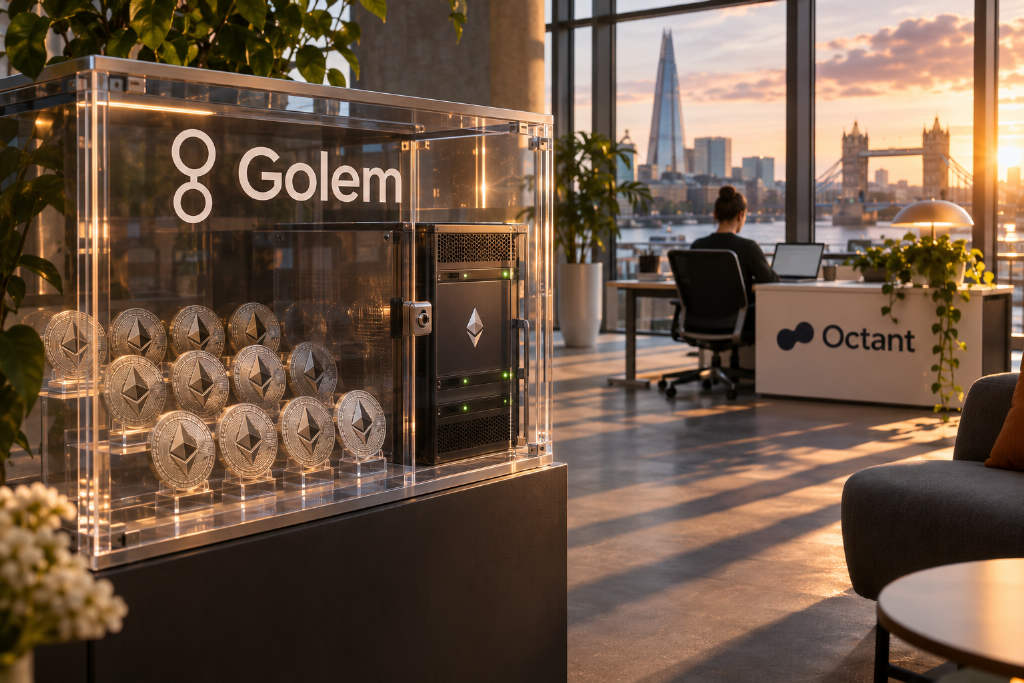
Golem Foundation executive Julian Zawistowski has marked the 10th anniversary of the Golem project’s launch. According to his post, the project began its token sale on Nov. 11, 2016, raising about 820,000 ETH in less than 30 minutes. It also minted 1 billion tokens, initially called GNT and later renamed GLM. Zawistowski said the Golem Foundation has staked 100,000 ETH since 2023. The staking returns are distributed to GLM holders who participate through Octant, while the foundation also supports the development of Ethereum public goods. The post described the foundation’s long-term objective as preserving the reserve so that GLM holders and the broader Ethereum ecosystem can benefit from it. The account was published by ChainCatcher and attributes the information to Zawistowski, a Golem Foundation executive. No additional details about the reserve, the distribution schedule, or the public-goods initiatives were disclosed in the report.
ChainCatcher reported that Golem Foundation executive Julian Zawistowski has reflected on the 10th anniversary of the Golem project’s launch.
He said Golem began its token sale on Nov. 11, 2016. The sale raised about 820,000 ETH in less than 30 minutes and resulted in the minting of 1 billion tokens. The asset was initially named GNT and is now known as GLM.
Zawistowski also disclosed that the Golem Foundation has staked 100,000 ETH since 2023. Staking returns are distributed to GLM holders who participate through Octant, while the foundation supports Ethereum public goods. Its long-term goal is to preserve the reserve so GLM holders and the broader Ethereum ecosystem can benefit from it.
This article was originally published by Bit.Fan. For more cryptocurrency news and market insights, visit www.bit.fan. Disclaimer:
The market information, project data, and third-party content displayed on this platform are for industry information sharing only and do not constitute any form of investment advice or return commitment.
Cryptocurrency trading carries high risks. Users should fully assess their risk tolerance and make independent decisions. All profits, losses, and legal responsibilities are borne by the users themselves.