
Alphabet has launched its first new smart speaker in six years, the Google Home Speaker, priced at $100. Billed as 'the first audio device built for Gemini,' it delivers a noticeably better AI conversation experience than the older Google Assistant. But there's a catch: the sound quality doesn't cut it.
Gemini raises the bar for AI interactions
The Home Speaker recognizes individual users' voice profiles, auto-switches to their Google accounts, and handles calendar entries, to-do lists, shopping lists, and smart home commands with smoother context understanding than its predecessor. Google ran an opt-in preview on older Nest devices for months, fixing 'thousands of bugs' and optimizing response speed — a necessary precaution when the AI controls locks, lights, and cameras, where a single mistake could compromise home security.
Yet a fundamental tension remains: most Gemini capabilities already live on your phone. A $100 speaker essentially saves you the action of picking up your device. That convenience alone may not justify the cost, especially when the full conversational AI requires a paid subscription. Without it, you're left with a basic voice assistant. The real entry cost isn't just the $100 hardware; it's the recurring monthly fee.
Audio performance falls short
A speaker's primary job is playing music. On that front, the Home Speaker stumbles. The $100 Amazon Echo Dot Max sounds 'slightly better' in reviews. Premium rivals like Sonos Play, Echo Studio, and Apple HomePod 2 operate in a different league altogether. Even Google's own older Nest Audio offers better tonal balance. Google clearly prioritized Gemini integration over audio hardware improvements in this iteration.
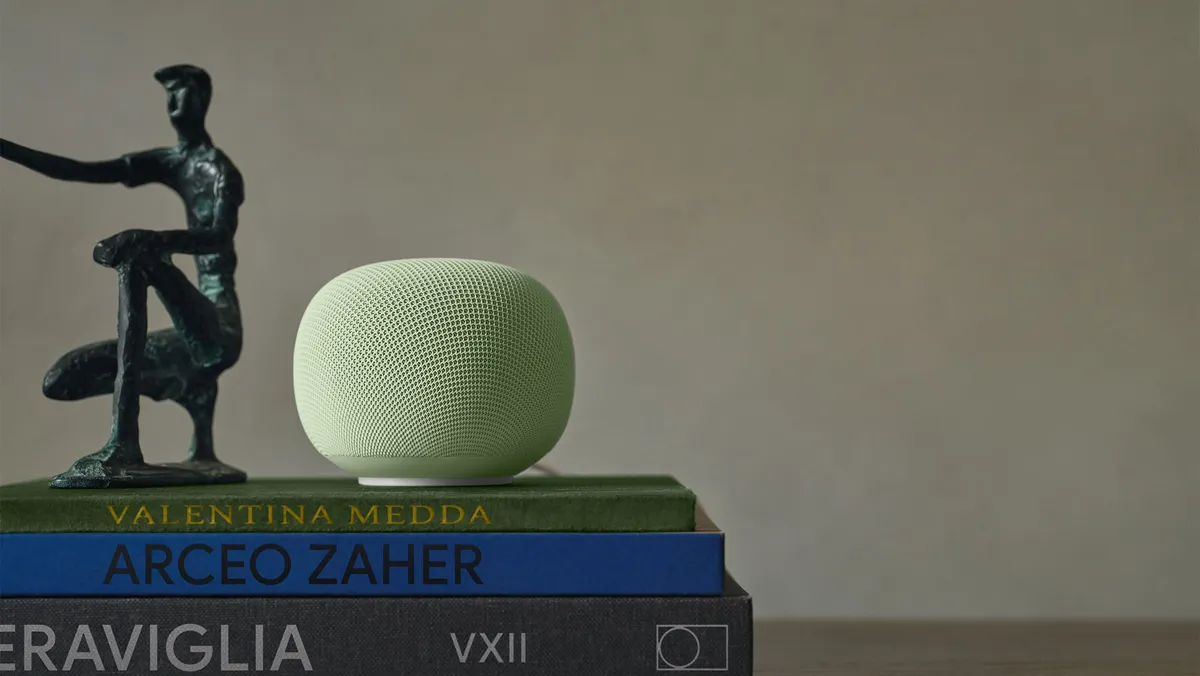
The design is standard — knitted fabric shell, a light ring at the base that glows when Gemini listens or responds, a mute switch on the back, and touch controls on top for volume and playback. Nothing stands out.
Why buy one?
For the Home Speaker, that question is hard to answer. It targets users already deep in Gemini's ecosystem or those who prefer voice control for everything — but such users typically already have phones or other smart devices. The Amazon Echo Dot Max faces the same problem: no killer app, no scenario that makes the speaker feel essential. Both are competent but uncompelling. Google bets on Gemini, Amazon on its Alexa LLM, and Apple on a subscription-free approach. All are trying to convince consumers they need an always-on AI endpoint that isn't just an extension of their phone.