
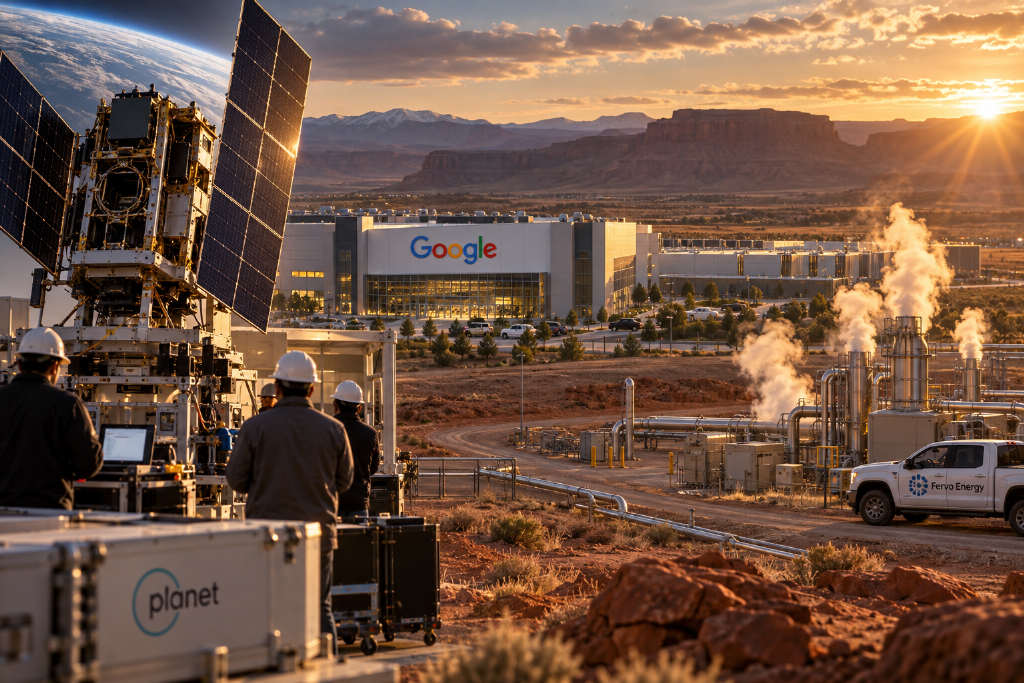
Google moved forward on two very different fronts of AI infrastructure on Sept. 24: orbital computing and geothermal power. On the same trading day, the company confirmed that the first test satellite for Project Suncatcher will launch on Oct. 1, while its partner Fervo Energy said the Cape Station geothermal plant in Utah had reached the first utility-scale enhanced geothermal power milestone globally.
The broader market backdrop was mixed. The 30-year U.S. Treasury yield touched its highest level since 2004, the Nasdaq Composite edged up 0.01% to 26939.373, and Oracle fell 3.47% after a force majeure notice became part of the market discussion.
Project Suncatcher adds an early hardware test, with Planet Labs building the satellite
The New York Times first reported, and Google later confirmed, that the first Project Suncatcher test satellite is scheduled to launch on Oct. 1 on the Transporter-18 rideshare mission. The report said this launch was an unplanned addition meant to validate hardware at the minimum viable product stage.
The satellite carries four of Google’s in-house Tensor Processing Unit chips and has 1 kilowatt of solar power. Its computing capacity is described as roughly equivalent to one ground-based data center server. The spacecraft is designed to operate in orbit for about one year and handle simple AI queries.
Google has kept expectations restrained. According to the report, the company said the project will not produce commercially usable output in the near term. The original plan for two prototype satellites with Planet in 2027, aimed at testing laser networking, remains in place. The article said orbital computing costs are not expected to approach parity with ground-based systems until the mid-2030s.
Power efficiency sits at the center of the effort. In orbit, only 1 kilowatt of electricity is available, and heat dissipation is difficult because there is no air convection in a vacuum. The report said compute per unit of power is the hard physical constraint. Google’s TPU, an ASIC designed for neural-network matrix operations, trades general-purpose flexibility for higher energy efficiency, which the article framed as a practical advantage for deploying compute in extreme environments.
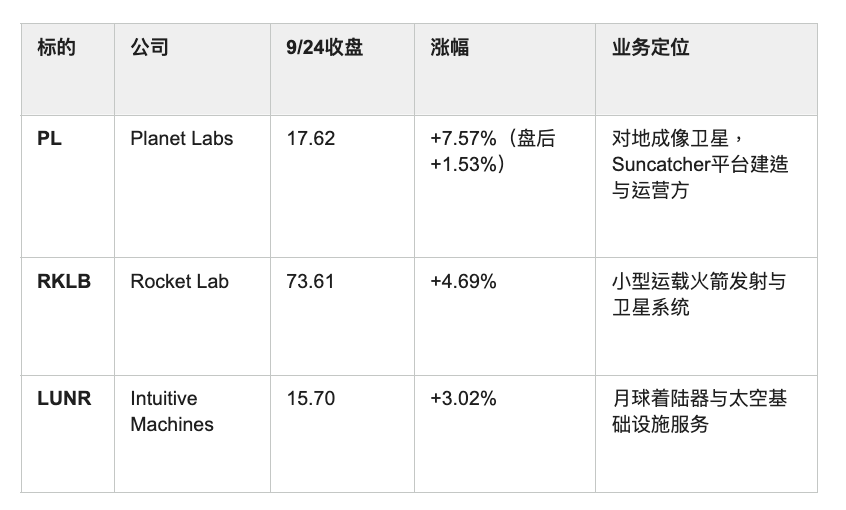
Planet Labs (NYSE: PL), known for Earth-imaging satellites, is responsible for building and operating the spacecraft rather than Google manufacturing it directly. The division of labor is straightforward: Google provides the chips, Planet provides the satellite platform and in-orbit operations. For Planet, whose market capitalization was described in the report as a little over $6 billion, the partnership opens a possible new business line in what the article called a space data center market. Planet Labs shares rose 7.57% on Sept. 24 and continued higher after hours.
Fervo Energy reaches First Power at Cape Station
Underground, Google’s power strategy also made progress. On Sept. 24, Fervo Energy (NASDAQ: FRVO) announced that its Cape Station project in Beaver County, Utah, had achieved First Power. The company said the project became the first enhanced geothermal system, or EGS, development in the world to reach a utility-scale generation milestone.
FRVO rose more than 11% in premarket trading and finished the session up 2.20%. The report said phase one of Cape Station is planned for 100 MW of installed capacity. Its first 33 MW GeoBlock module is set to begin commercial operations on Oct. 1. A second 400 MW phase is under construction, and the site’s potential development scale exceeds 4 GW. The article said the project has lowered development costs by adopting horizontal drilling techniques from the oil and gas industry.
Google is not only a major electricity buyer from Fervo but also a strategic shareholder. Their relationship began with a pilot project in Nevada. The report said Google participated in Fervo’s $462 million Series E financing and, in early September 2026, signed a 396 MW enhanced geothermal power purchase agreement described as the largest of its kind globally. Google also holds expansion options for roughly another 600 MW, bringing the potential total close to 1 GW.
That means Google stands to benefit in two ways as Cape Station advances: it secures stable zero-carbon baseload power for data centers, and it gains indirect upside as an equity investor. The article cited stockanalysis.com data as of Sept. 24, 2026, saying 13 analysts covered FRVO, with ratings skewing toward buy recommendations and an average target price of $40.75. It also noted that figures can vary across data platforms and that analyst ratings do not constitute investment advice.
Berkshire Hathaway lifts its Alphabet stake
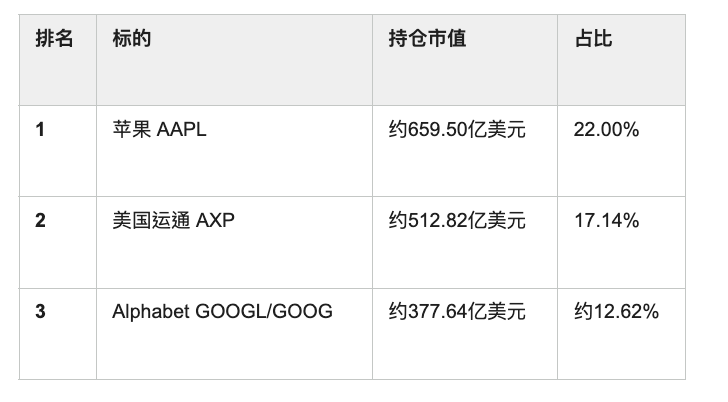
The report linked Google’s infrastructure buildout to Berkshire Hathaway’s larger bet on Alphabet. Berkshire’s second-quarter 13F filing showed that it increased its Class A Alphabet shares (GOOGL) by 45% to 78.79 million shares and raised its Class C shares (GOOG) by 83%. Combined holdings reached 106 million shares.
The article also said Berkshire served as a cornerstone investor with a $10 billion allocation in Alphabet’s $84.75 billion AI financing. Those moves pushed Alphabet into Berkshire’s third-largest holding, ahead of Coca-Cola, which Berkshire has owned for decades. The report cited Buffett’s public remarks from an interview in July 2026, saying Alphabet was more likely to be a winner than 90% to 95% of the stocks being pitched on Wall Street.
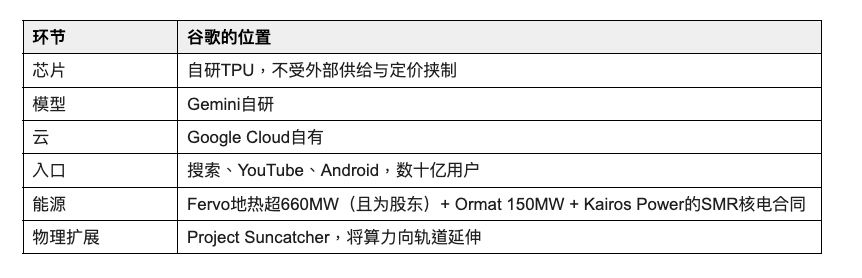
The article’s core argument is that Google is one of the few large technology companies with reach across the AI stack, from chips and models to cloud infrastructure, consumer distribution, energy supply and even physical expansion of compute into space. While much of the industry is still competing for AI chips, electricity and data center land, Google has already built around in-house TPUs, self-operated data centers, geothermal and nuclear investments, and orbital compute experiments. The report said that position, together with a price-to-earnings ratio of about 17, may help explain Berkshire’s decision to add to the stake.
Oracle’s force majeure notice highlights delivery risk in leveraged AI infrastructure
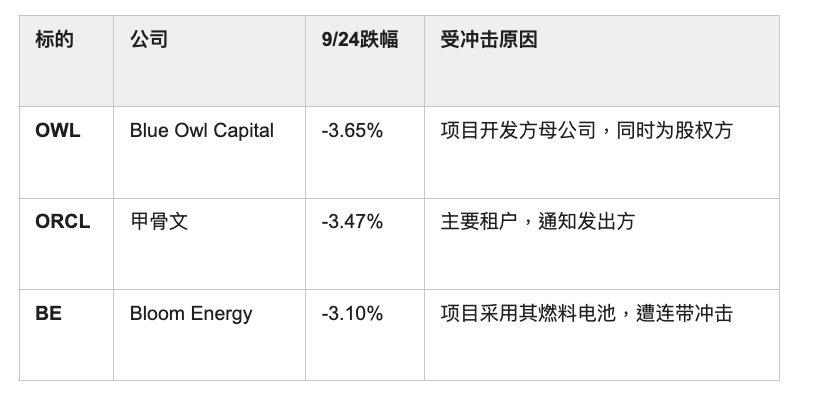
The article contrasted Google’s approach with risks emerging elsewhere in AI infrastructure. It said Oracle sent a formal notice invoking force majeure to Stack Infrastructure, affecting the Project Jupiter hyperscale data center built to provide compute for OpenAI. According to the report, the project uses a highly leveraged off-balance-sheet financing structure through a special purpose vehicle, combining debt and private equity. Oracle has maintained that the project remains on schedule.
Investor concern over possible delivery delays spread through the supply chain on Sept. 24. Blue Owl Capital, the parent company of the project developer, fell 3.65%. Oracle closed down 3.47%, and Bloom Energy, which supplies fuel cells to the project, dropped 3.10%.
Sources and timing in the original report
The original article said its market data, company disclosures and news references came from Futu market data, Google’s official blog, Fervo Energy press materials, Bloomberg, The New York Times, Berkshire Hathaway’s 13F filing and other public financial media disclosures.
It also noted that the Oracle force majeure discussion was based on media reports citing people familiar with the matter, while Oracle said the project remained on track and did not comment on the notice itself. The Buffett remarks were cited from public reporting on an interview in July 2026. All market prices referenced were U.S. closing prices from Sept. 24, 2026, and Berkshire’s holding data came from its second-quarter 13F filed on Aug. 14, 2026, with positions dated June 30, 2026.