
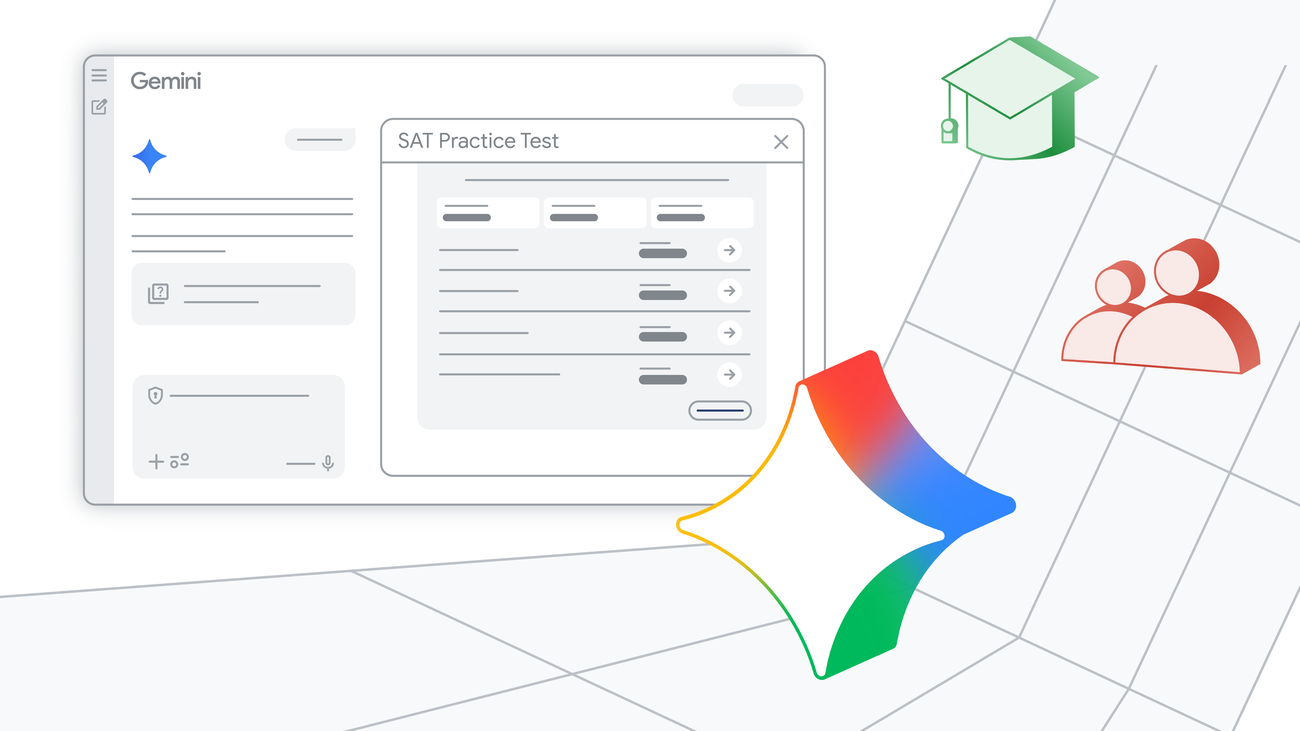
Google has launched a free SAT practice test feature inside Gemini. Users can start by typing “I want to take a practice SAT test”, which triggers a mock exam directly in the chatbot. After the test, Gemini analyzes performance, highlights strengths and weaker areas, and explains incorrect answers in detail, according to the source material.
A free SAT mock test built into Gemini
The feature is designed to make test prep easier to access through a general-purpose AI tool. The source notes that the author’s own attempt did not work consistently, but Google has publicly announced the rollout. On question quality, Google said it worked with education organizations including Princeton Review so the practice materials would be professionally reviewed and closely aligned with the real SAT exam.
SAT remains a major part of U.S. college admissions
The SAT, or Scholastic Assessment Test, is a standardized exam used in U.S. college admissions and administered by the College Board. It measures reading, writing, and math skills. The test carries a maximum score of 1600, split between 800 points for Reading and Writing and 800 points for Math. The source says millions of high school students take the exam each year, and scores can affect both admissions decisions and scholarship applications.
Google targets the cost gap in test preparation
SAT prep has long supported a large tutoring and cram-school market, with personalized guidance often carrying a high price tag. Google’s free package combines practice questions, score-based analysis, and answer explanations in one place. That puts AI-based prep tools in front of students who may not have access to private tutoring. The source also says Gemini’s tailored feedback may resemble one-on-one SAT coaching in some cases.
Gemini’s education push keeps expanding
Before this release, Google had introduced a Gemini-powered podcast audio course feature earlier in the month. Other education tools tied to Gemini include support for teacher brainstorming, lesson-plan creation, and customized classroom materials. The source closes on a broader issue: as AI spreads across education, schools and educators will keep watching how to balance efficiency gains from technology with the need to preserve independent thinking.