
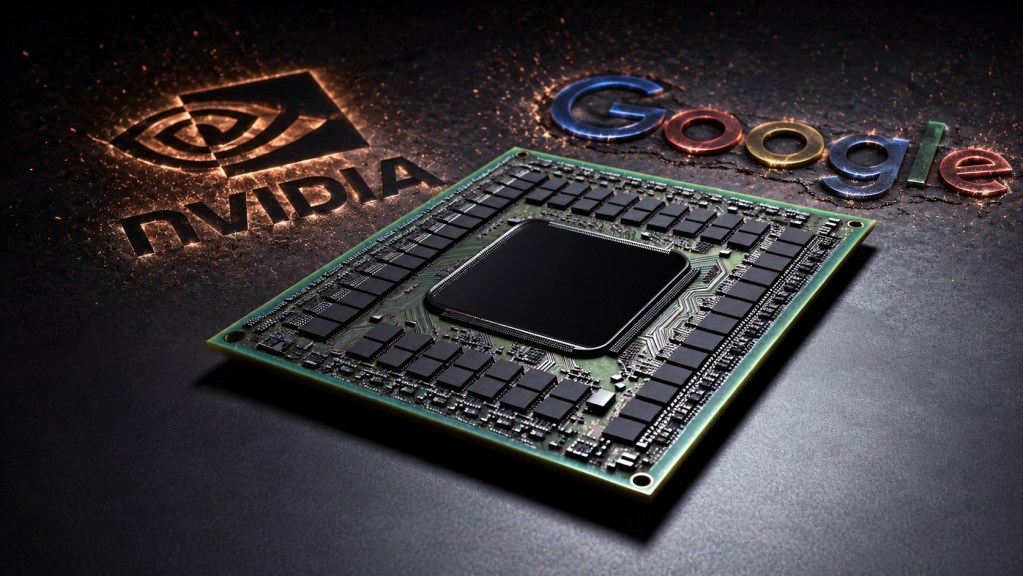
Google is taking aim at Nvidia’s core allies in the AI infrastructure market, with neocloud providers now a major target for external TPU sales, according to The Information. The report said Google is focusing on emerging cloud companies whose main business is supplying AI compute, a move designed to push TPU commercialization directly into a market where Nvidia GPUs dominate demand. Nvidia has already responded by offering financial incentives to neocloud companies it is in talks with, the report said.
Google moves from cloud provider to direct chip seller
In April, Alphabet Chief Executive Officer Sundar Pichai said on the company’s first-quarter earnings call that Google planned to sell TPUs directly to selected external customers for their self-built data centers. The report framed that shift as a move beyond selling cloud compute, placing Google in direct competition with Nvidia on hardware.
Google is expected to ship 4.3 million TPUs this year and more than 35 million by 2028, the report said. Morgan Stanley estimated that sales of 500,000 TPU chips alone could bring in about $13 billion in revenue for Google in 2027, with most of that revenue expected to be recognized that year. Initial shipments to customer data centers are expected before the end of this year.
Google began developing TPUs in 2013. For years, the chips were used internally for Search, YouTube algorithms and Gemini model training. The Information said a 2022 internal reorganization laid the groundwork for selling them externally.
Nscale becomes a focal point
Mark Lohmeyer, vice president of Google Cloud AI and compute infrastructure, said new TPUs optimized for AI inference workloads are drawing interest from customers that had not previously considered the product. He cited Citadel Securities, saying the firm recently used TPUs for workloads tied to research software, cutting costs by 30% and improving speed by as much as four times.
The report identified Nscale as one of Google’s latest targets. Nvidia is one of the startup cloud platform’s major investors. Google’s pitch, according to the report, centers on technical simplicity: compared with the deployment complexity of Nvidia’s Grace Blackwell systems and the next-generation Vera Rubin platform, TPU-based server networking is simpler and performance is more stable.
After learning Google was actively approaching Nscale, Nvidia moved quickly to counter that push. The report said Nvidia proposed financial incentives in talks with Nscale in an effort to reinforce the relationship.
“Jensen Jail” concerns remain in the market
The report pointed to Nscale as a live example of what some in the AI sector call “Jensen Jail.” The term refers to concerns among neocloud providers that failing to keep buying Nvidia’s full hardware stack could hurt their priority in chip allocations. In a market where AI compute remains in short supply, that risk carries real weight for operators trying to stay competitive.
Anthropic and Meta are already part of Google’s TPU camp
Google’s TPU lineup currently includes Anthropic and Meta, according to the report. Anthropic has committed to deploying as many as 1 million TPUs and plans to invest about 3.5 gigawatts of power capacity starting in 2027. Meta, the report added, is also said to be in talks over large-scale TPU purchases.
Nvidia, on the other side, remains closely tied to OpenAI, a rival to Anthropic. The report said Nvidia has invested more than $30 billion in OpenAI in exchange for 3 gigawatts of inference compute capacity and 2 gigawatts of training compute capacity on Vera Rubin data centers.
TSMC capacity may be part of the strategy
The Information said Google’s aggressive TPU sales push may be partly tied to competition for advanced-node capacity at Taiwan Semiconductor Manufacturing Co. Nvidia is one of TSMC’s most important customers and takes up a large share of front-end capacity. If Google can expand outside demand for TPUs, that stronger demand base could improve its bargaining position when seeking wafer allocations from TSMC.
The report also noted that Amazon’s Trainium and Inferentia chips, along with Microsoft’s Maia accelerator, are moving ahead as in-house AI chip projects. But none of them, according to the report, has gone as far as directly selling chips to the core customers of a direct competitor.
