
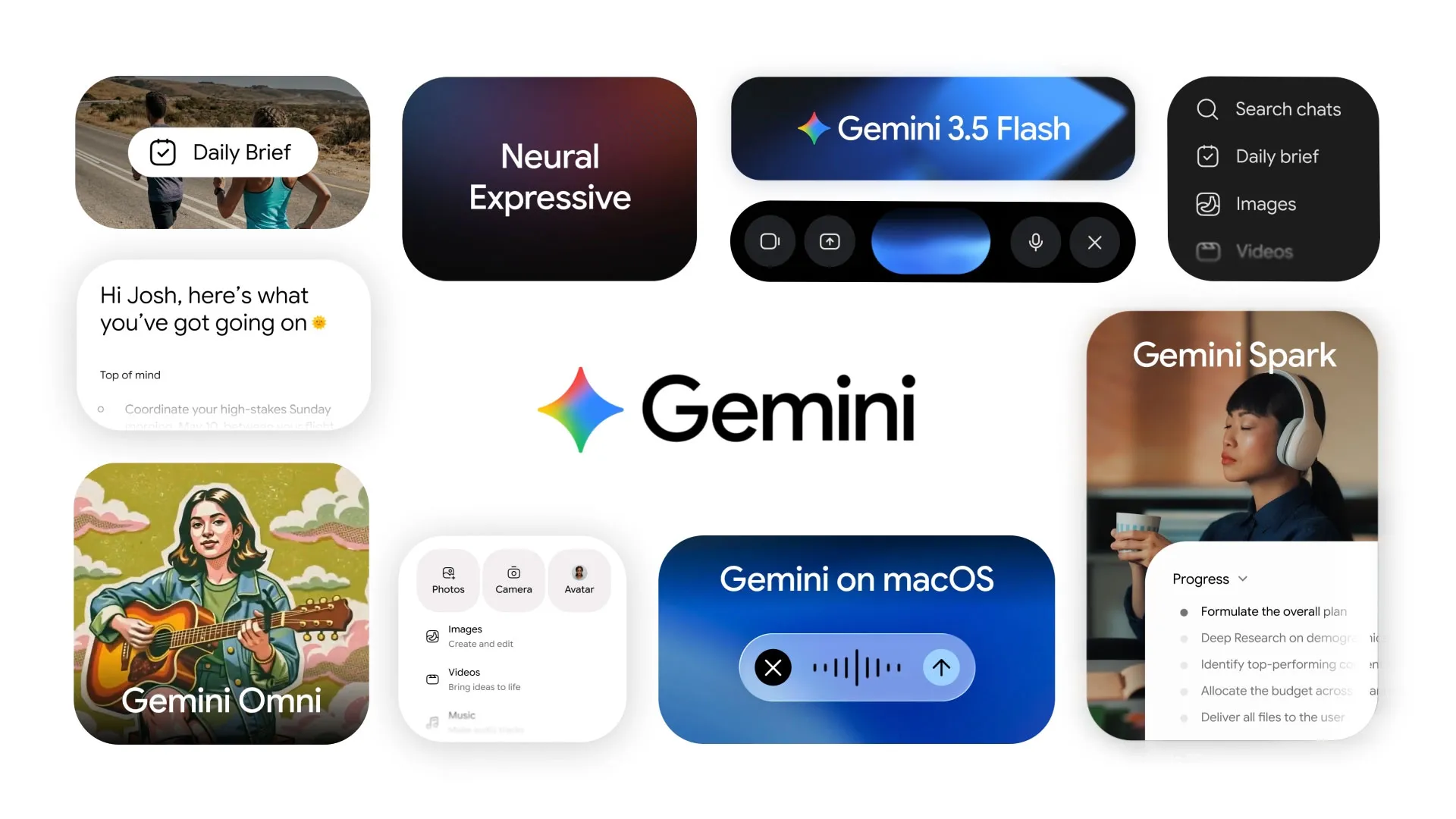
Google introduced Gemini Spark at I/O 2026, pitching it as an always-on AI agent that can keep working 24/7 in the background. Even if a user closes a laptop or phone, Spark continues running on a Google Cloud virtual machine. The product opened to trusted testers this week, with a broader beta planned next week for Google AI Ultra subscribers in the United States, putting it in direct competition with OpenClaw.
Built on Gemini 3.5 Flash with Workspace integration
Spark runs on Gemini 3.5 Flash and is designed for ongoing task execution rather than one-off prompts. Google Labs Vice President Josh Woodward described the experience as handing a task over and having Spark catch it and finish the job. Google said the assistant can handle tasks such as drafting emails, building continuously updated study guides, and scanning credit card statements to identify hidden subscription charges.
On integration, Spark connects natively with Gmail, Docs, Sheets, and Slides. Through MCP, it can also link to third-party apps including Canva, OpenTable, and Instacart. Google said support for reading local macOS files is expected this summer through a bridge in the Gemini app.
Expansion plans include Chrome and Android Halo
Google also outlined upcoming features for Spark. These include the ability to converse with the agent directly through text messages or email, integration with the Chrome browser, and real-time task progress shown inside a new Android interface called Android Halo. The roadmap points to a product meant to sit across Google's broader software stack rather than remain a standalone assistant.
Closed subscription model faces comparison with open-source rivals
The report also highlighted the contrast with OpenClaw, which is open source, community-hosted, and available for anyone to deploy. Spark, by comparison, is currently limited to Google AI Ultra subscribers, and full pricing and subscription terms have not yet been disclosed. Portability is another open question: task memory and execution state are stored on Google Cloud, and Google has not publicly explained what happens to that data if a user stops paying for the service.
That leaves Spark entering a market shaped by two tracks: closed ecosystems from large platforms and open-source alternatives controlled by users themselves. Google’s next test will come from actual retention among Ultra subscribers in the months ahead.