
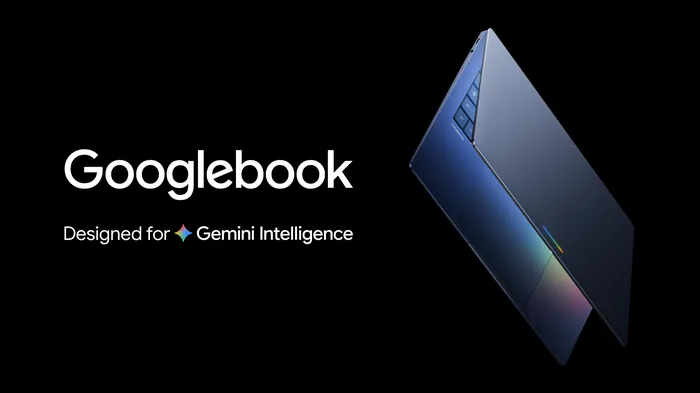
Google has introduced Googlebook, a new laptop category built around Gemini. According to the company, Googlebook combines Android’s underlying architecture with the browser-centric experience of ChromeOS, and the first wave of devices from Acer, ASUS, Dell, HP, and Lenovo is scheduled to arrive in fall this year.
Android apps and ChromeOS web experience in the same device class
Googlebook is not being positioned as a simple Chromebook refresh. Google said the product brings Android’s technical foundation into the laptop format, which means native access to the millions of apps available through Google Play. At the same time, the ChromeOS browsing experience remains in place as a parallel layer rather than being removed.
That puts Googlebook in a segment that has long been dominated by Windows laptops. Google describes the concept as offering stronger local computing capabilities than a Chromebook, tighter integration with Google’s ecosystem than a MacBook, and a fuller input and multitasking setup than an Android tablet. The company did not say whether Chromebook production will continue, but the message behind Googlebook is clear: AI assistants are being pushed to the center of the laptop experience, while the operating system moves into the background.
Google has not disclosed pricing or detailed specifications. More information is expected closer to the fall rollout.
Magic Pointer turns the cursor into an AI trigger
One of the main features announced with the platform is Magic Pointer. Google said the function was developed with DeepMind and works by letting Gemini interpret where the cursor is hovering on screen in real time, then surface suggestions without requiring an extra command from the user.
Google gave two examples. In one, hovering over a date in an email prompts Gemini to suggest scheduling a meeting, removing the need to copy the date, switch to a calendar app, and manually create an event. In another, selecting a local room photo together with a furniture image from the web allows Gemini to generate a composited layout preview without opening image-editing software. Google framed the feature as a way to compress tasks that usually take three to five cross-app steps into a single cursor action.
The company also announced a natural-language feature for creating custom widgets. Users can ask Gemini to build desktop widgets that pull data from web search results, Gmail messages, or Google Calendar events. Google’s example centered on family travel planning, where hotel confirmations, restaurant reservations, and a departure countdown are combined into one desktop card.
Data access is part of the design, privacy details are not yet public
For that widget system to work, Gemini needs permission to read data from a user’s Google account, including email and calendar content. Google did not explain in this announcement how the data will be processed, nor did it publish detailed privacy controls. The company said more information on those points is expected before the fall release.
Five hardware partners confirmed as Google keeps the licensing model
Googlebook hardware will not be manufactured directly by Google. The company is sticking with the same licensing approach used in the Chromebook era, where partners build devices while Google defines the software and platform standards. The first confirmed partners are Acer, ASUS, Dell, HP, and Lenovo.
Hardware details remain limited. Google said each Googlebook will use “premium materials,” come in multiple sizes and form factors, and include a “light bar” as a visual signature. The company has not explained what that bar does beyond describing it as both practical and aesthetic.
As for launch timing, Google only said devices will begin rolling out in fall this year, with no regional order announced. The company has opened pre-registration through googlebook.com, but there is no active preorder page and no full specification sheet yet. At this stage, the announcement confirms the product category, partner list, and release window, while leaving price, detailed specs, launch markets, and privacy policy specifics for later.