
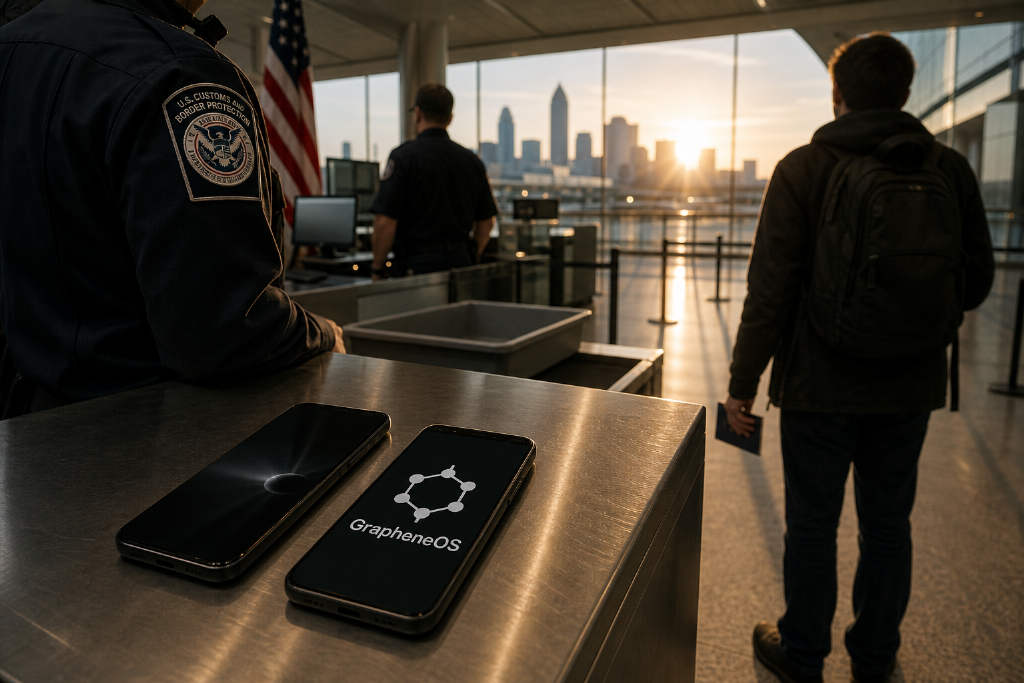
A GrapheneOS user charged with obstruction after wiping his phone during a U.S. border inspection says he hopes the case draws a hard line around personal privacy.
"I just hope to send the message that the government doesn’t own our data," Samuel Tunick told The New York Times in an interview published Friday. "The government doesn’t own our communications, our relationships, as hard as they might try to." He added that in a democracy, "we have to defend our fundamental right to privacy."
Phone data erased during airport inspection
Tunick, 30, is a musician and a geography graduate student at Georgia State University. He was returning from the Dominican Republic in January 2025 when Customs and Border Protection officers pulled him aside at Hartsfield-Jackson Atlanta International Airport and asked for his phone.
He gave officers a passcode that wiped the device, using GrapheneOS’s duress password feature. Tunick runs the privacy-focused Android build on a Pixel handset. Prosecutors later charged him with obstruction.
Court proceedings revealed watch list status
Later court proceedings showed that authorities had placed Tunick on a watch list. He told the Times he was "surprised and upset," though he viewed it in the context of broader prosecutions in Georgia, where roughly 40 Stop Cop City protesters and dozens of music festival attendees have already been charged with domestic terrorism.
He also linked his case to NSPM-7, a presidential memorandum issued last September that widened the definition of domestic terrorism. Tunick called that move "a direct attack on our First Amendment rights to free speech and free assembly."
Surveillance concerns and legal restrictions
Tunick said he installed GrapheneOS because he knew how heavily activists are surveilled, and did so "just out of the principle of privacy." After being prosecuted, he said the idea that the government is "trying to dig up dirt on you" feels "creepy."
The obstruction charge carries a potential sentence of up to five years. Tunick has surrendered his passport. If he wants to go on tour or visit family on the U.S. West Coast, he now needs a judge’s approval to leave the Northern District of Georgia.
Government and GrapheneOS respond
U.S. Attorney Theodore Hertzberg said in a statement that anyone who destroys data to prevent a lawful search should expect prosecution.
CBP said it may search the devices of anyone crossing the border, regardless of citizenship. The agency added that it examined fewer than 0.01% of arriving travelers’ devices in the last fiscal year.
Tunick has pleaded not guilty. GrapheneOS has pushed back, calling its software "completely legal" and constitutionally protected. A ruling on Tunick’s motion to suppress is not expected before the end of October.