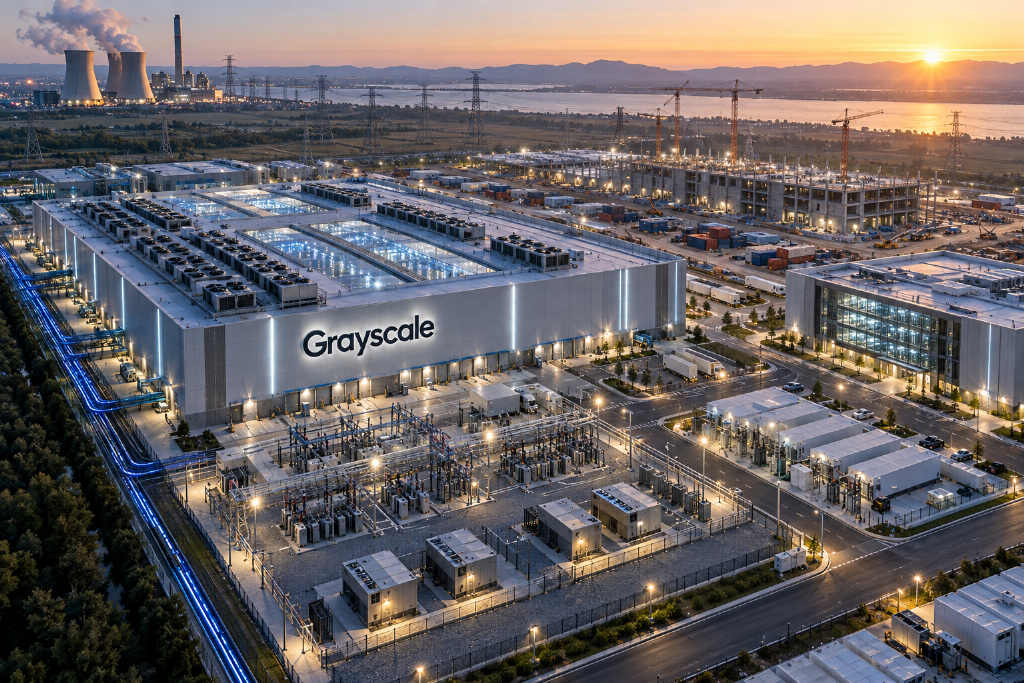
Grayscale research head Zach Pandl said in a Sept. 24 post in The Stack that the artificial intelligence boom is creating a split between fast-rising demand for compute and the much slower buildout of the physical infrastructure needed to supply it. According to Pandl, digital demand can scale almost immediately, while power, data centers, chips, memory and cloud infrastructure often take years to permit, connect and complete. The piece argues that this mismatch could benefit owners of compute capacity that is already energized and operational, creating what Grayscale described as more growth-oriented investment opportunities. It also said AI agents handling multi-step tasks may consume 5x to 50x more compute tokens than a typical chatbot interaction, pushing application-layer growth down into the underlying infrastructure stack. Citing the International Energy Agency and Lawrence Berkeley National Laboratory, the article added that data centers are expected to account for about half of U.S. electricity demand growth by 2030, while new projects may take more than five years to connect to the grid.
Grayscale research head Zach Pandl said in a Sept. 24 post in The Stack that the boom in artificial intelligence is driving a divergence between demand for compute used to train, run and operate models and the path available to supply that capacity.
Grayscale said the imbalance favors owners of compute capacity that is already powered and able to run, and that it may create more growth-oriented investment opportunities. Pandl wrote that digital demand can expand immediately, but physical infrastructure such as power, data centers, chips, memory and cloud services can take years to secure approvals for, connect and build.
Application growth feeds into infrastructure demand
The article said AI agents performing multi-step tasks may consume 5x to 50x more compute tokens than a typical chatbot interaction. As activity rises at the application layer, that demand can flow through to the underlying compute infrastructure.
Power and grid access remain key constraints
Citing data from the International Energy Agency and Lawrence Berkeley National Laboratory, the piece said data centers are expected to account for about half of U.S. electricity demand growth by 2030. It added that new projects may take more than five years to connect to the grid.
Even when power is secured, the article said projects still need permits, skilled labor, electrical equipment, cooling systems, GPUs, high-bandwidth memory and networking. Grayscale said lasting value is likely to accrue to power generators, data center operators and AI cloud providers that can already turn electricity into compute.
This article was originally published by Bit.Fan. For more cryptocurrency news and market insights, visit www.bit.fan. Disclaimer:
The market information, project data, and third-party content displayed on this platform are for industry information sharing only and do not constitute any form of investment advice or return commitment.
Cryptocurrency trading carries high risks. Users should fully assess their risk tolerance and make independent decisions. All profits, losses, and legal responsibilities are borne by the users themselves.