Sebastian Pulido, head of onchain asset management at Grayscale, said the industry’s main question by 2030 may no longer be how much value has been tokenized, but how effectively those assets can be used once they are onchain. In a post on X, Pulido said attention is likely to move away from the sheer scale of tokenized assets and toward their practical utility.
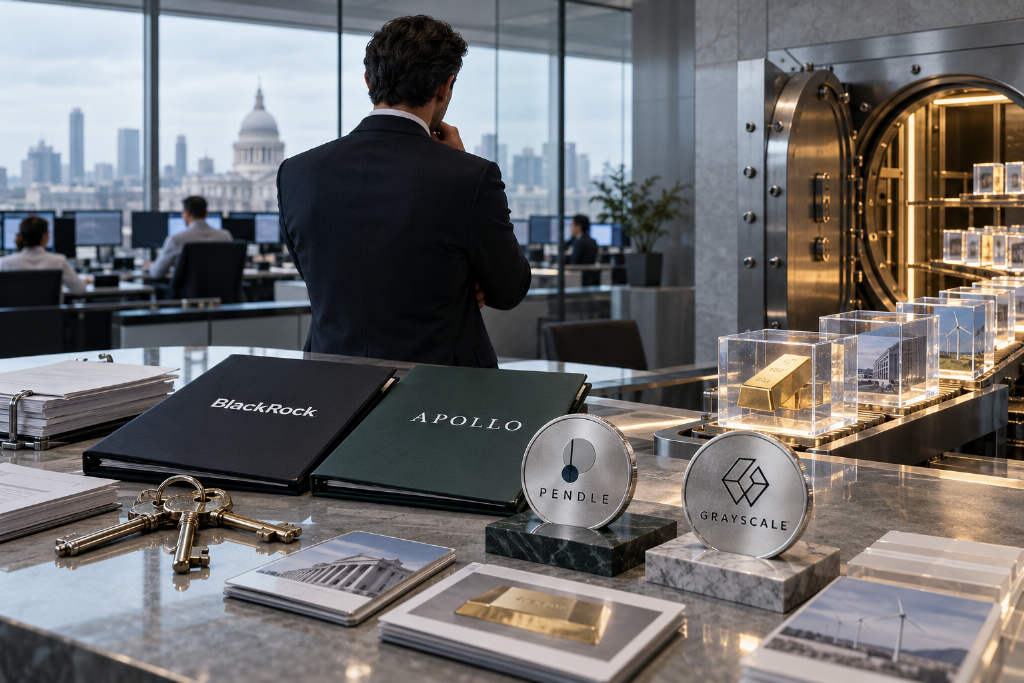
In his latest RWA report on Pendle, Pulido wrote that the onchain market for tokenized real-world assets reached $39.3 billion this month, up more than 80% since January. He also said institutions including BlackRock and Apollo have already brought fund and credit products onchain. Against that backdrop, he framed the next stage of competition around functionality rather than issuance volume. The central issue, according to Pulido, is what holders can actually do with these assets after acquiring them.
Grayscale’s head of onchain asset management, Sebastian Pulido, said in a post on X that by 2030 the industry’s focus is expected to shift from 「how many assets are tokenized」 to 「how efficiently those assets are used」.
In his latest RWA insight report on Pendle, Pulido said the onchain market for tokenized real-world assets had reached $39.3 billion this month, up more than 80% since January. He added that institutions including BlackRock and Apollo have brought fund and credit products onchain.
Pulido said the key question now is what holders can actually do with those assets after they acquire them.
This article was originally published by Bit.Fan. For more cryptocurrency news and market insights, visit www.bit.fan. Disclaimer:
The market information, project data, and third-party content displayed on this platform are for industry information sharing only and do not constitute any form of investment advice or return commitment.
Cryptocurrency trading carries high risks. Users should fully assess their risk tolerance and make independent decisions. All profits, losses, and legal responsibilities are borne by the users themselves.