
Grayscale’s Zach Pandl says higher borrowing costs hit AI compute stocks, not demand

Grayscale’s Zach Pandl says higher borrowing costs hit AI compute stocks, not demand

N
News Editor
2026-10-21 00:19:54
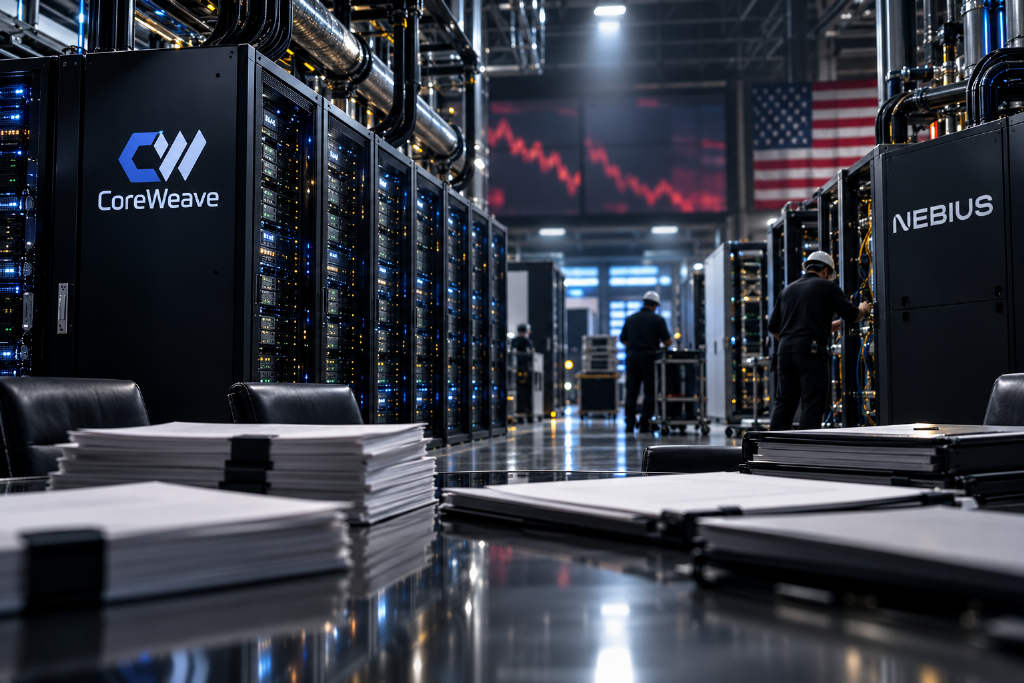
Grayscale Head of Research Zach Pandl said in the Oct. 20, 2026 edition of The Stack that recent weakness in AI compute infrastructure stocks reflects investor concern over rising borrowing costs rather than a drop in underlying demand. He pointed to the heavy financing needs of these companies, many of which are still in an early stage and require large capital outlays. According to Bloomberg and Grayscale Investments data based on the Indxx High Performance Computing Index, an index that includes AI cloud providers CoreWeave and Nebius had fallen about 27% since late September as of Oct. 19, 2026. Pandl said some neocloud companies are spending several times their current revenue on capital expenditures, while the top five holdings in the index posted a capex-to-sales ratio of more than 230% over the past 12 months. Even so, he argued that compute demand and pricing have held up during the pullback. He also said lower token prices and wider use of AI agents could drive more inference demand, while slower GPU depreciation, overlap with the Bitcoin mining sector, and a possible rise in Bitcoin’s price could also matter. In his view, the selloff is a chance to add exposure to the energized compute layer.

Grayscale Head of Research Zach Pandl said in the Oct. 20, 2026 edition of The Stack that recent declines in AI compute infrastructure stocks were driven by investor concern over higher borrowing costs, while the companies involved still face substantial financing needs.

Using data from Bloomberg and Grayscale Investments based on the Indxx High Performance Computing Index, Pandl said an equity index that includes AI cloud providers CoreWeave and Nebius was down about 27% since late September, with data current as of Oct. 19, 2026.

Capital intensity remains central to the selloff

Pandl said most of these companies are still in an early stage and are highly capital intensive. In some cases, neocloud operators are spending several times their current revenue on capital expenditures. He added that the top five holdings in the index posted a capital-expenditures-to-sales ratio of more than 230% over the past 12 months, based on data through Oct. 19, 2026.

Even with the stock pullback, he said compute demand and pricing have held up. In his view, demand for compute is rising, not falling.

Pandl’s demand outlook

Pandl also said lower token prices and increased use of AI agents could lead to higher inference demand, which in turn would support growth in compute demand. If demand keeps rising and compute pricing stays elevated, he said these companies could benefit.

He also pointed to slower GPU depreciation, overlap between AI compute and the Bitcoin mining industry, and the possibility of a higher Bitcoin price.

Pandl’s conclusion was that higher borrowing costs have weighed on AI compute infrastructure stocks, but the underlying trend of rising compute demand remains intact. He said the current pullback should be viewed as an opportunity to add exposure to the energized compute layer.


This article was originally published by Bit.Fan. For more cryptocurrency news and market insights, visit www.bit.fan.
8300

Disclaimer:

The market information, project data, and third-party content displayed on this platform are for industry information sharing only and do not constitute any form of investment advice or return commitment.

Cryptocurrency trading carries high risks. Users should fully assess their risk tolerance and make independent decisions. All profits, losses, and legal responsibilities are borne by the users themselves.
