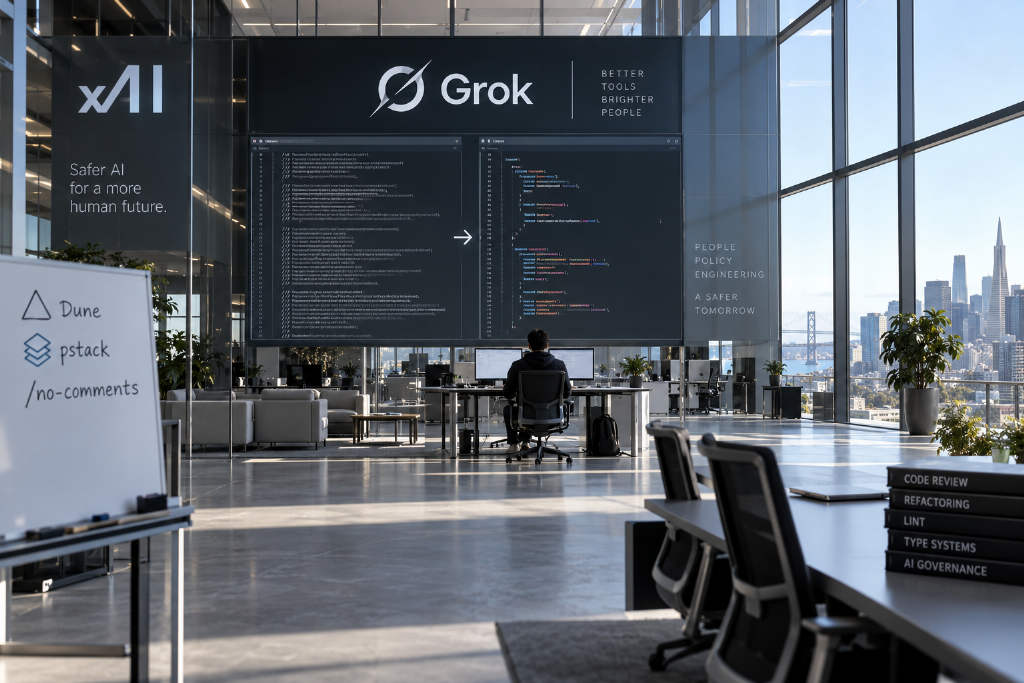
Lauren Tan, the engineering lead for Grok Bot, said most comments in codebases should be removed because coding agents tend to imitate what they see in existing code. In her view, a comment that explains a temporary fix can later be copied by another agent as if it were the correct long-term approach, allowing outdated patches and workarounds to spread across a project.
Tan said in an earlier interview that Dune, the development framework used by Grok Bot, already bans code comments. She estimated that 99% of the AI-generated comments she has encountered were explaining historical context that no longer mattered. One example she gave was a case where an engineer only wanted a specific style avoided in a pull request, but an agent turned that instruction into a comment that later agents could treat as a permanent rule.
To address that, Tan recommended the "/no-comments" Skill in her open-source toolkit pstack. She said it uses a dedicated agent to review comments, identify outdated explanations and temporary workarounds, and then fix the underlying issue through refactoring. That can include converting architectural requirements into automatically enforced lint rules or using the type system to block incorrect patterns directly.
Lauren Tan, the engineering lead for Grok Bot, has called for removing most comments from codebases, arguing that coding agents tend to imitate existing code. In her view, a comment that explains a temporary fix can be copied by later agents as if it were the right approach, letting outdated patches and workarounds spread through an entire project.
Comments can become permanent rules for AI agents
Tan had previously said in an interview that Dune, the development framework used by Grok Bot, already prohibits code comments. She estimated that 99% of the AI-generated comments she has seen were explaining historical context that was not important.
She gave one example: an engineer may only want a certain style avoided in a specific pull request, but an agent writes that instruction into a comment, leaving later agents to treat it as a permanent rule.
pstack tool aims to review and replace outdated comments
Tan recommended the "/no-comments" Skill in her open-source toolkit pstack. It calls a dedicated agent to review comments, identify outdated explanations and temporary workarounds, and then address the root problem through refactoring.
That can mean turning architectural requirements that once lived in comments into automatically enforced lint rules, or using the type system to directly prevent incorrect coding patterns.
This article was originally published by Bit.Fan. For more cryptocurrency news and market insights, visit www.bit.fan. Disclaimer:
The market information, project data, and third-party content displayed on this platform are for industry information sharing only and do not constitute any form of investment advice or return commitment.
Cryptocurrency trading carries high risks. Users should fully assess their risk tolerance and make independent decisions. All profits, losses, and legal responsibilities are borne by the users themselves.