
Guangyunda has disclosed two related-party transactions to build a stake in Jishengwei (Shanghai) Semiconductor Technology Co., Ltd., using less than RMB 20 million in total through two wholly owned subsidiaries. The deal marks the listed company’s entry into the domestic semiconductor precision components segment.

The investment is modest in size and does not amount to a controlling acquisition. At the same time, Guangyunda’s newly released interim report for 2026 shows that while revenue and net profit rose sharply, the improvement was driven largely by consolidation from acquisitions and investment income rather than a clear recovery in the company’s core business.
Two transactions give Guangyunda direct and indirect exposure
Guangyunda structured the Jishengwei investment in two parts, both funded with its own capital, with combined consideration below RMB 20 million.
In the first transaction, Shenzhen Guangyunda Weihui Technology Limited Partnership, a wholly owned subsidiary of Guangyunda, agreed to pay RMB 15.6109 million to acquire a 1.7944% equity stake in Jishengwei from Hai’an Ronghan. The share transfer will be settled in two installments, with half paid after confirmation of pre-emptive rights and the remainder paid after the completion of industrial and commercial registration changes.
In the second transaction, another wholly owned subsidiary, Guangyunda Industrial Investment, will spend RMB 3.2666 million to acquire a combined 86.15% partnership interest in Shengli Micro Enterprise Management (Shanghai) Partnership. According to the company’s disclosure, Shengli Micro does not conduct actual operating business and mainly serves as an external investment management platform. Through multiple layers of equity penetration, the partnership is able to influence Jishengwei’s largest shareholder, giving Guangyunda an indirect position in the target. After the transaction closes, Guangyunda plans to push Shengli Micro to carry out a capital reduction process to reorganize subscribed capital at the partnership platform.
Both transactions were classified as related-party deals because Guangyunda co-chairman Wu Wei also serves as a director of Jishengwei.
Jishengwei operates in a localized semiconductor components niche but is still loss-making
Guangyunda’s interest in Jishengwei centers on the domestic substitution opportunity in semiconductor precision components.
Components inside semiconductor equipment are often described as the “joints” of chipmaking tools. They include structural parts made of silicon carbide, quartz and silicon-based materials, and they directly affect wafer manufacturing yield. This market has long been dominated by overseas suppliers, while the domestic localization rate remains in the single digits. Jishengwei is one of the companies operating in this field. Its products cover quartz parts, silicon parts, silicon carbide components and vacuum pump repair services. The company offers more than 100 component products for core chip manufacturing processes including etching, diffusion, epitaxy and cleaning, and it has already supplied multiple batches to several leading domestic wafer fabs.
That growth story comes with heavy losses. As an early-stage hard-tech company, Jishengwei continues to spend on plant and equipment construction as well as materials and process research, leaving fixed costs elevated and profitability out of reach for now.
Financial data disclosed in the investment announcement show that Jishengwei posted a net loss of RMB 32.1838 million in 2025. It remained in the red in the first half of 2026, with net loss widening to RMB 31.1444 million. As of the end of June 2026, shareholder equity had fallen to RMB 301 million, while liabilities exceeded RMB 529 million, reflecting a business still in a heavy-investment phase without returns yet.
In its filing, Guangyunda said: “This transaction is an equity investment based on the company’s recognition of the development trend of the semiconductor precision components industry, and is intended to optimize the company’s industrial investment allocation and strengthen its layout in the high-end intelligent manufacturing industry chain.” It added that the deal “will help broaden the company’s industrial investment horizon and accumulate experience for future business expansion in high-end manufacturing.”
Interim report growth was driven by M&A consolidation and investment gains
Guangyunda’s push to find new industrial opportunities also reflects pressure in its own operations.
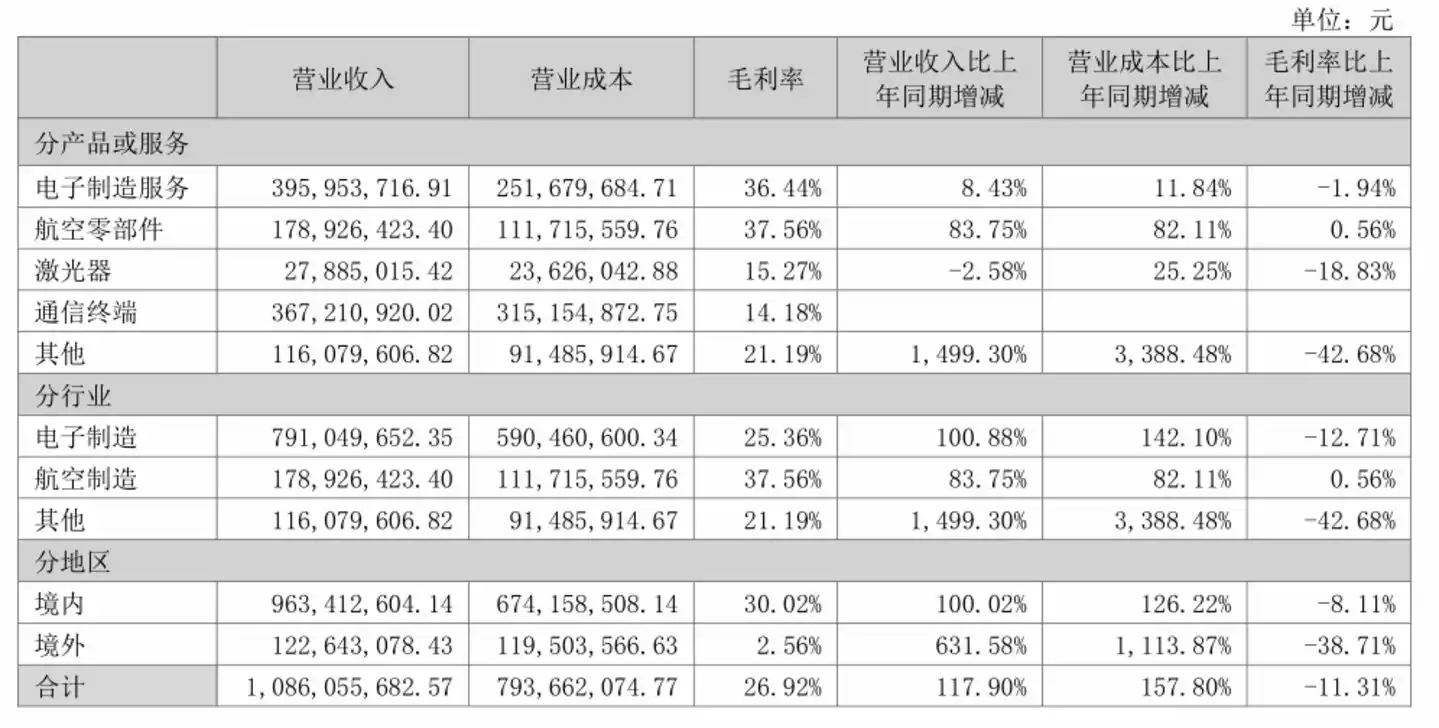
The company’s 2026 interim report showed first-half revenue of RMB 1.086 billion, up 117.90% year over year, and net profit of RMB 14.7538 million, up 728.49%. On the surface, those numbers look strong. A closer look shows that the jump in revenue and profit did not primarily come from stronger performance in the company’s legacy business.
During the reporting period, Yilian Infinite and Lingxuan Precision, both acquired by Guangyunda, were included in the consolidated financial statements. The communications terminal business alone contributed RMB 367 million in revenue, lifting the group’s top line. By contrast, the company’s traditional electronic manufacturing services segment, which remains its base business, generated RMB 396 million in revenue, up just 8.43% from a year earlier.
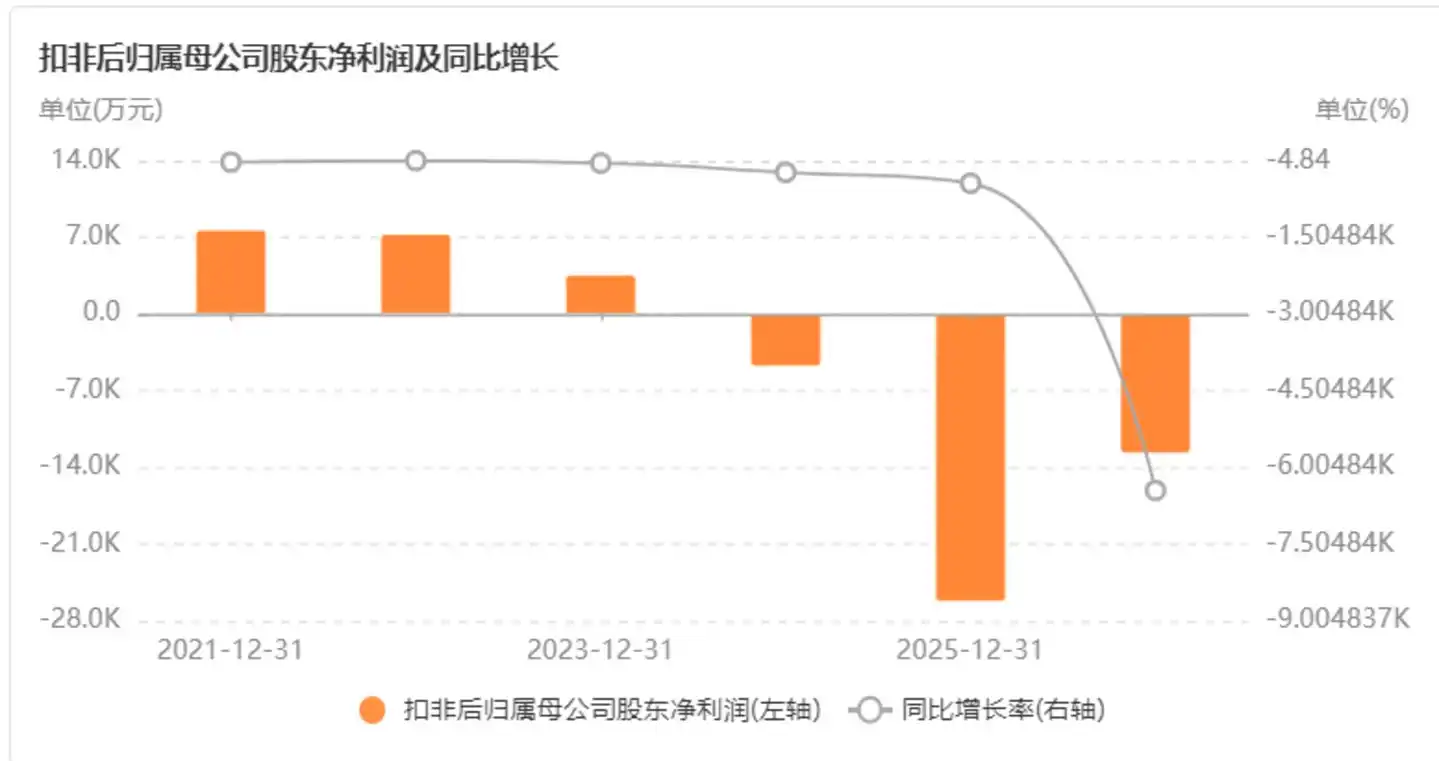
The return to profitability also depended on a non-recurring gain. Guangyunda had previously spent about RMB 30 million to participate in the strategic placement of Youyan Metal. The fair-value change gain on those shares was about RMB 115 million and was recognized in current profit and loss, becoming a major contributor to earnings. Excluding that one-off floating gain, the company’s core business remained loss-making. Data show non-recurring-item-adjusted net profit for the first half of 2026 was negative RMB 128 million, compared with negative RMB 1.945 million in the same period last year, with the loss widening by more than 6,400% year over year.
Cash flow and margin pressure remain visible
Operating cash flow also sent a warning signal. In the first half of 2026, net cash flow from operating activities was negative RMB 139 million, with the outflow widening from the same period last year.
As newly acquired lower-margin businesses were brought into the statements, the company’s overall gross margin fell 11.31 percentage points year over year to 26.92%. Guangyunda’s existing businesses are also dealing with tougher competition. At the same time, rising share-based payment expenses linked to equity incentives further narrowed profit margins.
A breakdown by segment shows pressure across several business lines. Traditional electronic manufacturing posted relatively stable revenue, but profit came under strain from competition and share-based payments. The aviation components business recorded a strong increase in revenue, though expenses also rose. The laser business of subsidiary Haifu Photonics remained loss-making. The communications terminal business added notable revenue and had a clear consolidation effect, but its gross margin was only 14.18%, well below electronic manufacturing services and aviation components, dragging down the group’s overall margin.
Minority investment is unlikely to ease near-term pressure
Against that backdrop, Guangyunda’s stake in Jishengwei gives it a foothold in a higher-growth semiconductor components segment and may serve as preparation for a new growth path.
Still, Jishengwei remains in an investment-heavy, loss-making stage, and semiconductor components is a field with a long research and iteration cycle. Guangyunda is only acquiring a small stake, which means it will neither consolidate Jishengwei nor be in a position to direct the company’s operations. In the near term, the industrial investment is unlikely to relieve the pressure facing Guangyunda’s core business.
The original article was written by Cao Shengyuan and edited by Deng Haotian.