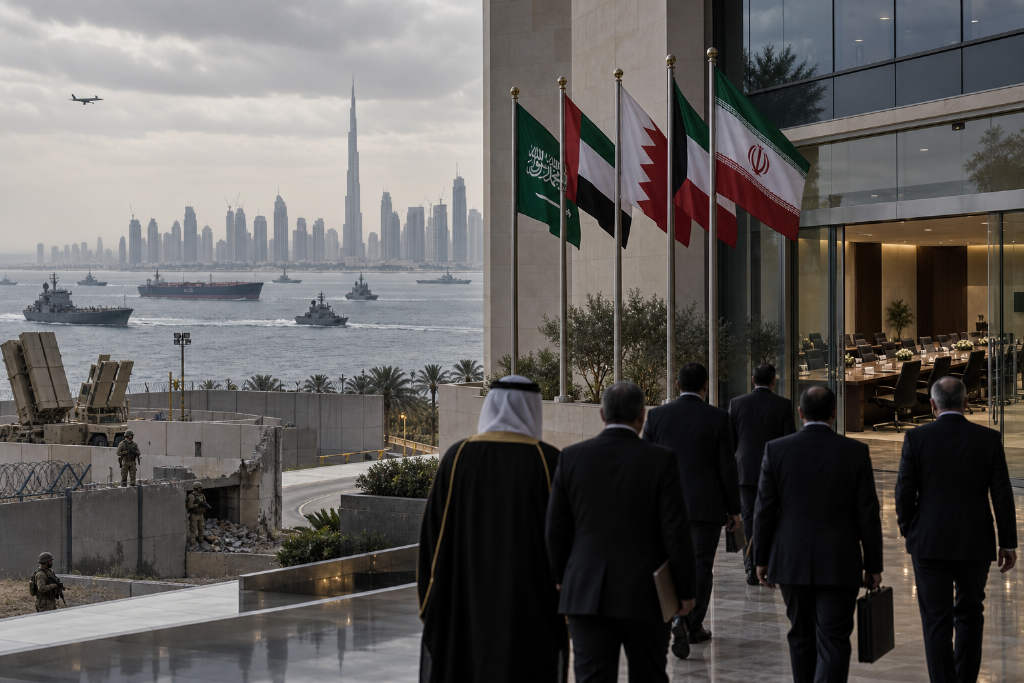
Gulf countries are reassessing their security posture after months of conflict exposed the limits of U.S. protection in the region, according to a New York Times report cited by BlockBeats on Sept. 15. During the half-year war involving the U.S., Israel and Iran, Iran repeatedly launched missile and drone attacks on Gulf states, while U.S. military bases in the region also came under attack. The developments pushed Saudi Arabia, the United Arab Emirates, Bahrain and Kuwait to explore new options.
Those options include stronger regional defense cooperation and direct diplomatic engagement with Iran. The report said the Gulf states do not have a clear alternative to U.S. security guarantees, and neither China nor Russia has directly stepped in to protect them. Analysts cited in the report said a more practical path would be to build additional defense partnerships that supplement, rather than replace, U.S. protection.
At the same time, Gulf states are trying to ease tensions with Tehran through diplomacy. A meeting between Gulf states and Iran that had been scheduled for Monday was postponed because Saudi Arabia and Iran disagreed over shipping arrangements in the Strait of Hormuz, though diplomatic efforts are expected to continue.
Gulf states are seeking to reduce their reliance on U.S. security protection and are turning to direct engagement with Iran, according to a New York Times report cited by BlockBeats on Sept. 15.
The report said that during the half-year war involving the U.S., Israel and Iran, Iran repeatedly used missiles and drones to strike Gulf countries, while U.S. military bases in the region were also attacked. That, the report said, exposed the limits of the U.S. security system.
Saudi Arabia, the United Arab Emirates, Bahrain and Kuwait have since started looking at new security arrangements, including closer regional defense cooperation and direct diplomatic contact with Iran.
According to the report, the Gulf states do not have a clear replacement for the U.S. as a security guarantor, and China and Russia have not directly intervened to protect them. Analysts said a more realistic option would be to form more defense partnerships to supplement, not replace, U.S. protection.
At the same time, Gulf states are also trying to ease relations with Iran through diplomacy. A meeting between Gulf countries and Iran that had been scheduled for Monday was postponed because Saudi Arabia and Iran had differences over shipping arrangements in the Strait of Hormuz. The diplomatic push is still expected to continue. As a neighboring country to the Gulf states, Iran's geography makes long-term avoidance of direct contact difficult, the report said.
This article was originally published by Bit.Fan. For more cryptocurrency news and market insights, visit www.bit.fan. Disclaimer:
The market information, project data, and third-party content displayed on this platform are for industry information sharing only and do not constitute any form of investment advice or return commitment.
Cryptocurrency trading carries high risks. Users should fully assess their risk tolerance and make independent decisions. All profits, losses, and legal responsibilities are borne by the users themselves.