
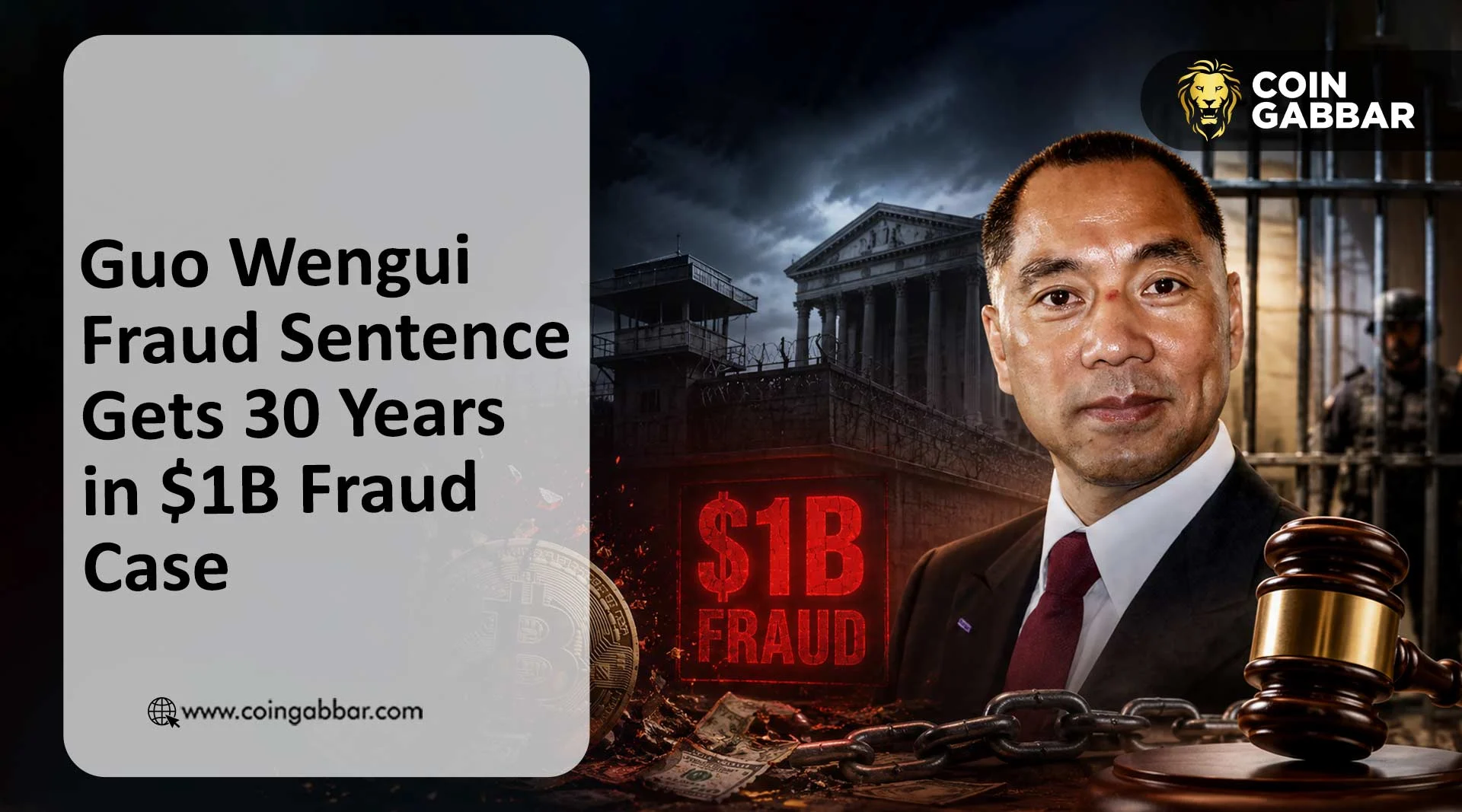
Guo Wengui, also known as Miles Guo, received a 30-year prison sentence in Manhattan federal court this week for a massive cryptocurrency fraud scheme. The self-exiled Chinese businessman raised over $1 billion from 2018 to 2023 through ventures including GTV Media Group, Himalaya Farm Alliance, and Himalaya Exchange, funds that prosecutors said largely financed a luxury lifestyle instead of real business. The court also ordered him to forfeit nearly $900 million in assets.
How the Guo Wengui Scam Worked
Guo built a following as a vocal critic of the Chinese Communist Party. He used that platform to pitch Himalaya Exchange, launched around 2021, which issued two tokens: Himalaya Coin (HCN) and Himalaya Dollar (HDO). The platform claimed the tokens were gold-backed and framed the project as a tool against the CCP, raising close to $262 million. However, the exchange operated as a closed system with little real on-chain presence, and its price movements appeared artificially pumped. Former CEO Jesse Brown testified that the company lacked real control and employees, and that H-Coin never had true cryptocurrency functionality. The Department of Justice has seized hundreds of millions in assets tied to the platform, and multiple countries had issued regulatory warnings before Guo's conviction.
Parallels with FTX, Celsius, and Bitzlato
This case echoes other high-profile crypto collapses. Sam Bankman-Fried, former FTX CEO, was convicted in 2023 and sentenced to 25 years for misusing customer funds. Celsius founder Alex Mashinsky pleaded guilty to fraud in 2025. Russian founder Anatoly Legkodymov of Bitzlato was arrested in 2023 for processing over $700 million in illicit funds. All share a common thread: bold innovation promises masking hollow operations, with customer money treated as personal funds.
Regulatory Implications and Lessons
The Guo Wengui case adds to scrutiny of celebrity-driven crypto schemes leveraging political appeal. U.S. authorities pursued charges via unregistered securities and wire fraud, backed by asset seizures. This pushes global regulators toward stricter KYC/AML rules, tighter oversight on stablecoins, exchanges, and influencer token promotions. Frameworks like MiCA in Europe and clearer U.S. guidance aim to close gaps, but enforcement still trails the pace of new scams. Investors are reminded to verify project leadership, independent audits, and actual technology — closed ecosystems without external checks carry the highest risk of becoming the next headline.