
Back-to-back hardware wallet security incidents are forcing a new look at one of crypto’s oldest slogans: keep your own keys, keep your own coins.
Safe Labs CEO Rahul Rumalla told Cointelegraph that people who want to hold digital assets should not be expected to become security experts. On the other side of the argument, Onramp CEO Michael Tanguma said self-custody was never designed for beginners in the first place.
Ledger and Coldcard incidents set off the debate
The immediate trigger was a pair of recent hardware wallet cases.
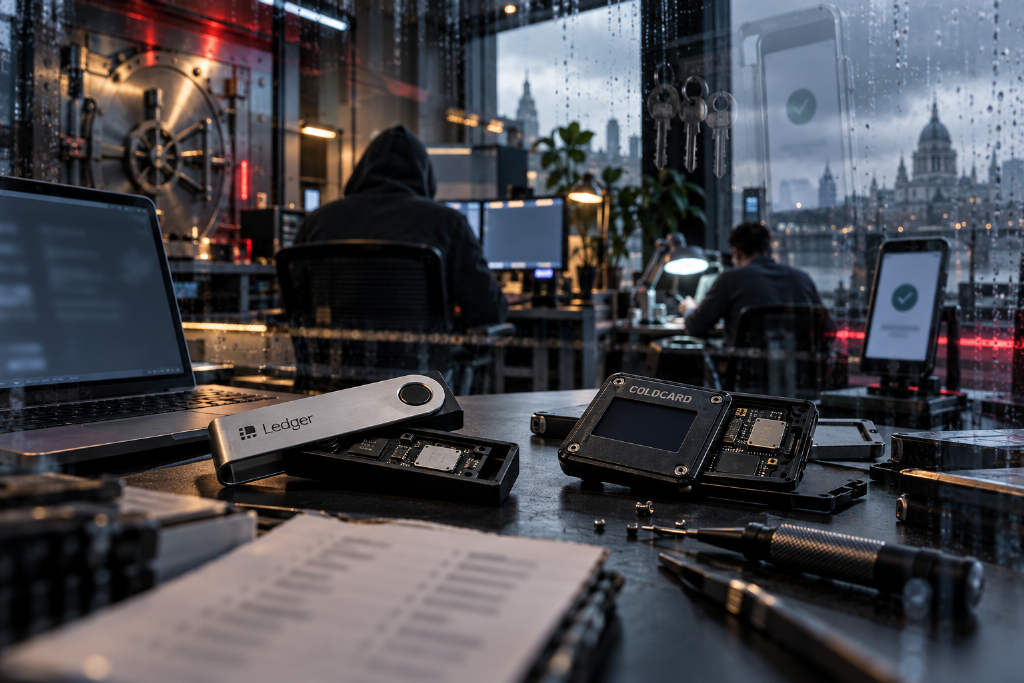
In Ledger’s case, some devices were found to contain unauthorized implanted components. According to the report, the hardware could read a user’s 24-word recovery phrase from the screen during setup and transmit it to attackers through an embedded eSIM over an LTE mobile connection. A Ledger statement tracked by The Record said the thefts were concentrated last week, and nearly all confirmed victims had bought devices sold by Southeast Asian distributor CryptoBilis.
The second case involved Coldcard. The report said a flaw introduced into the wallet’s seed-generation process in firmware released in March 2021 made recovery phrases predictable. That allowed attackers to reconstruct private keys and drain wallets. Galaxy Research’s onchain tracking put estimated losses at about $130 million and linked the activity to at least 15 separate attackers. Coinkite later issued an emergency firmware fix, but the patch only worked for seeds generated after the update.
Two executives, two sharply different views
Rumalla pushed back on Tanguma’s position and said self-custody was "designed for everyone." In his view, the ability to own and control assets is central to cryptocurrency, and self-custody does not mean every task must be handled manually by the user.
Tanguma framed the issue through the history of personal computing. He compared self-custody to personal computers in the 1970s, when users had to build and understand the machines themselves. What brought computers into ordinary homes, he said, was simpler design. Bitcoin custody now faces the same problem, in his view.
Multisig spreads risk but raises complexity
Multisignature wallets require multiple keys to approve a transaction. In theory, that reduces the danger of a single device failure, but it also increases the burden of managing the setup.
Synergy Network CTO Justin Hutzler said traditional multisig adds complexity around signer coordination, key backups, recovery procedures and transaction approval. For beginners, he said, that is not an easy system to manage.
Rumalla also said multiple approvals do not stop every attack. If several signers are misled by the same compromised interface, a malicious transaction can still be approved and executed.
Seedless wallets remove one problem and create another
Tangem’s seedless design removes the need for users to manage a recovery phrase and stores keys on physical cards instead. A private key is generated on one card, and up to two backup cards can hold copies.
Tangem confirmed to Cointelegraph that if all cards are lost, the user will be permanently locked out of the funds. The company said it has not received reports of users losing every card.
Foundation CEO Zach Herbert raised a separate concern. Tangem cards do not have built-in screens, so transaction details must be verified on a phone. In his view, an attacker would not need to steal the private key if the user could be tricked into approving a transaction that empties the wallet.
What the incidents exposed
The report argues that hardware wallets were long treated as the safest option for keeping private keys offline, yet the Ledger and Coldcard cases point to the same weak spot. Self-custody security depends not only on where the private key sits, but also on whether the device itself and the setup process have been compromised.
Ledger’s issue centered on supply-chain tampering. Coldcard’s centered on its own firmware. For beginners, multisig can distribute risk while making operations harder. Seedless wallets can simplify the flow while shifting trust toward physical cards and the phone interface used to confirm transactions.
What to watch next
The report highlighted two near-term points to watch: whether Ledger finds additional implanted devices in other distribution channels, and how the class-action lawsuit against Coinkite in Ontario, with claimed damages estimated at more than $140 million, could affect supply-chain scrutiny across the hardware wallet industry.
For everyday users, the practical steps cited in the report were straightforward: back up keys immediately after generation, buy devices through official channels, and verify each transaction carefully before approving it.



