
Harry Chun Tak Yeh, founder and managing partner of Quantum Fintech Group, has been found dead in Paraguay, with prosecutors still reviewing how the case should be classified.
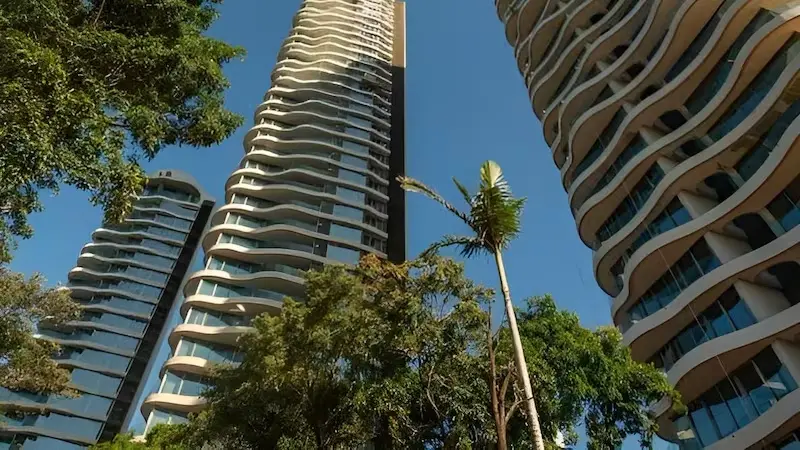
Paraguayan outlet La Tribuna reported on Aug. 7, 2026 that a Chinese man was found dead outside the Jade Park luxury apartment building in the Trinidad district of Asuncion. Authorities made a preliminary identification as Harry Yeh, also known on social media as @harryyeh. Police said their initial estimate is that the fall happened in the early hours of last Tuesday local time, from the 30th floor of the building, one of the tallest in the neighborhood.
According to police, Yeh’s body was naked and covered with a black plastic bag when it was found. Investigators then inspected an apartment on the 30th floor linked to him and found the door open and the interior in severe disarray. Forensic teams also collected evidence from another apartment on the 27th floor in the same building that was also tied to him. His 29-year-old Brazilian girlfriend, who lived on a lower floor, told authorities she knew nothing about the incident.
Paraguay’s homicide unit and forensic technicians have collected physical evidence and handed it to prosecutors. Prosecutors are examining several possibilities at the same time, including an accident, suspected suicide, and homicide. The body has been sent to the judicial morgue for an autopsy. No final official conclusion has been released.
Links to Tomb Finance, LIF3 and L3 Reserve
According to information published on harryyeh.com, Yeh served as managing director of Quantum Fintech Group, a firm focused on investment management in cryptocurrency, blockchain and digital assets. The website says the company sought excess returns for clients and partners.
The same website states that while operating Quantum Fintech Group, Yeh founded and became a seed investor in LIF3 and L3 Reserve. LIF3 is described as an omnichain DeFi ecosystem, while L3 Reserve is the issuer of L3 USD, which was positioned as a variable-collateral stable asset.
Public materials say Yeh had more than 25 years of technology and business experience, had served as chief technology officer and co-founder at multiple startups, and had years of experience trading stocks, options and foreign exchange. He was born in Hong Kong and moved to Canada as a child.
Entered crypto in 2013 and took over Tomb Finance in 2021
Public information cited in the report says Yeh entered the Bitcoin market in 2013 when BTC was trading at about $60, and started his first fund with roughly $250,000. Earlier in his career, he ran OTC trading, market making and related fund management through Binary Fintech Group.
A key turning point came in September 2021. Tomb Finance, an algorithmic stablecoin-style project deployed on Fantom and involving the TOMB, TSHARE and TBOND tokens, had introduced a Gatekeeper Tax intended to prevent whale withdrawals. The report says that mechanism was exploited through social engineering, which led to liquidation panic. Yeh then announced that he and his team would take over the project and published a detailed plan on Sept. 11.
Tomb Finance later expanded rapidly. In January 2022, the project’s total value locked briefly reached a record $1.6 billion. The report says the tokens tied to the project are now close to zero, and that the project’s most recent post on X dates to February 2025.
Early Fantom backer and later promoter of LIF3
During the same period, Yeh was described as an important early supporter and promoter of the Fantom ecosystem. He repeatedly expressed optimism about FTM in public and shared his views at related conferences.
From 2022, he began pushing LIF3, which was positioned as an improvement and extension of Tomb. The project emphasized accessibility and security, and offered trading, yield farming, liquidity provision and derivatives. His X profile for a long period carried the token labels LIF3, TOMB, FTM, TSHARE and L3 USD.
A high-profile image and a divided community view
The report describes Yeh’s public image as high profile. While he did not showcase luxury living on X, he frequently posted images on Instagram featuring private jets and luxury yachts.
Views in the crypto community were split. Early on, some saw him as an OG who helped accelerate ecosystem growth. Later, criticism grew around the sustainability of the projects linked to him and the transparency of the teams behind them.
Other abnormal deaths in crypto were also mentioned
The article notes that the crypto sector has seen other abnormal deaths involving high-net-worth participants.
In 2025, Faruk Fatih Özer, founder of the now-defunct Turkish exchange Thodex, died in prison. His lawyer said he had recently isolated himself and refused to see family members, and a preliminary judicial assessment leaned toward suicide. In the same year, Ukrainian crypto-related figure Konstantin Galish, also known as Kostya Kudo, was found shot dead inside his own car in Kyiv. Police mentioned suicidal tendencies and farewell messages, at a time when the market had fallen sharply. In early 2026, a man in Hong Kong fell from his residence after losing about $1.2 million in crypto investments, and police classified the case as a fall from height.
In Yeh’s case, the report says official findings and community speculation often coexist in incidents like this. The investigation remains at an early stage. Details at the scene, including the nudity, the plastic bag and the disorder inside the apartment, have fueled doubts about a simple accident or a simple suicide, but there is still no official conclusion before the autopsy and more evidence are released.