

Hash Global said a market call it published on Aug. 13 centered on one idea: consolidation was nearing its end, and the market only needed one reason to turn higher. A week later, in the firm’s view, that reason arrived when the U.S. Treasury announced a Treasury buyback plan. BTC then rallied, broke above the short-term holder cost basis and the 200-day moving average, and at one point tested $80,000. The broader market rose with it, and the technical picture, according to Hash Global, shifted back into a bull trend.
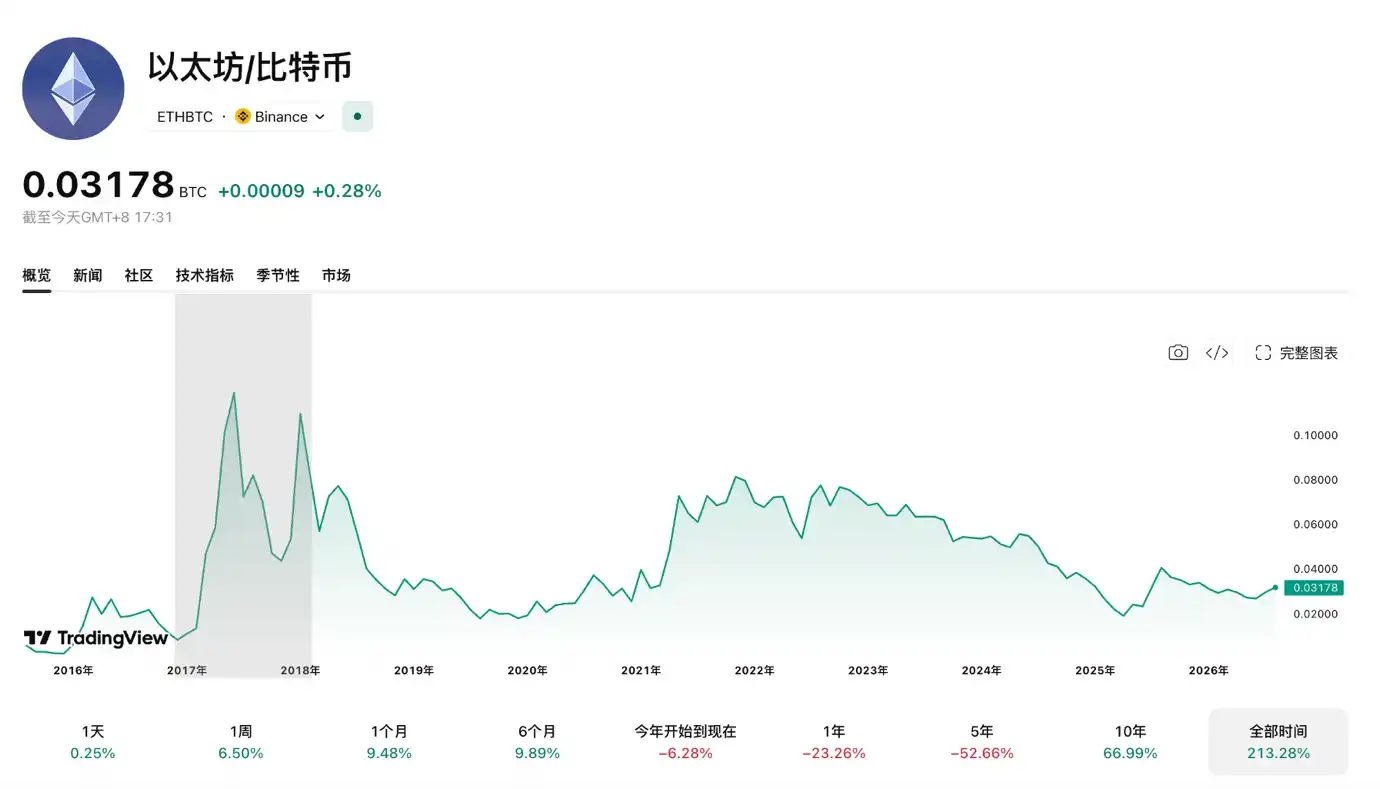
That has pushed the market to ask whether the bull market is back. Hash Global’s answer is more nuanced. It said the usual script from the previous cycle would be straightforward: institutions keep adding exposure, spot Bitcoin exchange-traded funds post continued net inflows, BTC leads first, and capital then rotates into ETH and other assets. But the firm argues this cycle may not unfold the same way.
One reason is the market action already visible at the start of the move. While BTC staged a sharp rebound, ETH — an asset that spent much of the previous cycle under pressure — outperformed noticeably. The ETH/BTC rate rose more than 10% in a single day at one point. BNB and HYPE also posted strong gains of about 20% and 42%, respectively. Hash Global said that stands in contrast to the last cycle’s pattern, when BTC was far more dominant. Its conclusion is that BTC can still rise, but it may not be the biggest winner of this bull market.
From capital on-chain to assets on-chain
Hash Global frames the shift in simple terms. The last bull market was driven by money entering crypto. The next one, it said, may be driven by assets entering crypto.
Over the past several years, one of the most important changes in the industry has been the arrival of traditional capital. BTC ETFs, DAT treasury companies and institutional allocations all addressed the same problem: how to bring traditional money into crypto.
Now, the firm said, another trend is building. Stablecoins, credit assets, bonds, funds and stocks are increasingly being tokenized. Recent policy signals have added momentum to that process.
Hash Global pointed to the SEC’s proposed Regulation Crypto as a move that creates a clearer compliance path for token issuance and fundraising. As regulatory uncertainty falls, the firm said, more capital can enter, new projects and assets can be created, and the supply side of crypto can expand. It listed that as one of the major catalysts behind the recent market breakout.
Still, Hash Global said Regulation Crypto should not be viewed in isolation. It placed the proposal inside the broader Project Crypto agenda pushed by SEC Chair Paul Atkins. In the firm’s reading, Regulation Crypto addresses asset issuance and financing within that framework, while Project Crypto also seeks to reshape rules for trading, custody and settlement across on-chain markets. The stated aim is to build a regulatory structure that fits an on-chain financial system and lays institutional groundwork for traditional capital and traditional assets to move on-chain.
At the same time, Congress is advancing the CLARITY Act, which Hash Global said would strengthen the legal foundation for digital asset classification, regulatory boundaries and market structure. Taken together, the firm argues, these two tracks are slowly forming the institutional base needed for on-chain capital markets to operate over the long term. In that context, the idea of putting everything on-chain is moving closer to reality.
Hash Global draws a sharp distinction between the old and new flows. Before, the path was TradFi capital to crypto. Now, the path may become TradFi assets to on-chain markets. If the story is only capital entering crypto, BTC is the clearest beneficiary. If the story becomes large-scale asset migration into crypto, the winners shift toward financial infrastructure: issuance, trading, settlement, custody and lending.
After asset supply expands, who carries it?
Hash Global said crypto has seen an asset-supply-driven bull market before. For the firm, the clearest historical example is the 2017 initial coin offering boom. What changed the market then was a surge in on-chain asset supply.
Ethereum sharply lowered the barrier to issuing on-chain assets at the time, the firm said, leading to a wave of new projects and tokens. That drew users and capital into the market and expanded the crypto sector rapidly. As the infrastructure that carried that issuance wave, ETH became one of the standout assets of that period, rising 27x and clearly outperforming BTC’s 13x in the same cycle.
Hash Global argues that a similar growth dynamic is reappearing, but that an everything-on-chain model would be an upgraded version of the ICO era. The asset base is larger, the asset quality is higher, and the institutional foundation is more mature. This time, the assets moving on-chain are not lower-quality ICO projects, but stocks, funds and bonds backed by real value and demand.
That changes the central question. If trillions of dollars in assets ultimately move on-chain, who will support them? Hash Global said that may be the structural opportunity worth watching most closely in the next crypto bull market.
The competitive setting is also different from the ICO period. After years of industry shakeout, infrastructure that was once scattered across many chains and protocols is becoming more concentrated. A large number of public blockchains, protocols and projects have exited the market. What remains, the firm said, is a small group of leading ecosystems with established users, liquidity and network effects.
That could produce an unusual setup: more assets, but fewer infrastructure winners. Once demand rises, new flows may not be spread evenly across the market. They may move directly to the top platforms that have already been tested and validated.
Why Hash Global favors ETH and BNB
ETH: certainty
Hash Global described ETH as the most mature decentralized financial infrastructure in the market today. Its case is direct: if asset issuance starts to accelerate, the most mature on-chain financial rails should capture the largest share of new demand.
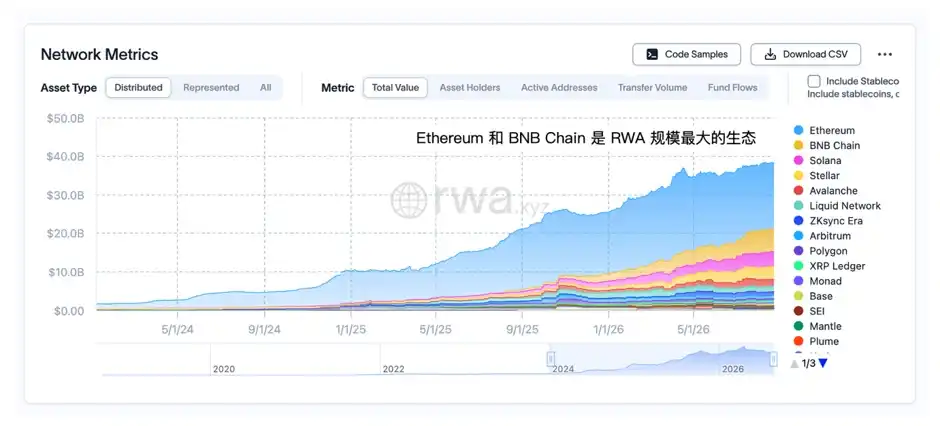
It cited several data points. Ethereum carries more than 50% of global tokenized RWA, accounts for nearly half of global stablecoin supply, and has more than $40 billion in DeFi total value locked, or about 44% of the market. On that measure, Hash Global said, Ethereum is more than eight times the size of second-tier public chains.
The firm also pointed to the concentration of established DeFi protocols in the Ethereum ecosystem, including Uniswap, Aave, Lido and Sky. That concentration, it said, means Ethereum still has the deepest liquidity and strongest ecosystem moat. For Hash Global, the reason to back ETH is not a fresh narrative. It is the prospect that a ten-year-old piece of infrastructure is about to enter a new demand cycle.
BNB: growth leverage
If ETH represents certainty, BNB represents growth leverage, according to Hash Global. Rather than competing only as a public-chain platform, the BNB ecosystem has taken a different route by building what the firm called a more complete financial network.
Its argument is that if traditional financial assets begin moving on-chain at scale, the key competition will not be limited to which chain is technically better. The more important question will be which ecosystem can connect assets, users, trading and liquidity in a working network. Hash Global describes BNB’s setup as one that gathers users and liquidity through a leading exchange, supports DeFi infrastructure with a high-performance public chain, and links to top institutions through brand and ecosystem resources.
Over the past two years, the firm said, BNB has become one of the fastest-growing RWA ecosystems. It said RWA assets on BNB grew from about $3.6 million at the start of 2025 to more than $5.8 billion now, making it the largest RWA ecosystem outside Ethereum. It also said the number of RWA holders has passed 1.15 million, ranking first among ecosystems.
Hash Global added that this Web3 financial network has extended further into TradFi this year, with related businesses growing quickly and moving into the front ranks of the industry. In the firm’s view, those changes have not yet been fully priced by the market.
Its positioning is clear: ETH stands for the certainty of on-chain financial infrastructure. BNB stands for the growth leverage of an on-chain financial super-network. Hash Global said ETH spent much of the last cycle suppressed despite retaining its central role, while BNB’s fundamentals have kept improving without being fully reflected in price. The firm expects both forms of value to return to focus in a new cycle.
Robinhood as BNB’s mirror in traditional finance
For readers who think the idea of everything on-chain still feels distant, Hash Global points to Robinhood. The firm described Robinhood as the clearest expression of the same trend inside traditional finance.
Robinhood began as an internet brokerage, then expanded into crypto, explored tokenized stocks and moved on to build its own on-chain infrastructure. In Hash Global’s view, what Robinhood is doing amounts to moving traditional financial assets onto blockchain rails step by step.
That creates a parallel. Robinhood starts in TradFi and moves toward on-chain markets. BNB starts in crypto and extends toward TradFi. They come from different systems, but Hash Global said they are both positioned around the same long-term trend: traditional finance and on-chain finance are set to converge.
For that reason, the firm said it is not only positive on ETH and BNB, but also on Robinhood’s potential for outsized growth in this cycle.
BTC opens the door, infrastructure may be where value ends up
Hash Global closed by saying BTC remains the most important core asset in crypto and the most direct entry point for institutions. That part of the market structure, in its view, has not changed.
What could change is where value accrues if the next cycle is defined by more assets moving on-chain. More assets mean more trading, greater liquidity demand and stronger need for financial infrastructure. Combined with the concentration that followed the previous cycle’s shakeout, that could shift market attention.
The firm said its focus in this cycle is on three expressions of that theme: ETH for certainty, BNB for leverage, and Robinhood as a representative of the on-chain transformation of traditional finance.
Its core judgment is straightforward. In the last cycle, BTC helped bring crypto into traditional finance. In the next one, Hash Global said, it is more interested in the possibility that traditional finance brings the broader world of assets into crypto. BTC still matters. But in the next bull run, infrastructure may become the lead story.