
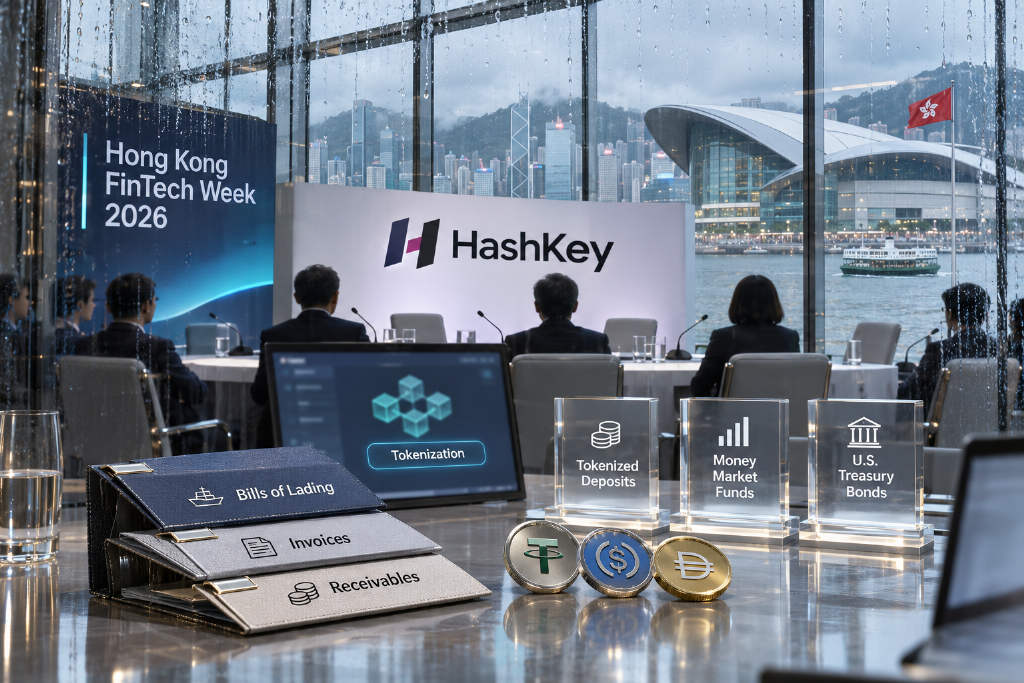
Rachel Qiu, Head of Business Development at HashKey Group and chief operating officer of its On-Chain business, spoke at a roundtable held during Hong Kong FinTech Week 2026, where representatives from RedotPay, HSBC, RigSec and IG Group discussed development trends and commercial applications for stablecoins as financial infrastructure.
Liquidity supply remains the main constraint
Qiu said stablecoins have already become an important tool for on-chain settlement. Still, she argued that on-chain finance will need to break through liquidity supply bottlenecks before it can scale, and that the sector needs financial infrastructure capable of supporting the circulation of multiple asset classes and different forms of capital.
She said liquidity sources on-chain are set to become more diverse as tokenized deposits, money market funds and U.S. Treasuries gradually move onto blockchain rails. In her view, that shift could help create a more resilient and sustainable on-chain financial ecosystem.
Cross-border trade highlighted as a practical use case
On commercial applications, Qiu used cross-border trade to explain what HashKey On-Chain is working on. She said traditional cross-border trade settlement often takes a long time, leaving corporate funds tied up while goods are in transit.
HashKey is working with shipping companies, exporters and importers to explore the tokenization of trade assets including bills of lading, invoices and accounts receivable. According to Qiu, that approach could improve cross-border settlement efficiency while also allowing those assets to be used as collateral for financing, helping companies unlock trade assets, obtain working capital and improve capital turnover.
Traditional finance controls still matter
Qiu said HashKey On-Chain is focused on building financial infrastructure that can carry stablecoins, tokenized deposits and other forms of on-chain liquidity.
As traditional finance and on-chain finance move closer together, she said the industry also needs risk management, asset protection and emergency response mechanisms that match the pace of technical development. She added that mature practices from traditional finance in cybersecurity, fraud detection and customer protection should be brought into on-chain financial systems to support large-scale adoption of on-chain financial services by institutions and enterprises.




