
HashKey RWA CEO Anna Liu attended the second Women Chief Executives Summit (WCE Summit) on Tuesday, where this year’s event focused on “Women’s Voice: Influence and Innovation.” The summit centered on women’s leadership, technological innovation and the development of emerging industries, bringing together more than 450 institutional representatives from Standard Chartered, UBS Hong Kong, J.P. Morgan, HSBC and Anchorpoint, among others.
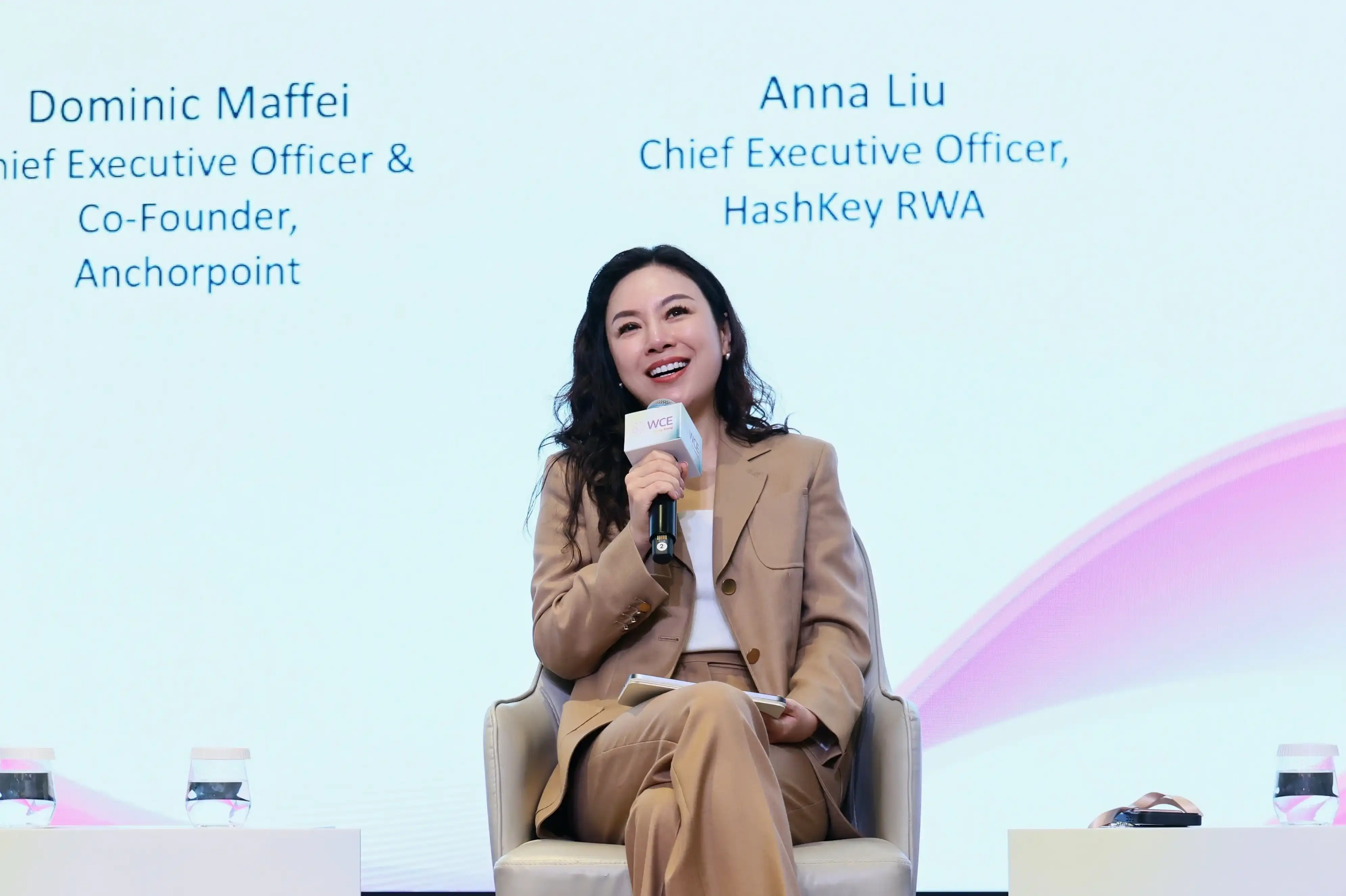
Roundtable focused on innovation and business in APAC
Liu joined a roundtable session titled “Scaling Innovation and the Future of Business in APAC,” where she shared her experience as a female business leader. The discussion also covered leadership development for women in emerging sectors, corporate innovation and commercialization opportunities.
From legal lead to CEO
Speaking about women’s leadership and career growth, Liu said a professional background should not define the boundary of career development, but instead serve as a distinct leadership advantage. She said her legal training gave her the ability to identify risk, build trust and understand complex business structures, which also laid an important foundation for leading a tokenization business.
According to Liu, the most important change in moving from head of legal to CEO of HashKey RWA was not simply the title itself, but a shift in mindset — from asking whether something is permitted to judging whether it is worth doing and how to execute it well. She said the core of leadership lies in professional depth, strategic vision and decision-making, and that women should make full use of their accumulated expertise while actively expanding their career possibilities.
Women should have a real voice in key decisions
On opportunities for women in emerging industries, Liu said these sectors offer not only more room for career development, but also a chance to take part in shaping the future of the industry itself. She pointed to artificial intelligence, Web3 and digital assets as areas where market structures and rules are still taking shape. In her view, the empathy, sharp insight and resilience shown by women leaders — including the ability to balance firmness with flexibility in complex environments — can bring distinct value to innovation and industry development.
She also said that an open industry environment does not mean equal opportunity will form on its own. Women, she argued, need more than access to participation; they should also hold substantive influence in key decisions. Liu added that companies should actively identify leadership potential among women from different professional backgrounds and support them with resources, career development opportunities and industry networks, helping more women move into core management roles and play a larger part in the growth of emerging industries.