
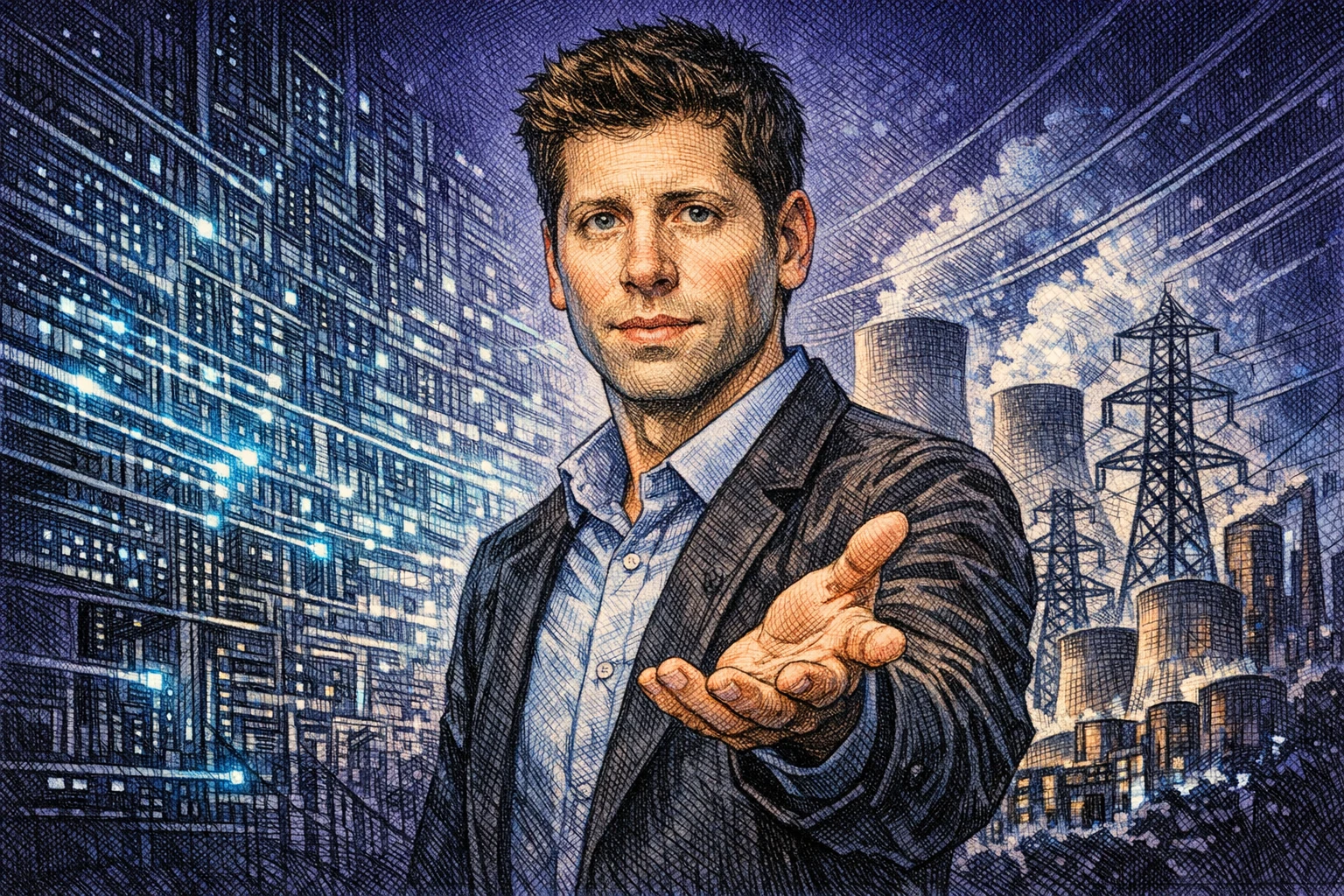
The surging electricity demand from global AI data centers is outpacing traditional grid capacity. Fusion startup Helion announced Thursday it closed a $465 million Series G round, bringing its valuation to $15.5 billion — nearly triple its 2025 level.
Altman Holds ~1/3 Stake, Steps Down from Board
The round was led by Thrive Capital, with new investors including Alta Park Capital, Anti Fund, and BoxGroup, alongside existing backers Capricorn Technology Impact Funds, Lightspeed Venture Partners, and a university endowment. The most prominent name behind the capital is Sam Altman, who disclosed during the Musk vs. Altman trial this year that he holds roughly one-third of Helion's equity. He resigned from Helion's board in March to clarify potential conflicts with OpenAI.
Aggressive 2028 Timeline: First Fusion PPA with Microsoft
The funding arrives as Helion races to build its first power plant, Orion. The company signed the industry's first fusion power purchase agreement (PPA) with Microsoft, pledging to deliver at least 50 MW of commercial fusion power to the grid by 2028 for Microsoft's data center in central Washington state. That timeline is the most ambitious public commitment in the fusion sector.
Skipping the Steam Turbine: Helion's Unique Technical Path
Most fusion startups use magnets or lasers to confine or compress superheated plasma, generating heat to boil water and spin steam turbines — essentially a coal plant with a fusion heat source. Helion bypasses the steam turbine entirely. It compresses fuel with magnets; the fusion reaction occurs inside the plasma, which expands and pushes against the magnetic field. Helion directly converts that mechanical thrust into electricity — akin to regenerative braking in an electric car. The approach could drastically reduce energy conversion losses. However, some fusion physicists are skeptical — Helion rarely publishes in peer-reviewed journals, making independent verification difficult. CEO David Kirtley's response is blunt: "We don't want to talk about fusion; we just want to build it."
Capital Rush: Fusion Sector Raises Over $1B, but Commercial Scale Remains a Decade Away
Helion is not alone. Fusion has become a venture capital darling in recent months. Last week, Focused Energy and Thea Energy each announced new rounds — $240 million and $100 million, respectively. In February, Inertia Energy emerged from stealth with a $450 million Series A. A month earlier, Type One Energy was raising $250 million in a Series B. In just a few months, the sector has absorbed over $1 billion. Yet most companies acknowledge their first commercial-scale plants won't run until around 2035. Helion's 2028 target is an outlier, and it still lacks peer-reviewed publications to verify technical feasibility. Capital is essentially betting on an option: in the AI energy arms race, if someone does crack fusion, you want a seat at the table.