Hong Kong and Pakistan Regulators Present Contrasting Crypto Approaches

Hong Kong and Pakistan Regulators Present Contrasting Crypto Approaches

N
News Editor
2026-08-28 06:34:36
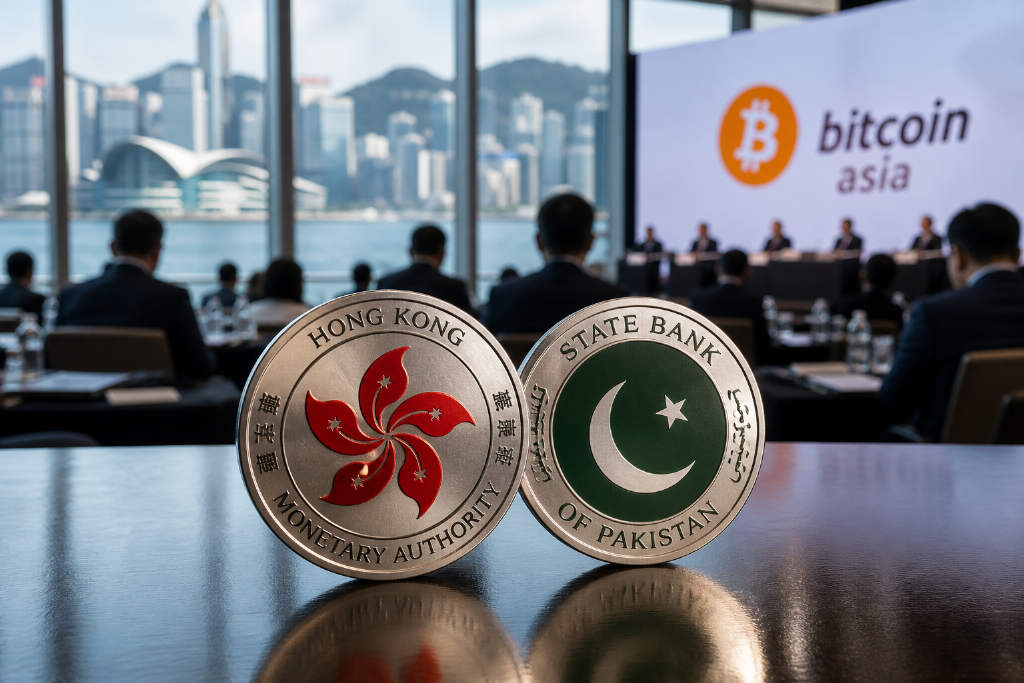
At Bitcoin Asia 2026 in Hong Kong, two officials outlined divergent paths for digital asset regulation during a panel titled "The Future of Bitcoin and Special Economic Zones." Liang Hanjing of Hong Kong's Investment Promotion Agency emphasized consistency, saying Hong Kong lays out a roadmap and sticks to it, releasing new measures every six to twelve months so firms can plan over three-to-five-year horizons. He noted Hong Kong aims at tokenizing $320 trillion in traditional financial assets. In contrast, Bilal Bin Saqib, chairman of Pakistan's Virtual Assets Regulatory Authority, prioritized speed: his agency moved from legislation to rules in six months while using only 8% of its budget. He argued that emerging economies still rely on institutional frameworks built on 19th- and 20th-century tracks, even as technology moves at machine and internet speed. He acknowledged that execution requires risk mitigation but said for Pakistan, inaction would cost far more than action.

Asia's Two Regulatory Speeds: Hong Kong and Pakistan

Liang Hanjing, Head of Global Financial Services, Fintech and Sustainability at the Hong Kong Investment Promotion Agency, and Bilal Bin Saqib, Chairman of the Pakistan Virtual Assets Regulatory Authority (PVARA), shared a stage at Bitcoin Asia 2026 in Hong Kong. On a panel titled "The Future of Bitcoin and Special Economic Zones," they laid out two very different ideas on how fast to regulate digital assets.

Liang argued that consistency is what Hong Kong, as an international financial center, values most, saying that if rules keep changing, market participants could hardly engage. Hong Kong has chosen to lay out a roadmap and stick to it, rolling out new measures every six to twelve months so businesses can plan investments on three-to-five-year cycles. He also said that as Hong Kong embraces digital assets, it is aiming at putting $320 trillion of traditional financial assets on the blockchain.

Saqib emphasized speed. Pakistan's Virtual Assets Regulatory Authority went from the passage of relevant legislation to the introduction of rules in just six months, using only 8% of the government budget allocated to it. He said that at least in emerging economies, the existing institutional framework is still built on tracks from the 19th and 20th centuries, while technology is evolving at machine speed and internet speed.

He also said enforcement still needs adequate risk mitigation, but for a country like Pakistan, "the cost of inaction will be far greater than the cost of action."

This article was originally published by Bit.Fan. For more cryptocurrency news and market insights, visit www.bit.fan.
1200

Disclaimer:

The market information, project data, and third-party content displayed on this platform are for industry information sharing only and do not constitute any form of investment advice or return commitment.

Cryptocurrency trading carries high risks. Users should fully assess their risk tolerance and make independent decisions. All profits, losses, and legal responsibilities are borne by the users themselves.