
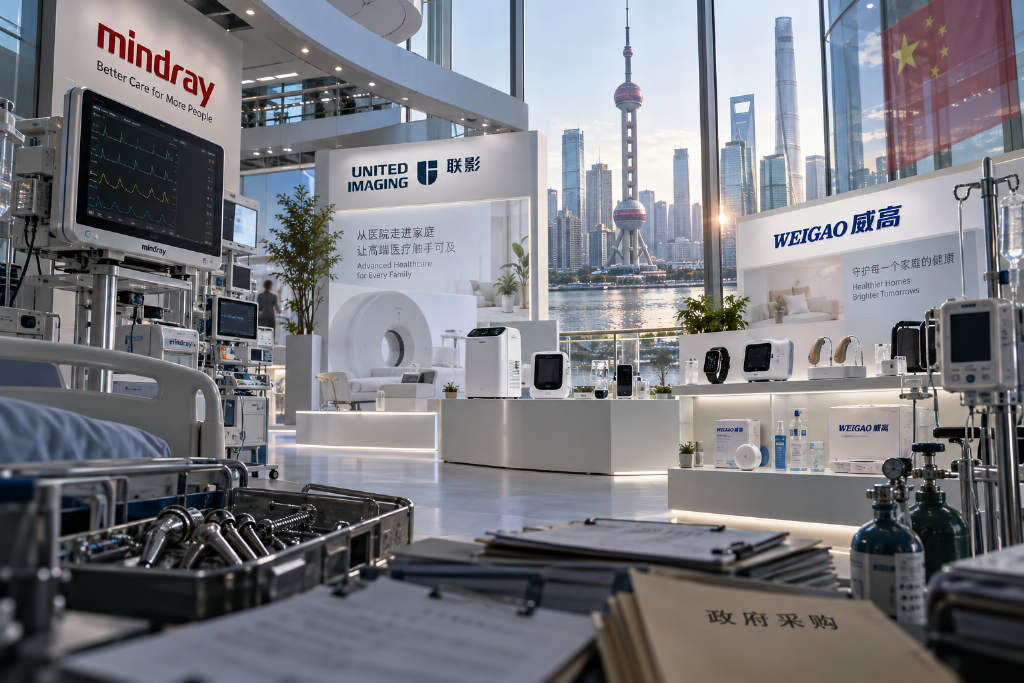
Medical device companies that once made strong profits from China’s hospital market are now dealing with a much colder operating environment. Volume-based procurement, price wars and slower payment collection have all narrowed margins, and leading companies are quietly moving into the home medical device market.
Hospital market shifts from a high-margin era to intense competition
The article opens with the recollection of a distributor identified as Lao Zhou, who described 2019 as a peak year for hospital-focused medical device sales. At the time, he held distribution rights for several imported orthopedic products. One imported hip implant, with an ex-factory price of about RMB 11,000, could sell to hospitals for RMB 40,000 to RMB 60,000. In some cases, distributors earned more than manufacturers.
The report gives more examples of the pricing spread that existed in that period. A domestic coronary stent with an ex-factory price of RMB 3,000 could be sold into hospitals for RMB 11,500. A domestic artificial joint priced at RMB 3,000 to RMB 4,000 at the factory level could carry an end price of RMB 15,000 to RMB 60,000. Lao Zhou estimated that distributors’ procurement costs from manufacturers were roughly one-third of the hospital purchase price, leaving a large profit pool in the circulation chain.
Back then, many small and mid-sized distributors relied less on product differentiation and more on hospital relationships, department-level access and channel maintenance. Lao Zhou left a sales job at a foreign medical device company in 2008, started his own business with several tens of thousands of yuan and a contact book, and over the next decade built a team of more than 30 people.
In 2019, China’s medical device market exceeded RMB 600 billion, with annual growth above 10%, according to the article. After the launch of the STAR Market that year, companies such as MicroPort Endovascular MedTech and Nanjing Micro-Tech listed, and newly listed medical device stocks broadly rose in their early trading period. Aging demographics, consumption upgrades and import substitution were widely seen as the sector’s main growth drivers.
The turning point came with volume-based procurement. From 2020 to 2026, the policy moved from a new variable to a normalized operating condition. Coverage expanded from coronary stents to orthopedic joints, spinal consumables, dental implants, electrophysiology products, biochemical reagents and trauma consumables. The article says prices generally fell by 50% to 70% on average, with some categories dropping by as much as 90%. Companies responded with a volume-for-price strategy, hoping larger winning volumes would offset lower unit prices.
That pressure spread across the supply chain. Manufacturers saw profits shrink, while distributors shifted from traditional intermediaries to delivery service providers, with gross margins falling from the tens of percentage points to single digits.
Homogeneous competition made the situation worse. The article says only a small number of domestic companies can produce globally original or genuinely high-barrier products, while most routine categories, including drug-eluting stents, trauma plates, staplers and low-value catheters, have become technologically mature. As more domestic manufacturers entered, product materials, processes and clinical outcomes became increasingly similar, making price a key competitive factor.
In the sixth round of national procurement for coronary drug-coated balloons, more than 30 companies won bids, and final prices fell from above RMB 10,000 in the past to RMB 1,677 to RMB 6,015. Similar price competition has appeared in staplers, ultrasonic scalpels and disposable flexible ureteroscopes.
China’s National Healthcare Security Administration wrote “anti-involution” into procurement principles for the first time in 2025, and in the sixth batch of high-value consumables procurement in 2026 introduced anchor prices and a revival mechanism to guide more rational bidding. The article argues that policy intervention itself shows how severe the competition has become.
High-value consumables makers are finding it harder to make money
Lao Zhou said companies focused on the hospital market have found it increasingly difficult to sustain profits since the policy shift. For high-value consumables makers, lower prices, R&D spending, channel adjustments and foreign-exchange losses have all weighed on earnings.
Weigao Orthopaedics is one example cited in the report. In 2021, the company posted revenue of RMB 2.154 billion, net profit attributable to shareholders of RMB 690 million and an overall gross margin of 81.17%. In 2022, after trauma and joint procurement programs were implemented, revenue slipped to RMB 2.058 billion. In 2023, after national spinal procurement was fully rolled out and one-off channel inventory compensation hit results, revenue dropped to RMB 1.284 billion, down 37.63%, while net profit fell to RMB 112 million, down 81.30%. Gross margin narrowed to 66.5%. In 2024, revenue recovered to RMB 1.453 billion and net profit to RMB 224 million, but gross margin fell again to 65.73%. Over four years, the company’s gross margin moved from 81% to 66%, a decline of about 15 percentage points.
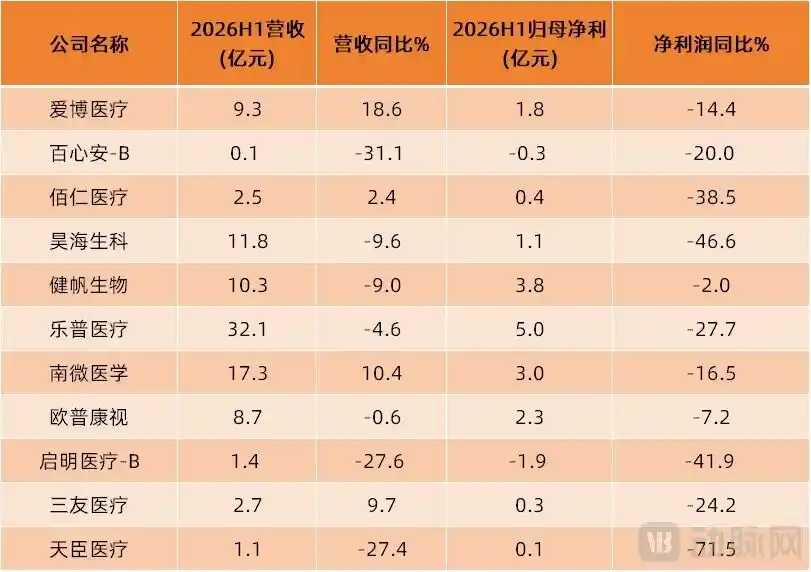
The 2026 interim reporting season pushed that sense of pressure even further. The article lists a series of profit declines: Tengine Medical down 71.5%, Venus Medtech down 41.9%, Haohai Biological down 46.64%, Balancemed down 38.54%, and Lepu Medical down 27.71%. Excluding one-off expenses, Lepu Medical’s recurring net profit fell about 14.8%. The reasons differ by company, but the direction is broadly the same.
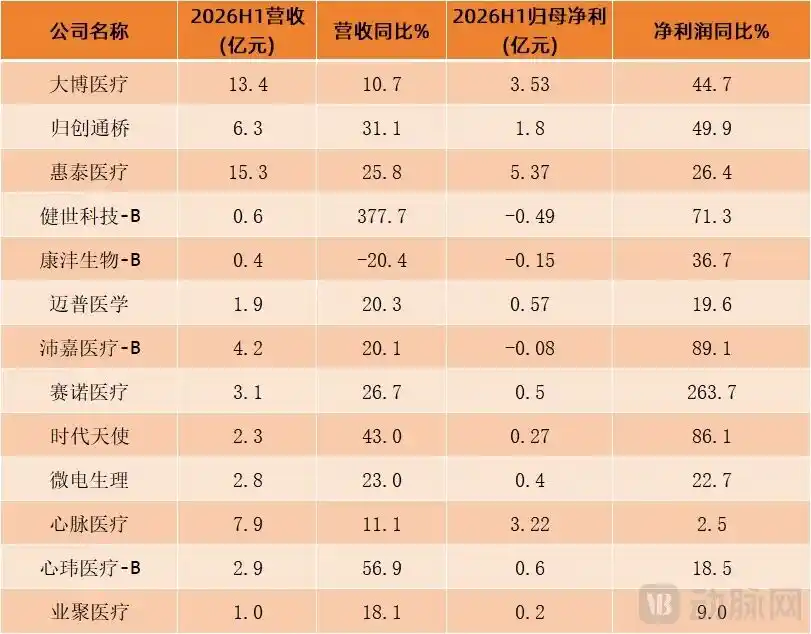
There are exceptions. The report says Sinomed’s net profit rose 263% year on year, HeartCare Medical grew 26%, Zylox-Tonbridge rose 50%, and Dabone Medical increased 45%. Sanyou Medical, after excluding share-based payment and foreign-exchange losses, reported a 41.58% rise in attributable net profit.
The article points to two main reasons. One is overseas expansion. In the first half of 2026, HeartCare Medical recorded overseas revenue of RMB 195 million, up 35.9%, while overseas revenue at MicroPort Endovascular grew more than 21% after excluding exchange-rate effects. The other is the ramp-up of innovative products. Examples include Sinomed’s coated dense-mesh neurointerventional stent and HeartCare Medical’s pulsed field ablation, or PFA, products. Because these products are relatively new and competition is still limited, gross margins have remained higher.
Still, the article says such outperformers remain a minority within the broader high-value consumables segment. For distributors like Lao Zhou, falling profits at most manufacturers usually mean even sharper pressure on their own earnings.
Medical equipment suppliers are under pressure as well
The same pattern is showing up in hospital-facing medical equipment. Based on bidding and tendering data from recent years, the article says prices for high-end equipment have fallen less sharply, but declines in mid- and low-end equipment have been more obvious.
In county-level medical consortium equipment package purchases, a domestic entry-level 1.5T MRI can be priced as low as RMB 2 million, a basic 64-slice CT at about RMB 1 million, and a basic whole-body ultrasound at under RMB 500,000. The report says that several years ago, standalone purchases of equipment at similar levels were almost double those prices.
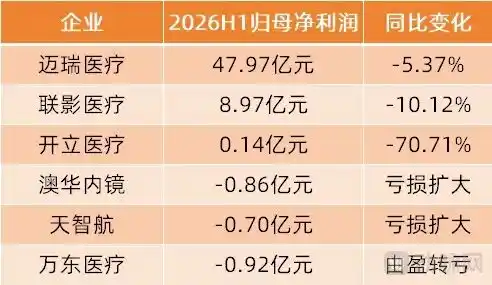
Wandong Medical is cited as a case in point. In the first half of 2026, the company reported revenue of RMB 875 million, up 3.71%, but swung to a net loss attributable to shareholders of RMB 91.67 million. Its overall gross margin fell from 35.16% a year earlier to 24.94%, a drop of 10.21 percentage points.
According to the company, the decline was mainly due to a volume-for-price strategy in procurement, along with weaker hospital purchasing, high core component costs and the lack of visible scale-driven cost reductions. In 2025, Wandong participated in 34 provincial procurement projects, won bids for 932 units of equipment and secured RMB 520 million in bid value, with an average discount rate of 46%. Its full-year gross margin fell to 26.56%, nearly 20 percentage points below the 45.82% recorded in 2021.
Price cuts are only part of the problem. The article says the more damaging issue for equipment companies is delayed payment collection. A distributor in imaging equipment told the publication that while slow payments and heavy capital occupation were manageable in the past because unit prices and margins were high, the past two years have become much harder. A three- to six-month collection cycle used to be considered normal. Now, payment cycles at many public hospitals have lengthened further, putting more pressure on distributors and manufacturers.
Even industry leaders have not escaped the trend. United Imaging Healthcare reported accounts receivable of RMB 5.59 billion in 2025, up 28% year on year. In the first half of 2026, its accounts receivable turnover days reached 146.2 days, about five days longer than a year earlier.
If that is the situation for a leader, the article says, the pressure on smaller equipment makers and distributors is easy to imagine. Unlisted small and mid-sized manufacturers lack access to capital markets and rely mainly on internal funds. A single large receivable delayed for many months can put cash flow at risk.
Inventory ties up principal, receivables lock cash flow, and procurement plus price competition keep squeezing margins. Under those combined pressures, profitability in medical equipment has continued to weaken. Some former agency bosses have quietly shut down their companies, while others have returned to manufacturers as regional managers on fixed salaries.
Home medical devices are still growing
The home medical device market presents a different picture. The article says China’s market expanded from RMB 53.3 billion in 2017 to RMB 102.5 billion in 2021 and then to RMB 168.2 billion in 2023, with double-digit growth in nearly every year. LeadLeo forecasts the market will reach RMB 178.4 billion in 2026.
Against that backdrop, many domestic home medical device companies have continued to post growth in both revenue and profit. In the first half of 2026, Resvent’s revenue rose 40.3%, Kufu Medical grew 38.51%, Sinocare’s net profit increased 22.52%, and Lifesense Medical’s net profit climbed 41.96%.
Mindray, Weigao and United Imaging are moving into household use cases
The article highlights a more important signal: leading hospital-market companies are now moving toward the home.
Mindray said in 2025 that demand for life information and support products had extended beyond treatment into long-term disease management and proactive health maintenance. In response, the company developed a new chronic disease management solution based on wearable sensors and AI diagnostic and early-warning algorithms. The goal is to connect hospitals, primary care and the home in a continuous integrated management model.
According to the report, Mindray’s chronic disease management solution has already won recognition from some top hospitals in Europe and other international markets and has begun to be deployed. In the first half of 2026, Mindray disclosed that it was developing next-generation wearable monitoring products, including lighter, smaller and longer-lasting ECG sensors, miniature temperature patches that support wireless continuous measurement, and more comfortable integrated blood pressure monitors.
Weigao Group is also stepping up efforts through its “Weigao Health” brand. At CMEF in 2025, it launched a series of home medical device products including a positive airway pressure therapy machine, an automatic oxygen-control concentrator, a wrist pulse oximeter and a blood pressure monitor with atrial fibrillation warning functions. After launch, the company’s oxygen concentrator production line quickly moved to full capacity, and it expected sales of that single product to reach RMB 100 million in 2025.
In 2026, Weigao partnered with JD.com to launch the Weigao Health AOT oxygen concentrator online. The article says sales in a single livestream session exceeded 200 units, above the daily sales level of leading products in the category.
The report adds that Weigao is not entering the segment through light-touch OEM arrangements. It says the company has committed substantial resources to in-house R&D, made progress in core components and developed what it describes as the world’s first AOT automatic oxygen flow regulation technology.
United Imaging is making a similar push. In 2024, the company launched its first medical-grade hearing aid, built on a self-developed heterogeneous six-core chip and a Chinese speech enhancement algorithm, and began selling it through offline outlets. At CMEF in 2025, United Imaging signed strategic cooperation agreements with JD Health and Tmall Health, and its hearing aid products officially went on sale through those e-commerce channels. At CMEF in 2026, the company displayed four home medical device products: the uOrigin series medical-grade hearing aid, the uCGM continuous glucose monitoring system, an integrated flexible dynamic ECG system and a remote diagnosis-and-treatment integrated insulin pump system.
The home segment is not an easy market
The article is clear that this is not a move into a low-competition, easy-profit segment. Competition in home medical devices is already intense. In CGM, companies have entered price wars, and the price per sensor has fallen from several hundred yuan in past years to around one hundred yuan now. Hearing aids are also crowded, with domestic and imported brands competing directly on channels, technology and value for money.
Hospital-market leaders do have advantages. The article says their long experience in clinical settings has given them medical-grade product development capabilities and strong hardware expertise. Their products may also connect with hospital systems, creating a chance to build integrated health solutions that span in-hospital and out-of-hospital care.
But the weaknesses are also clear. These companies still carry the habits of the hospital market and continue to place heavy emphasis on traditional offline exhibitions such as CMEF. In the home market, they have less experience in e-commerce operations, online traffic acquisition and consumer-facing brand marketing.
The article concludes that as companies such as Mindray, United Imaging and Weigao enter the home medical device segment in a concentrated way, a market that was already highly competitive is heading into a new round of direct confrontation. Hospital-market leaders with medical-grade technology and hospital resources will now compete head-on with established home-device companies that know consumer channels and the mass market well.
The original article was published by the WeChat account Dongmai Network (ID: vcbeat) and written by Zhang Jing. It was republished by MarsBit.