

Crypto did not turn into AI overnight. What happened is simpler: power, data center capacity, engineers and capital left behind by the last crypto cycle started moving into an industry with a sharper need for compute.
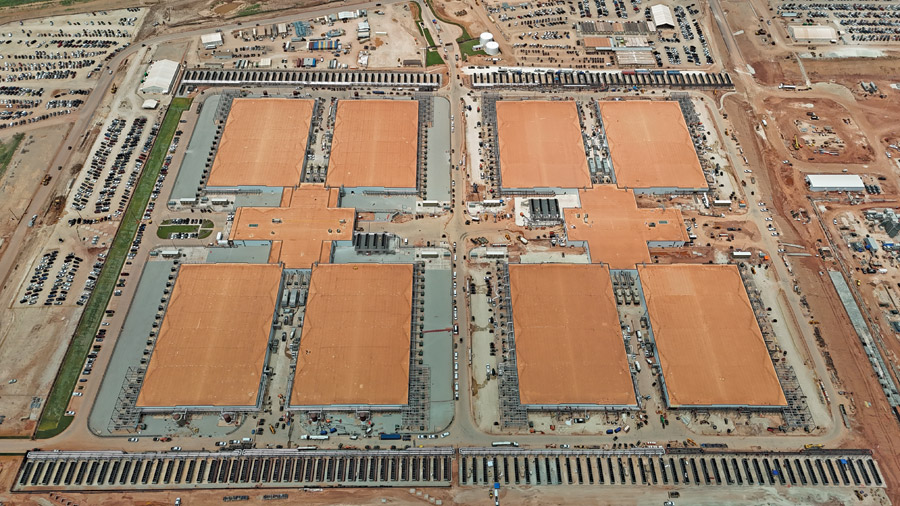
In Abilene, Texas, eight H-shaped data center buildings are being brought online across a construction site of roughly 1,000 acres. The campus is the first large site under OpenAI’s Stargate plan. Total planned capacity is 1.2 gigawatts. The first two buildings are already online, while the rest are still under construction.
Oracle is operating the site, and the developer behind it is Crusoe, a company that began in bitcoin mining. Crusoe co-founder Chase Lochmiller was previously a partner at crypto fund Polychain Capital. In 2018, he and childhood friend Cully Cavness noticed that U.S. oil fields were burning off large volumes of stranded natural gas that could not be transported. They moved generators and mining machines to the wellhead and used gas that would otherwise have been wasted to mine bitcoin.
The business logic was straightforward: find power in remote places, then convert that power into compute as quickly as possible. Seven years later, the customer had changed from the bitcoin network to OpenAI. In 2025, Crusoe sold its bitcoin business, including more than 425 modular data centers, to NYDIG and focused on AI.
On the surface, that looks like a dramatic reinvention. At the operating level, the core skill set stayed much the same: secure power, build data centers, run and maintain them.
Crusoe is far from alone. A wider group of companies and founders have made the move from crypto to AI. They do not come from one firm, and there is no formal network binding them together. What links them is a common inheritance from the previous crypto cycle:
- power access, land and grid interconnection permits assembled by miners;
- engineers and founders trained inside crypto companies;
- capital accumulated during the last bull market.
After 2022, all three started flowing into AI at the same time.
What miners sell to AI is not mining rigs. It is electricity.
In 2019, Bitmain co-founder Jihan Wu wrote in an essay titled The Beauty of Computing Power that “the biggest contradiction in humanity’s future is the growing demand for data processing and the limited supply of computing power.” He said that was why Bitmain was investing in AI chips. At the time, the line could be read as corporate messaging. Six years later, it reads more like an early call.
In February 2026, Bitdeer, the mining company associated with Wu, said it had liquidated all of its bitcoin holdings to provide liquidity for AI data center construction. The shift from crypto to AI was presented without much ambiguity.
Mining companies moving into AI are often described as if they were simply turning mining rigs into AI servers. That is not what is happening. Most bitcoin mining hardware uses ASIC chips built for a specific hashing function and cannot train large models. Even GPUs left over from Ethereum mining are difficult to fit directly into today’s large AI clusters, which demand specific networking, memory, liquid cooling and reliability standards.
The part that matters is the grid-connected data center footprint. In building an AI data center, the hardest step is often not buying GPUs. It is securing hundreds of megawatts of stable power, along with land, substations, transmission lines and the permits needed to build. That process can take years. Miners spent the past several years doing much of that work already across North America, Northern Europe and the Middle East, driven by the need to lower mining costs and stay compliant.
Once mining margins weakened and AI companies proved willing to sign high-value long-term contracts, switching customers became a logical next step.
CoreWeave was one of the earliest companies to complete that transition. In 2016, three commodities traders placed a GPU on a pool table in their Manhattan office and started mining Ethereum. After the crypto winter hit, they bought large quantities of used graphics cards at depressed prices, then expanded into rendering for film and machine learning. The company originally operated as Atlantic Crypto before rebranding as CoreWeave. Its listing documents show that before 2022, most of its revenue still came from crypto mining. That business was later shut down completely.
Today, CoreWeave is a leading AI cloud company backed by Nvidia, and its trajectory is now being repeated across the mining sector.
In 2026, TeraWulf signed a data center lease with Anthropic covering about 401 megawatts over 20 years, with an initial contract value of roughly $19 billion. Cipher Mining signed a 15-year agreement with AWS for 300 megawatts, worth about $5.5 billion. Core Scientific committed large blocks of data center capacity to CoreWeave under long-term arrangements.
Hut 8 signed two separate 15-year leases at its Beacon Point campus in Texas, each with a base contract value of about $9.8 billion. After striking a $9.7 billion cloud services deal with Microsoft, IREN disclosed another $2.8 billion in new contracts in July 2026.
According to CoinShares, listed mining companies had announced more than $70 billion in AI and high-performance computing contracts as of the first quarter of 2026. At the same time, bitcoin mining revenue per unit of hash rate had fallen at one point to around $30 to $35 per PH/s per day, leaving some sites with older equipment or higher power costs close to unprofitable.
Miners did not leave the compute business. They changed their role inside it, from crypto-era compute facilities to AI-era compute infrastructure.
From OpenSea to OpenRouter
The migration is not limited to mining companies. People from crypto have been moving into AI as well.
Alex Atallah, co-founder and former CTO of OpenSea, left the company in July 2022 after the NFT marketplace had at one point handled more than $4 billion in monthly trading volume. In 2023, he launched OpenRouter.
OpenRouter addresses a clear problem. As the number of large models keeps growing, pricing, speed and capabilities vary widely, and developers do not want to integrate with every model company one by one. Through OpenRouter, they connect to one interface, access hundreds of models and route requests automatically based on price, performance and availability.
In 2025, OpenRouter raised a combined $40 million at a valuation of about $500 million. In May 2026, it added a $113 million Series B led by CapitalG, lifting its valuation to roughly $1.3 billion. Over the prior six months, the platform’s weekly token volume rose from 5 trillion to 25 trillion.
OpenRouter is not the same business as OpenSea, but the market structure is similar. OpenSea aggregated buyers and sellers of NFTs. OpenRouter aggregates model providers, compute suppliers and developers. One brokered digital asset trades; the other brokers inference requests. The product changed. The ability to build a market and organize fragmented supply did not.

Some crypto traces are still visible in the product itself. On OpenRouter’s signup page, MetaMask still sits alongside Google and GitHub login options, and the platform accepts USDC payments.
Fal.ai offers another example. Founder Burkay Gur previously worked on machine learning infrastructure at Coinbase. When he started the company in 2021, the focus was machine learning data pipelines and deployment tools. After Stable Diffusion was open-sourced, the team saw that image and video models were multiplying while inference remained slow, deployment was cumbersome and GPU utilization was poor. Fal.ai then shifted its focus to generative media inference.
The change paid off quickly. By mid-2025, Fal.ai had reached annualized revenue close to $95 million. In December that year, it raised a $140 million Series D led by Sequoia at a $4.5 billion valuation. Adobe, Canva and Perplexity were among the companies using its generative media infrastructure.
Crypto capital also found its way into AI
Mining companies supplied AI with power and data centers. Capital accumulated during the crypto cycle entered by a different route.
Jed McCaleb is one of the clearest cases. He founded crypto exchange Mt.Gox and later co-founded Ripple and Stellar, making him one of the earliest billionaires in crypto. In 2023, Navigation Fund, backed by McCaleb, spent about $500 million to buy 24,000 Nvidia H100 GPUs in a single move and created Voltage Park, which rents GPU capacity to AI companies and research institutions.
Rather than launching another blockchain, he converted crypto wealth into what had become one of AI’s scarcest assets. In 2026, Voltage Park merged with AI development platform Lightning AI. The transaction implied a valuation of about $2.5 billion for the combined entity. Wealth built during the previous crypto cycle had been transformed into the balance sheet of an AI cloud company.
The portfolio left behind by Sam Bankman-Fried, or SBF, produced an even more dramatic example.
In 2022, SBF invested $500 million in Anthropic when the company was still relatively unknown, taking a stake of about 13.5%. After FTX collapsed, the bankruptcy estate sold those shares in tranches during 2024 and recovered about $1.3 billion. Anthropic is now valued at $96.5 billion post-money. Had FTX not sold, its stake would likely have been around 6.7%, worth about $6.5 billion, roughly 130 times the original $500 million investment.
The Cursor story is more extreme. In April 2022, Alameda, SBF’s trading firm, put $200,000 into an early round for Anysphere, the company that later released the AI coding tool Cursor. After FTX entered bankruptcy, the estate sold that stake in April 2023 for the same $200,000, essentially getting out at cost.
In June 2026, SpaceX announced an all-stock acquisition of Anysphere valued at $60 billion. Based on public reporting, Alameda’s original ownership was about 5%. Ignoring later dilution from subsequent fundraising, that stake would have had a paper value of $3 billion, or 15,000 times the initial $200,000 investment.
These outcomes do not need to be read as proof that SBF was an investing genius. A closer reading is that before ChatGPT was released, some of the most aggressive and risk-tolerant capital from the crypto bull market had already begun looking for AI projects.
During crypto’s boom years, a great deal of capital operated on two beliefs: computing power would become more valuable over time, and software networks could scale globally very quickly. AI happened to fit both assumptions at once. So when crypto money entered AI, it funded more than hardware. It also financed new technical bets and organizational experiments.
Crypto brought an experimental mindset into AI as well
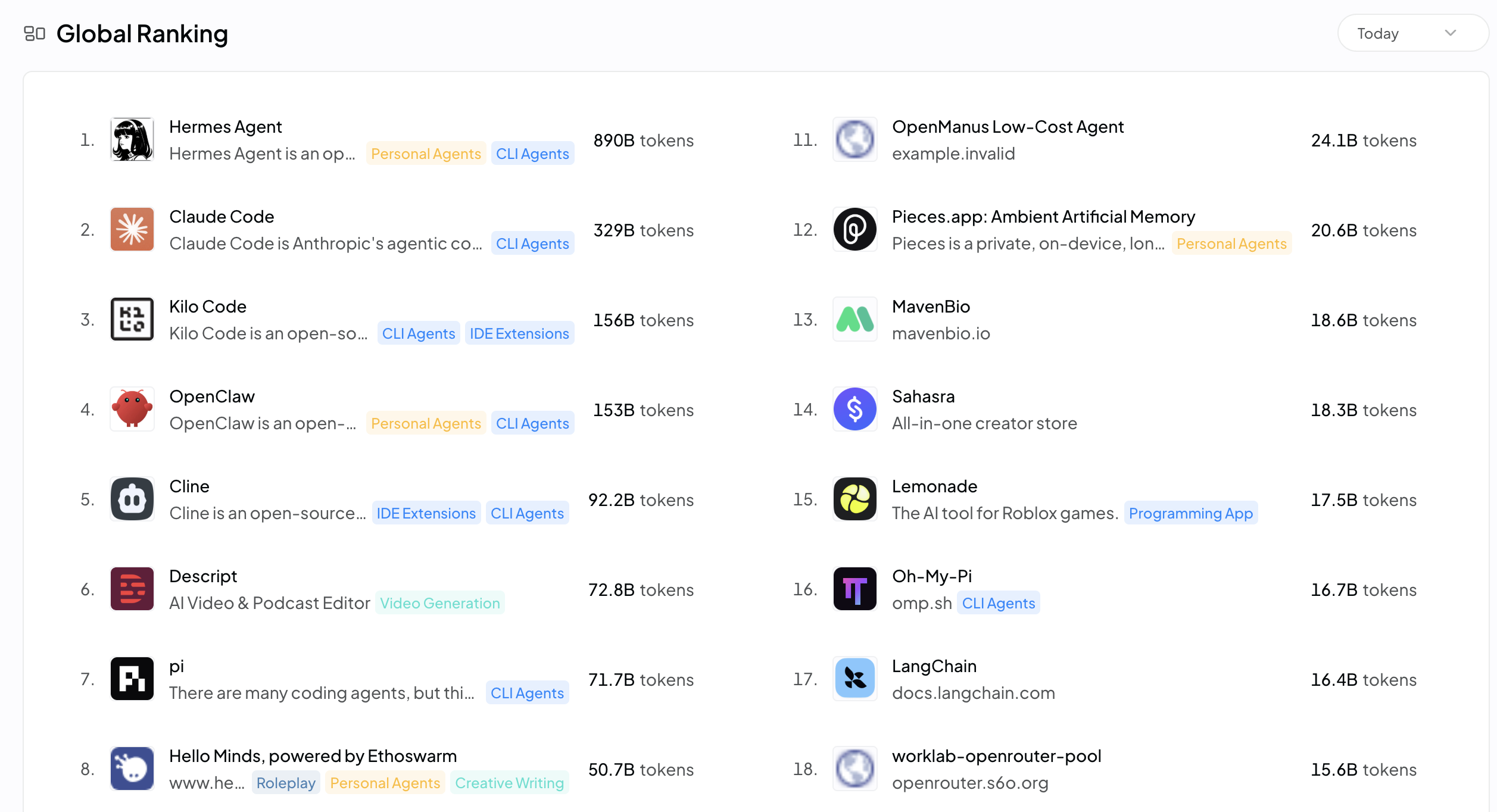
Nous Research is one example. Its Hermes Agent is an open-source AI agent designed to accumulate long-term memory and generate skills automatically. According to OpenRouter statistics, Hermes Agent ranks first globally in token call volume, ahead of Claude Code.
In 2025, crypto investment firm Paradigm led Nous Research’s $50 million Series A. Reporting at the time said the round implied a roughly $1 billion valuation for a token that had not yet been issued. Earlier backers included crypto VC Distributed Global and former Coinbase CTO Balaji Srinivasan.
Nous is also building Psyche, a distributed model training network on Solana. Traditional AI labs typically gather large numbers of GPUs in a single data center. Psyche is testing a different route: connect GPUs spread across regions and owned by different participants, train models collectively, and use smart contracts to coordinate training progress, verify participants and distribute rewards.
For now, Psyche remains experimental, and the project has explicitly labeled its testnet token as having no economic value. Even so, it shows another way crypto capital can shape AI once it enters the sector.
OpenAI itself seriously considered a related direction in its early years. The company was founded in 2015 as a nonprofit, but the capital required for frontier models quickly outgrew what a donation-based structure could support. By the end of 2017, Sam Altman and Greg Brockman were already discussing alternative funding structures, and one option on the table was an ICO.
Internal emails released later show that the team seriously examined a token issuance in early 2018. Elon Musk opposed the idea directly, arguing that an ICO would badly damage OpenAI’s credibility. OpenAI later said that by the end of that January, the team itself had begun losing interest in the plan.
OpenAI eventually chose to set up a for-profit entity and later secured major backing from Microsoft. Altman, however, did not leave crypto behind. In 2019, he co-founded Worldcoin with Alex Blania and Max Novendstern. The project uses an iris-scanning device called Orb to verify that a user is a real and unique human, then builds identity and payment rails through World ID and the WLD token.
AI inherited the usable residue of the last crypto cycle
Cases such as Crusoe, CoreWeave, OpenRouter, Fal.ai and Nous Research carry obvious survivor bias. They do not prove that crypto companies have better odds of succeeding when they pivot to AI.
They do show something concrete. Mining companies accumulated power, land and interconnection rights. Exchanges and Web3 firms produced engineers familiar with distributed systems, GPU scheduling and global products. Wealth created by rising tokens was later redeployed to buy GPUs, invest in model companies and fund technical experiments.
Crypto did not magically become AI. It supplied the resources left over from the previous cycle to the next industry that needed them more.