
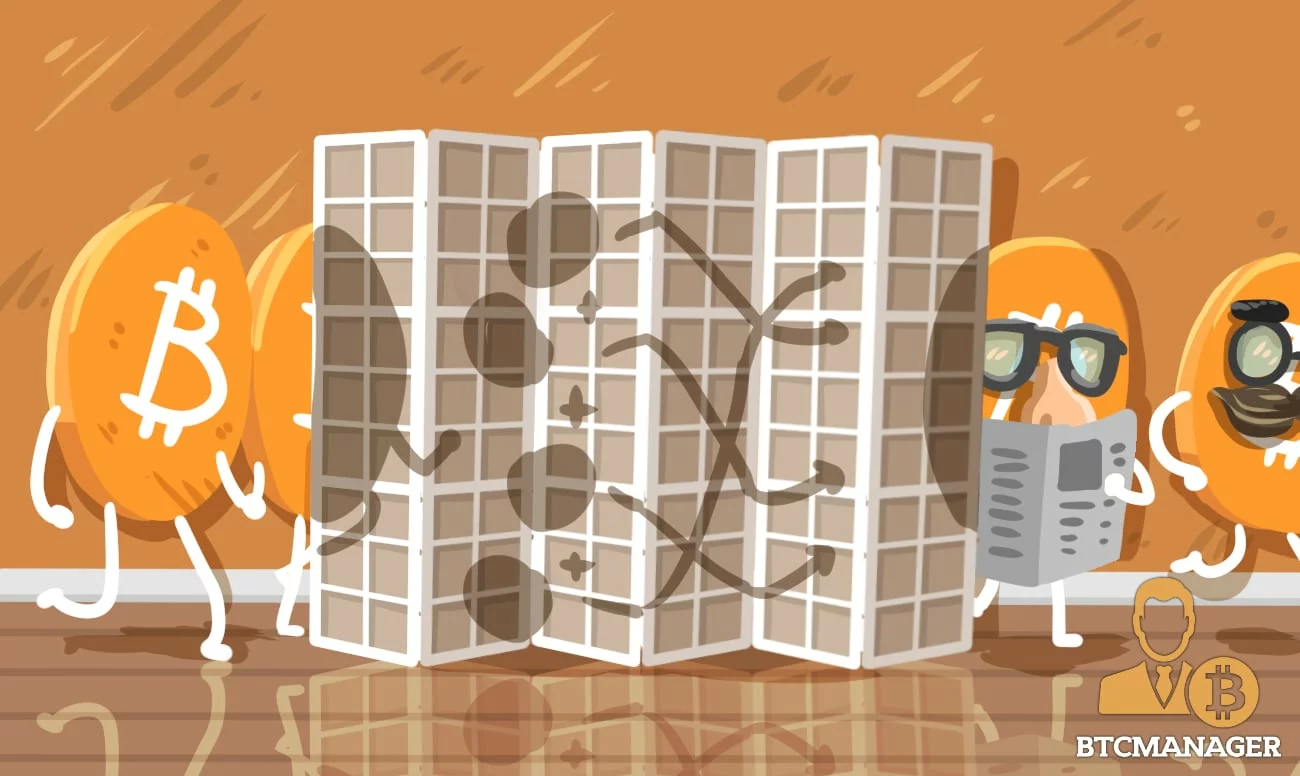
JoinMarket is built around CoinJoin, but its pitch goes beyond simple transaction mixing. The project aims at four persistent Bitcoin issues at once: privacy, fungibility, transaction costs, and scalability. Its main idea is that CoinJoin did not spread widely because participation was hard to coordinate, so JoinMarket turns that coordination problem into a market.
CoinJoin obscures links between inputs and outputs
CoinJoin, proposed by former Blockstream CTO Gregory Maxwell, combines inputs from multiple users into one shared transaction with multiple outputs. That structure makes it difficult to tell which output belongs to which input, which improves transaction privacy compared with ordinary on-chain transfers.
Still, the privacy is limited rather than absolute. The source material notes that if analytics firms have enough data from exchanges and merchant services, they can run statistical correlation analysis based on coin values and identify participants. One limitation stands out: CoinJoin does not hide the transaction amount.
Lower fees and better block-space efficiency are part of the appeal
Privacy is only one side of the case for CoinJoin. Participants can split fees according to transaction size or simply divide costs by the number of users in the join, which can make the transfer cheaper for each participant. There is also a scalability angle. A single CoinJoin transaction can occupy less block space than the total space required if all of those transfers were broadcast separately.
The problem is participation. CoinJoin needs multiple people with the right coins, available at the right time, in the right amounts. As the quoted description puts it, this is not a software problem or a tech problem. It is an economic problem.
Why fungibility matters for Bitcoin
Fungibility describes whether one unit of an asset is interchangeable with another unit of the same asset. The article uses the example of a dollar bill: one dollar is treated as one dollar, and people usually care whether it is genuine, not the path it took before reaching them. Cash behaves like an instrument with no visible history.
Bitcoin works differently because its transactions sit on a public ledger. Anyone with a public address can inspect related transaction history. That transparency can lead to distinctions between coins based on where they came from, even though a bitcoin is supposed to be just a bitcoin. The article points to a Bitcointalk example where user “binford 6100” offered two bitcoins for one bitcoin traceable to the famous pizza transaction, highlighting the tension around fungibility.
JoinMarket creates incentives for always-available counterparties
According to JoinMarket founder Chris Belcher, CoinJoin failed to gain broad traction because participants lacked incentives. JoinMarket addresses that by creating a market that allocates the needed resources instead of relying on ad hoc coordination.
The model has two main roles. A maker provides liquidity and can earn income on their bitcoins, or wait rather than paying fees themselves. A taker initiates a CoinJoin whenever needed, either for privacy or for lower fees, and pays the maker. That changes CoinJoin from a coordination headache into a standing market with quoted liquidity.
Private keys stay local and no custodian is required
The article describes JoinMarket as trustable because it uses self-enforcing, self-executing smart contracts, while participants’ private keys never leave their own systems. In the worst case, if one participant fails to complete their part, the transaction simply does not happen. Funds are not handed over to a central escrow party.
Within that design, liquidity and fees are balanced by the market itself, and mixing happens without escrow or custodial intermediaries. Monero’s Riccardo Spagni is quoted saying he would continue to promote JoinMarket as the best CoinJoin implementation and the best mix of trustlessness, privacy, ease of use, and liquidity for Bitcoin users who do not want to rely on altcoins, OTC trades, or mining.