

Memecoin trading has swung back into focus in 2026, and the tone described by Route 2 FI is one of sharply improving risk appetite. After a long stretch of bear-market quiet, the frenzy has returned. The activity is no longer limited to Solana. It has also shown up on Robinhood Chain, a Layer 2 blockchain that has been live for just two months.
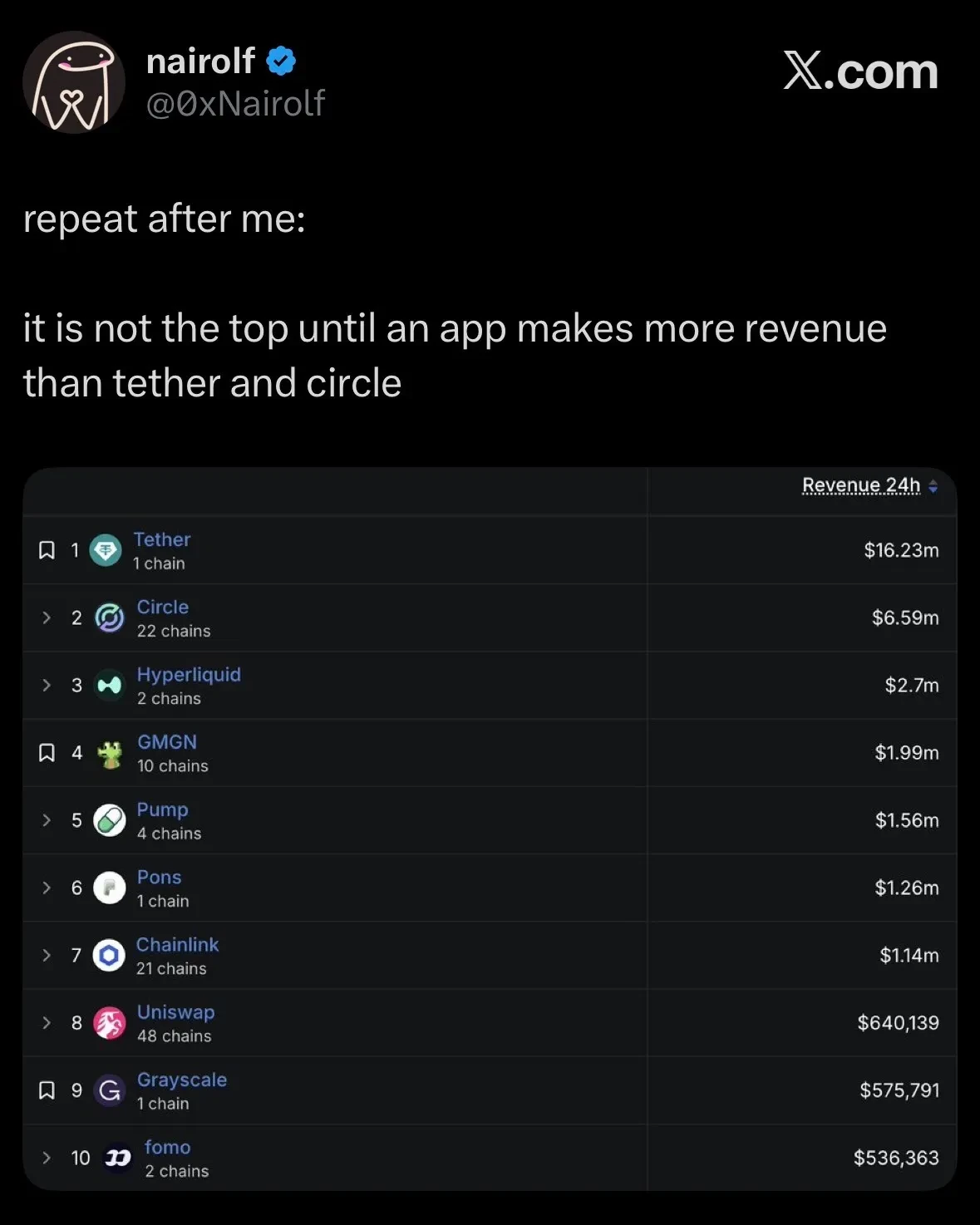
The article says Robinhood Chain is seeing more than just speculative token activity. It has already produced business models with real revenue. One example is Pons, the chain’s main token issuance platform, where users can launch and trade new tokens. Pons has already entered the crypto industry’s top 10 revenue rankings, behind only Pump.fun among token launch platforms. As platform revenue surged, the Pons token developed what the article calls a positive flywheel, and its market capitalization briefly moved above $900 million. Early holders booked outsized gains, turning it into a benchmark asset for the chain’s ecosystem and, in the author’s view, for the broader market as well.
Cashcat is described as the first memecoin from the chain to break out more broadly, while Pons lowered the barrier for ordinary users to issue memecoins of their own. After that, a wave of tokens posted eye-catching gains and drew some former market participants back into crypto, including people who had once declared the industry finished.
Still, the piece spends much of its time on the gap between what traders see online and what most of them actually capture. Screenshots of gains are everywhere, but the author argues that many of them do not reflect real profit that has been realized. Memecoin trading is presented as one of the most volatile forms of investing: a position can show 100x gains in the morning and then give back 99% by night. Retail traders often arrive late, while insiders, snipers, and early buyers have already secured much lower entries. Thin liquidity adds another problem. A large paper gain does not mean the money can actually be taken off the table.
The article’s main advice starts with planning. Seeing another person’s profit and buying on impulse is framed as the wrong way to begin. Traders need to know what kind of setup they are looking for, or they will drift from one trend to another and end up with little to show for it.
Pick a trading framework before chasing the market
The author argues that the memecoin sector is overcrowded and changes by the minute. Without clear control over where attention goes, traders get buried under noise. That is especially dangerous for beginners.
Several styles are outlined:
- Conviction traders: build around one clear thesis, size in heavily, and hold through a set time horizon while waiting for the narrative to play out.
- Follow traders: track the wallets of top traders, then investigate further when several of them buy the same token and use that research to form an independent view.
- Short-term in-and-out traders: enter very early in low-cap tokens, such as names at a $100,000 market cap, and take profit at preset targets. One example in the article is selling 50% after a token doubles and leaving the rest for a larger move.
- Single-chain specialists: focus on one blockchain where they have an information edge and scan new memecoin launches for asymmetric opportunities.
The article says experienced traders may combine styles, but beginners should not spread themselves across too many approaches. A narrower focus on one or two methods is described as the better starting point, with expansion only after experience and execution improve.
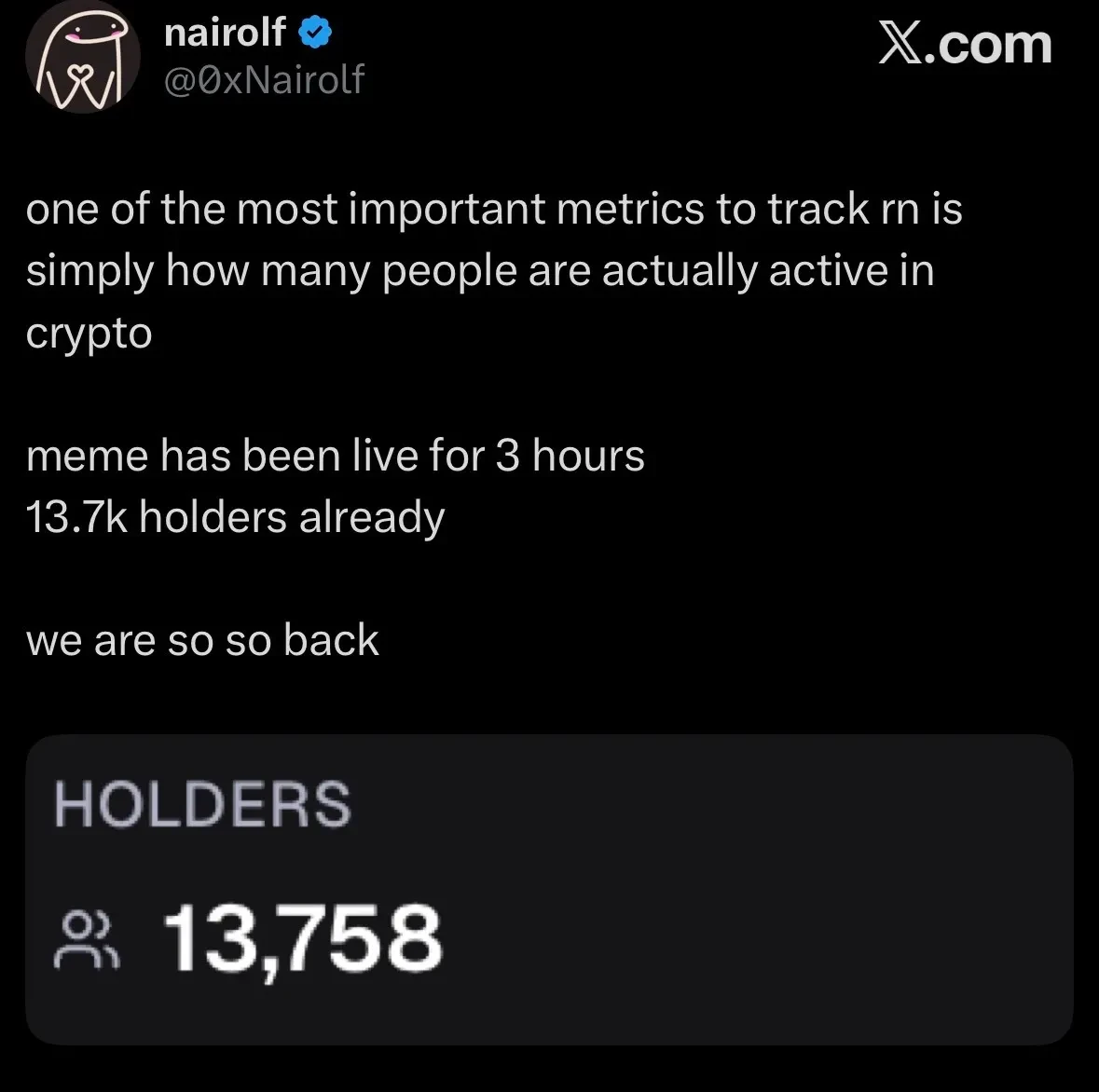
One of the author’s own early habits was keeping a full log of every trade, whether it ended in profit or loss. Each entry was meant to answer a set of questions: Why did the trade lose money? What was the core reason it worked when it worked? Under what condition should the position have been cut? What was the bullish case, and what risks would invalidate it? That journal, the piece argues, is one of the best ways to sharpen memecoin trading skill because it forces every trade to rest on logic instead of impulse.
The author also pushes back on the idea that frequent short-term trading is easier. For beginners, short-term activity without a clear framework is unlikely to produce stable gains. In some cases, holding an early high-quality token based on a well-formed view can outperform constant rotation through low-quality high-volatility names.
Social trading tools have changed access
The spread of copy trading has changed how memecoin traders operate. Traders no longer have to scan on-chain activity manually or handle every transaction detail from scratch. The article says some veterans still prefer the old methods, but new tools have made participation simpler and lowered the barrier to entry.
It focuses on two social trading apps: Pumpf.un and Fomo App.
Fomo App: easier execution, familiar mistakes
According to the article, anyone active in crypto recently has probably seen Fomo App screenshots posted across social media. The product gained traction by stripping friction out of memecoin trading. Gas fees, token approvals, and other steps are wrapped into a simpler interface so users can buy with a single tap.
Fomo App also allows direct token purchases with a bank card. The article says that feature helped it reach a broader audience. Its user base has now passed 500,000, placing it among the industry’s top 10 revenue-generating products.
What stands out more, in the author’s view, is that Fomo App opened up a market that used to be dominated by private circles. In earlier cycles, many of the traders making the biggest gains in memecoins operated inside closed groups. Now users can directly follow profitable traders, inspect the reasoning behind each trade, and copy a trade with one click if they agree with the setup.
The author’s own first experience with the app was messy. After downloading it, he followed roughly 20 large crypto personalities and then went back to X. Phone notifications started arriving one after another. The result was confusion, not clarity. He says he ended up turning notifications off because the flow of trade alerts made it impossible to decide what, if anything, was worth buying.
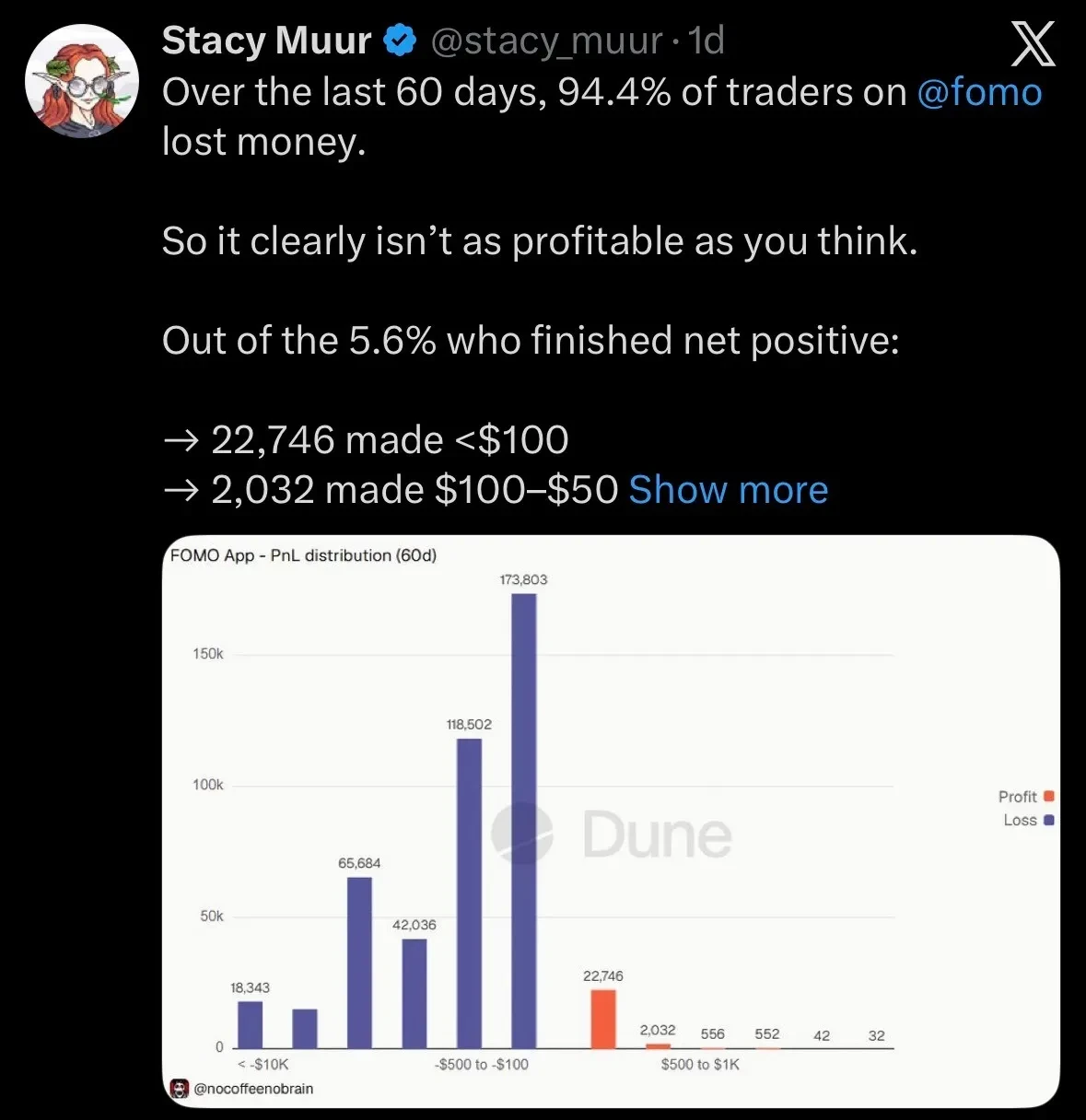
That experience leads into one of the article’s strongest warnings: screenshots of gains are only surface evidence. Beginners often make the mistake of opening the rankings page and following 20 top traders at once. Then the push alerts begin. Traders react emotionally, buy at random, and lose money.
The article cites platform data showing that only 0.25% of traders made more than $500 in profit over the past 60 days. In other words, the widely shared win screenshots do not reflect the actual distribution of gains.
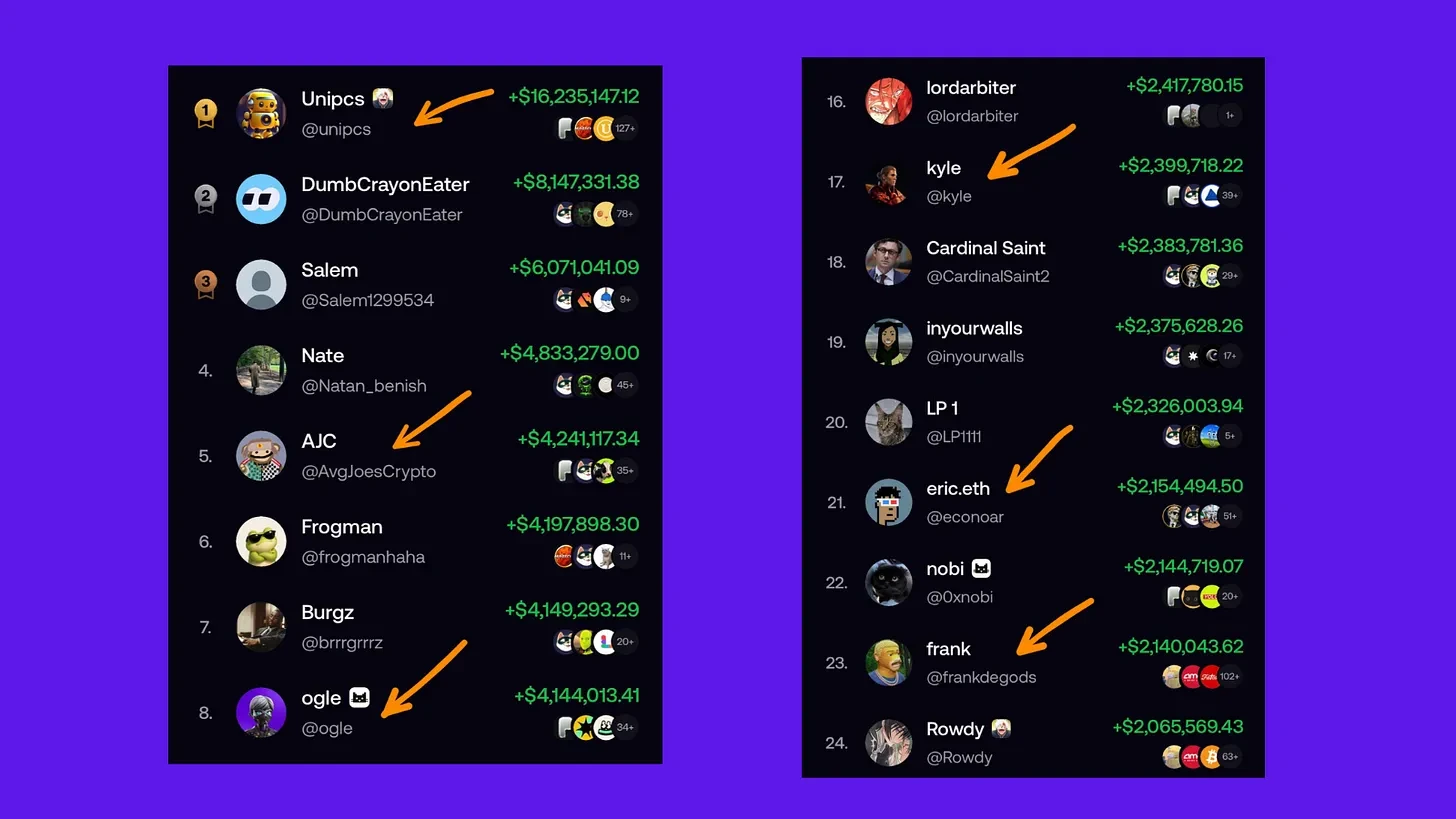
The author says he prefers to look at the 30-day rankings and all-time rankings rather than one-day surges or names on the seven-day leaderboard. The point of looking at rankings is not to mirror trades blindly. It is to study why certain traders keep identifying new narratives ahead of the crowd.
When choosing who to follow, the article recommends focusing on traders you already know and trust: people with a long public record of stable gains and a habit of laying out their reasoning in full. Those traders provide a framework that others can learn from. Even then, the author says attention has to be managed carefully. Following too many accounts creates noise. Five to seven high-quality accounts is the suggested ceiling.
One example is Kyle, described in the article as a well-known crypto trader with strong returns on Fomo App. Looking at his portfolio, the author notes that $PONS was his largest position. The app also lets users inspect his thesis on the token. After reviewing four core trades from Kyle, the author summarizes the strategy in two parts: build a large position early in the move and hold with conviction, while publishing a full bullish case so others can evaluate it.
Even with that clarity, copy trading is not simple. The article mentions another Fomo App trader, Rasmr, who has also shared practical guidance on identifying catalysts and selecting coins with real upside potential.
The bottom line is blunt. If the only edge a trader has is pressing the same one-click copy button as everyone else, the likely outcome is performance that looks like everyone else’s as well. To do better than the average follower, the trader has to act earlier.
From there, the article turns to automation. It says traders do not need to build systems from scratch because existing apps can already handle automated copy trading. This is not presented as a beginner tool. It is framed as an option for people who do not have time to stay up late watching alerts but still want exposure to memecoin trading. The setup is straightforward in principle: choose a top account to follow, search for the username, set the copy parameters, and let the strategy run.
The risk warning is clear too. In this setup, capital gains and losses depend almost entirely on the skill of the trader being followed.
Underused features inside Fomo App
The article also points to a few features beyond the rankings page.
The first is the hot trends board, which the author calls his favorite feature. It gives a direct view of the market’s most active narratives, offers a read on where momentum may be heading next, and shows where capital is clustering. He says he usually starts with the top 10 tokens on the board, then checks names that have fallen in the short term to see whether the drop has a specific reason and whether a rebound case exists.
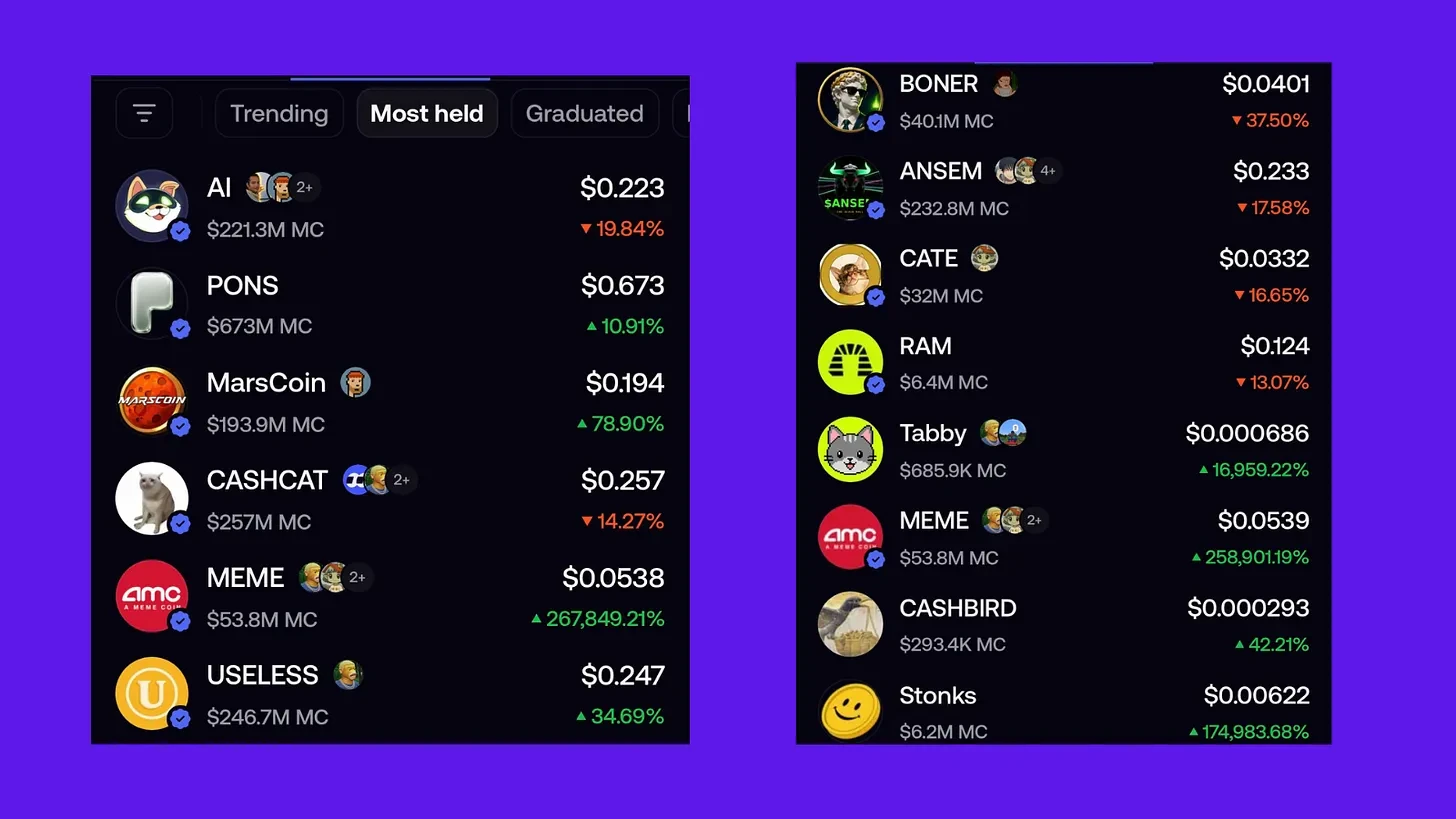
Another section is the hot tokens page, which highlights the coins drawing the most attention at the moment. The article says tokens with the highest holder count are usually larger in market cap because capital is already concentrated there. The hot page, by contrast, often includes smaller-cap names that are simply attracting attention that day but could later grow into the most widely held assets.
That is exactly why the author keeps watching the page closely. By studying the narrative around those tokens, he says, traders can sometimes identify future winners early. The underlying force behind price moves, in this telling, is community consensus built around a narrative.
Pump.fun: realized gains matter more
The article then turns to Pump.fun and says the basic logic for finding strong traders is similar to Fomo App. The difference is in the leaderboard design. Pump.fun separates rankings into total profit, realized profit, and unrealized profit, while Fomo App only counts unrealized gains.
Because of that, the author says he pays more attention to traders who repeatedly take profit and lock in gains. At the same time, he still studies traders with large unrealized profits to see how they build positions and where they tend to sell, using the same analytical approach applied on Fomo App.
Pump.fun also includes an extra incentive called Callout rewards. If a user likes a token, they can publish a recommendation post to all of their followers. The platform distributes Callout rewards every day and ties the payout to the amount of buy volume driven by that recommendation.
The article says 87% of users who received rewards had fewer than 250 followers, which suggests smaller accounts still have a meaningful chance to benefit.
There is one warning attached. Users should not spam token recommendations just to chase the incentive, because the campaign is governed by strict terms.
Tools matter less than discipline
The article closes by saying that anyone who has read this far is probably serious about going deeper into on-chain memecoin trading. Copy trading, in the author’s view, changed the way the previous memecoin bull cycle in 2024 was traded.
There are more tools that could be listed, but the author says traders do not need to bury themselves under too many dashboards and apps. He points to a remark from Smartestmoney, described as a top trader with annual income in the millions of dollars, who said he had never used TradingView. The point is not that tools are useless. It is that they are secondary.
The qualities that matter most are consistency, emotional control, and accumulated experience.