
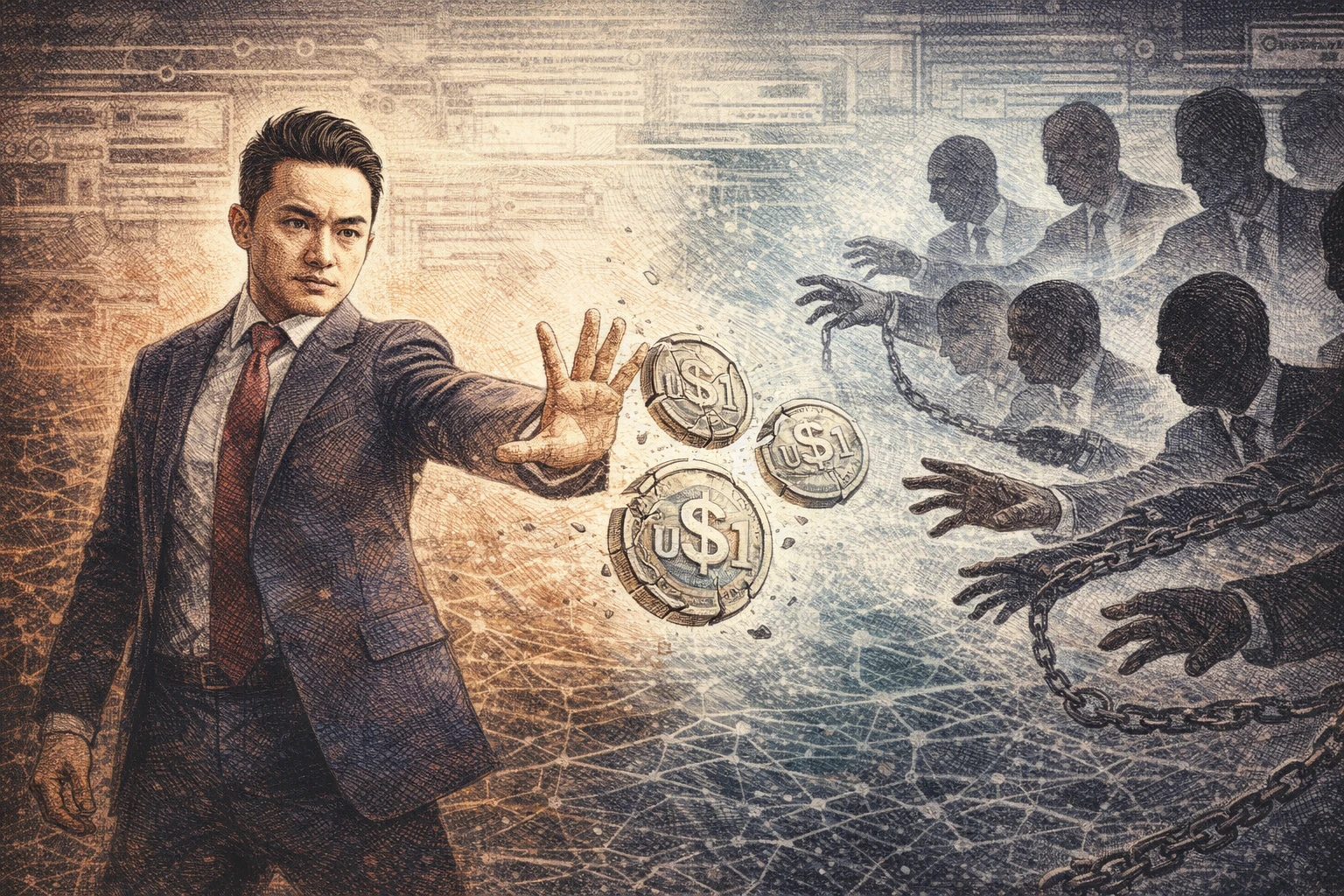
Prominent crypto exchange HTX announced on Saturday via X that it is delisting USD1, a stablecoin issued by the Trump-backed World Liberty Financial (WLFI). HTX accused WLFI of “unilaterally freezing specific HTX on-chain addresses for sanctions review,” claiming the freeze lacked “sufficient prior communication, adequate contractual or legal basis, transparent disclosure, or due process,” thereby infringing user rights.
The delisting took effect Sunday. HTX halted all USD1 deposits and redemptions, converting user holdings to Tether USDt at a 1:1 ratio. Trading pairs including WLFI/USDT, USD1/USDT, BTC/USD1, and ETH/USD1 were also suspended. The exchange framed the move as a protective measure against potential risks to user assets.
Freeze Timeline: Act First, Explain Later
HTX stated WLFI locked its on-chain addresses without advance warning, restricting circulation of WLFI-related assets tied to those addresses. WLFI responded on Wednesday via X, stating: “In light of recent sanctions updates, World Liberty maintains risk-based sanctions compliance controls,” without explicitly confirming the freeze. This “shoot-first” approach forced HTX into a defensive delisting.
Back Story: Legal Battles Between Justin Sun and WLFI
The tension predates the freeze. In April, Justin Sun—controller of HTX (formerly Huobi Global)—sued World Liberty, alleging the platform froze his tokens and threatened to burn them. WLFI countersued in May, accusing Sun of falsely claiming WLFI token sale terms were violated, involving transfer bans, short selling, and proxy purchases. Earlier this month, the UK sanctioned HTX on May 26 for allegedly supporting Russian financial services. HTX argued the sanctioned entity was “a different entity” and should not affect its operations.
The Power Play Behind USD1
USD1 is issued by World Liberty Financial, with Donald Trump and his sons Donald Jr., Eric, and Barron serving as advisors. This delisting incident underscores a deeper issue in the stablecoin market: even 1:1 dollar-pegged stablecoins rely on trust between issuers and exchanges for on-chain liquidity. When friction erupts, users bear the cost of disrupted swaps. HTX vowed to take actions to protect user rights, “including but not limited to pursuing legal remedies.”
The episode highlights an asymmetrical power dynamic among exchanges, issuers, and regulatory sanctions—with ordinary investors left absorbing liquidity risks. HTX's delisting is as much a commercial decision as a public protest against opaque on-chain control.