
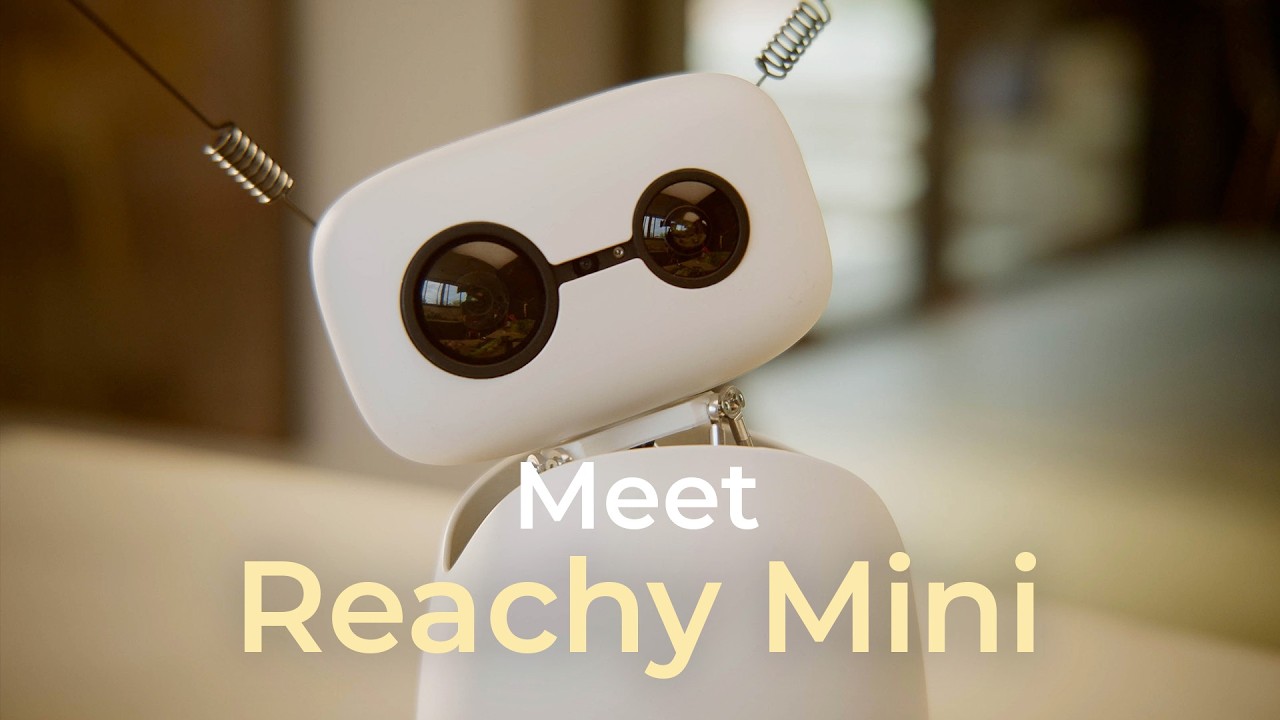
Hugging Face has officially launched the Reachy Mini App Store, featuring more than 200 free applications built by the community. The open-source desktop robot, starting at $299, has surpassed 10,000 cumulative units sold.
$299 Robot: Hardware is Just the Beginning
Reachy Mini comes in two variants: the Lite version at $299 with USB connectivity, and the Wireless version at $449 with a built-in Raspberry Pi CM4 and Wi-Fi. First introduced in July 2025, the robot is based on technology from Pollen Robotics, a French robotics company acquired by Hugging Face. To date, Reachy Mini has shipped roughly 10,000 units, with 3,000 sold in the past two weeks alone and another 1,000 expected to ship in the next 30 days. These numbers make it the most widely deployed open-source desktop robot in history.
What truly matters, however, is the ecosystem being built on top of these 10,000 hardware units.
Over 200 Apps Span Entertainment and Productivity
At launch, over 150 creators contributed more than 200 applications, all free of charge. The range is broader than Hugging Face expected: Emotional Damage Chess taunts opponents during gameplay, Reachy Phone Home detects when a user picks up their phone and tells them to get back to work, a language coach corrects foreign accents, and an F1 commentator app delivers live race updates. Each app generates real user-robot interaction data in real environments. For Hugging Face, the App Store is not just a distribution channel—it's a pipeline turning user behavior into training data.
AI Agent Demolishes Development Barriers
The core problem in robotics for 60 years has not been hardware cost but development complexity. Making a robot do something new requires understanding kinematics, sensor calibration, and low-level control logic—a barrier that keeps most creative minds out. Hugging Face removes this wall with an AI agent called “ML Intern.” Users simply describe the desired behavior in natural language (e.g., “wave when someone says good morning”), and the agent writes code, tests, and packages the app automatically. CEO Clément Delangue demonstrated the tool at Hugging Face's Miami office, building a receptionist app that identifies visitors in just two hours. He told VentureBeat, “Anyone can build the apps.” Every app on the store is hosted on Hugging Face Hub, can be forked, and can be simulated in a browser without owning a robot. The model layer is fully open, supporting GPT-5.5, Claude Opus 4.6, Kimmy 2.6, Mini Max GM5, Deep Sig V4 Pro, and real-time chat via OpenAI Realtime and Gemini Live.
App Store as Interface, Data as the Real Prize
Training data for robot AI is a structural challenge. Language models scrape the web, vision models use image databases, but robot manipulation data must come from real physical interactions. Past approaches relied on lab demonstrations (expensive, small scale) or synthetic data (limited generalization). Reachy Mini offers a third path: shifting data collection costs to users, turning them into contributors, and making each app's development and use a data node. Ten thousand robots running on desks, in classrooms, and in meeting rooms worldwide produce authentic operation logs from diverse environments, users, and tasks.