
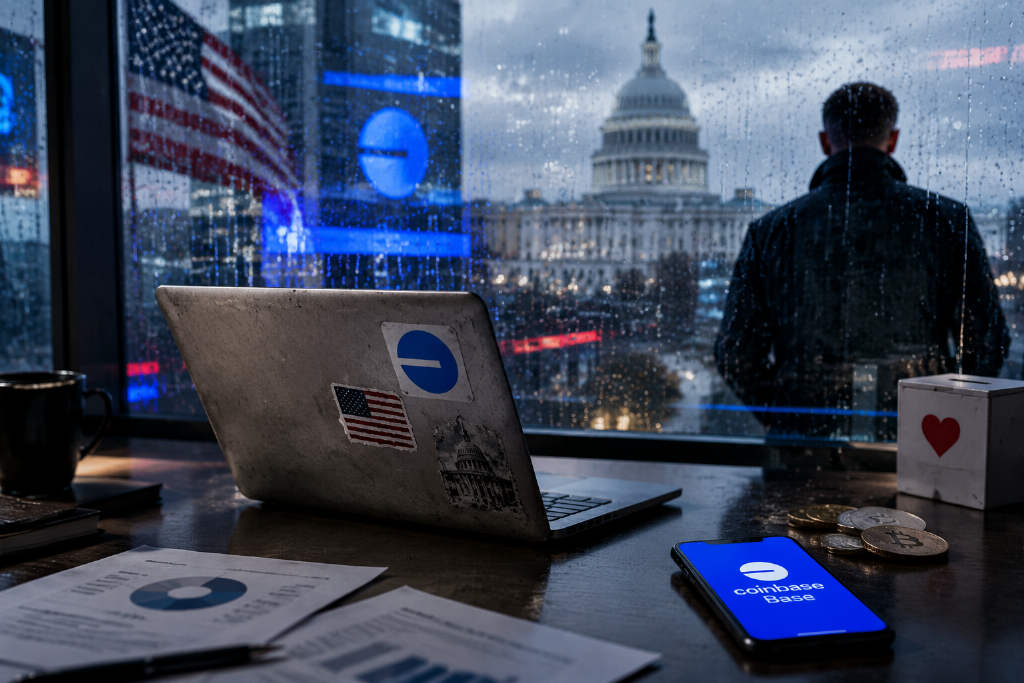
Hunter Biden has confirmed plans to launch the LAPTOP meme coin on Coinbase-backed Base on Sept. 9. The confirmation followed a Sept. 7 report by The Wall Street Journal.
Minutes after the report circulated, Hunter posted from a verified account, confirming the token name and launch date. He attached an image showing the laptop that has been repeatedly referenced in media coverage. The project website and the X account @Laptoptoken later published the Base contract address, and Hunter followed the account.
A token named after the laptop controversy
The LAPTOP name refers to a laptop Hunter left at a repair shop in Delaware in 2019. The FBI later seized the device, and material from its hard drive leaked before the 2020 U.S. election. Business dealings and financial records contained in that material became a central source of attacks against the Biden family over the following years.
Hunter has revisited the episode several times in recent years on Substack and social media. The new token turns the reference into a product name.
Hunter was convicted of a felony gun offense in 2024 and acknowledged tax allegations. He later received a full pardon from his father. He was also reported to owe about $17 million to a former law firm. Hunter has said that he entered the crypto industry because he was interested in the technology and wanted to make money. Some community users described the project as the direct assetization of a political scandal.
How the 1 billion tokens are allocated
According to the project’s official materials, LAPTOP has a total supply of 1 billion tokens:
- Founder allocation: 30%;
- Prediction mechanism: 30%;
- Initial airdrop: 10%;
- Future airdrops: 10%;
- Liquidity: 10%;
- Foundation treasury: 5%;
- Charity: 5%.
Thirty-five percent, or 350 million tokens, unlocks at the token generation event. This amount corresponds to the initial airdrop, future airdrops, liquidity and foundation treasury allocations.
The founder allocation, which includes Hunter’s own holdings, is locked for six months and then released linearly over 24 months. The 30% prediction allocation is tied to 30 political, crypto and cultural prediction markets from Polymarket. If a market settles as yes, the corresponding tokens are to be burned; if it settles as no, the tokens are to be donated to charity. This allocation is locked for 12 months and then released over another 24 months.
Of the 100 million tokens assigned to the initial airdrop, 20 million will be distributed through partner platforms to users who previously lost money on the TRUMP token. Another 80 million will go to users who subscribed to Hunter’s Substack column before Sept. 6. Unclaimed tokens will be burned after 30 days. The 100 million tokens reserved for future airdrops will be distributed at the discretion of the Phoenix Veritas Foundation.
The foundation has also signed lending agreements with market makers G20 and GSR. A combined 20.5 million LAPTOP tokens have been lent for market making. The project says these tokens are included in the liquidity allocation and do not represent an additional issuance.
Project materials say Hacken completed a security audit of the token contract in April 2026 and found no major vulnerabilities.
Written promises are not enforced by the contract
LAPTOP has no stated utility. The project describes it as a cultural digital collectible whose value is entirely driven by community sentiment. It offers no equity, governance rights or dividends. Its disclosure documents also state that there is no roadmap, that the token cannot be staked, and that the project has no buyback or price-floor arrangements.
ChainCatcher’s review of the contract address published on the website found that the entire 1 billion-token supply had already been minted in a single transaction. Holdings were highly concentrated. The top 10 addresses collectively held all of the tokens, while one treasury address held 800 million, or 80% of the total supply.
The treasury and the contract owner are controlled by the same three-person multisignature group. Two signatures are required for an action to take effect.
The contract uses the standard LayerZero Omnichain Fungible Token, or OFT, architecture. Its source code has been publicly verified and does not contain transaction taxes, blacklists, trading pauses or additional minting, which are common features in some exploitative token contracts. Cross-chain bridging is not currently enabled, although the contract owner can later open another route by configuring cross-chain permissions.
The lock-up periods, vesting plan, prediction-market burns and charitable donations highlighted on the website have not been written into the smart contract. Based on the current on-chain setup, they remain written commitments from the team rather than constraints enforced by code.
Copycat tokens emerge as traders remain cautious
Within an hour of the announcement, more than a dozen tokens with the same name appeared on Robinhood Chain, Solana, TON and BSC. Their combined trading volume reached several million dollars.
Data from GMGN showed that a popular copycat token on BSC briefly surpassed an $8 million market capitalization before falling back to around $6 million. Similar tokens on Robinhood, Solana and Base also retreated sharply from their highs.
At the same time, several previously popular meme coins recorded pullbacks of 9% to more than 20%. Bitcoin, Ether and SOL also experienced brief declines of about 0.7% to 1.2%.
According to the ChainCatcher report, traders remained visibly cautious, possibly because of the earlier TRUMP token experience. TRUMP was issued on Jan. 17, 2025, surged on its launch day and triggered market excitement. Its price later fell steadily, dropping from a high of $74.34 to $2.25. MELANIA, which was issued during the same period, has fallen 94%.
Bitcoin was trading near $100,000 when TRUMP launched. It then fell about 25% over 52 days. The full correction cycle lasted roughly 80 days, with a decline close to 29%. Many of the most popular Solana meme projects at the time also peaked around the TRUMP launch.
That history led some users to say they would wait after the LAPTOP announcement rather than chase the token higher.
Community views split as Base gains attention
Views in the crypto community have diverged. Some users said the brief decline following the announcement was mainly the result of information gaps and differences in market perception. In that view, one group of sellers was seeking to avoid a repeat of TRUMP, while another group of speculative buyers was trying to reproduce TRUMP’s wealth-creation effect.
Others argued that Hunter’s personal influence was limited. They also pointed to the early release of the contract address, which gave on-chain bots time to position ahead of other traders. Under this assessment, the launch may benefit a small group of participants, while ordinary users are more likely to buy at elevated prices.
On competition among public blockchains, crypto influencer Eden said Hunter had turned the laptop scandal into a personal brand. Eden also said that the current celebrity-token trend was moving from Solana to Base, reflecting a change in user habits. Regardless of LAPTOP’s eventual price, Eden said Base had already gained traffic from the event.
ChainCatcher’s report said the broad market view was that LAPTOP would not become the next TRUMP. It cited the discount attached to Hunter’s public image, the lack of value capture, concentrated holdings and mechanisms that remain off-chain as reasons. The report characterized LAPTOP as a short-window attention trade rather than a token experiment that could withstand long-term scrutiny.
Author: Zhou, ChainCatcher