
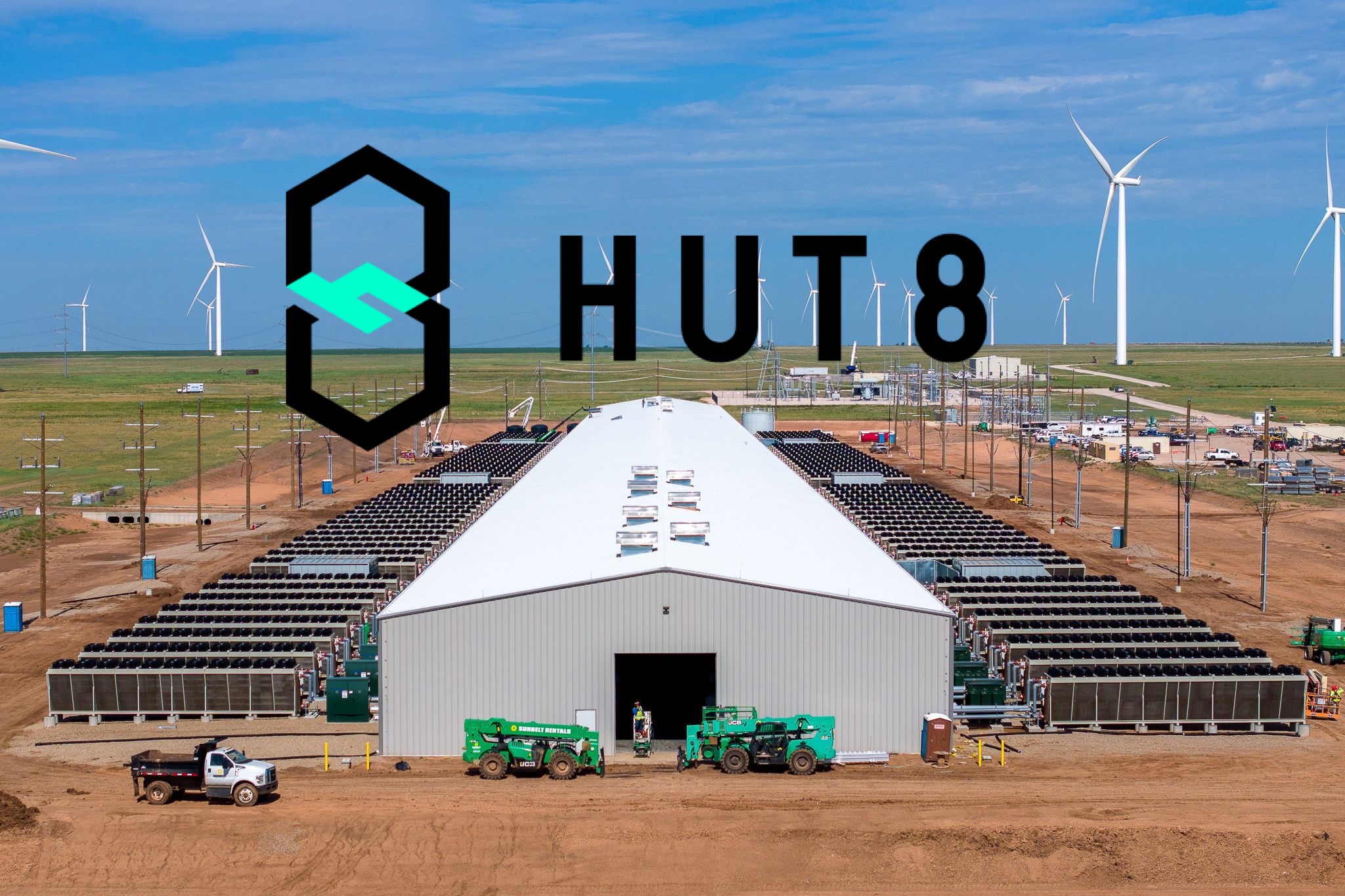
Bitcoin mining firm Hut 8 reported a $248 million net loss for fiscal 2025, but management dismissed concerns: $220 million stemmed from unrealized mark-to-market losses on its Bitcoin holdings, a non-cash accounting charge. Excluding that paper item, the underlying business improved.
Full-year revenue grew to $235 million, up 45% from $162 million, while gross margin widened to 54% from 47%. Fourth-quarter revenue hit $88.5 million, nearly triple the $31.7 million in the same period a year earlier. In contrast, 2024 had seen a $331 million net profit thanks to Bitcoin's book-value appreciation. Judging a Bitcoin-heavy miner by net loss alone, the company argued, is misleading.
Spinning Off Mining: Letting Two Businesses Stand Alone
Hut 8 made a pivotal move in 2025 – it spun off its Bitcoin mining operations into a newly formed entity called American Bitcoin Corp, co-founded with Eric Trump. The entity listed independently on Nasdaq, with Hut 8 retaining a majority stake. As of year-end, American Bitcoin held 3,865 BTC worth roughly $473 million; combined with Hut 8's cash and Bitcoin holdings, total liquidity stood at about $1.4 billion.
CEO Asher Genoot explained the rationale on the earnings call: Different businesses require different cost of capital. Bitcoin mining is a high-volatility, high-CapEx cyclical industry that draws narrative-driven investors. AI infrastructure is a long-duration, fixed-income asset class akin to real estate, attracting institutional capital seeking predictable cash flows. Mixing both on one balance sheet blurs the picture for investors.
Hut 8 can now be valued as an “AI data center developer,” no longer dragged by Bitcoin volatility. American Bitcoin operates as a pure-play BTC accumulation platform with an independent valuation.
$7 Billion Lease – But Data Center Won't Open Until 2027
In December 2025, Hut 8 signed a 15-year IT capacity lease worth $7 billion with Fluidstack for 245 megawatts of capacity at the River Bend project. The lease is financially backed by Google (which holds a ~14% stake), with AI firm Anthropic as the end user.
The lease is expected to contribute an average annual net operating income of $454 million. Including three 5-year renewal options, the total contract value could reach approximately $17.7 billion. Fluidstack also holds a right of first refusal to purchase up to 1,000 MW of future expansion at the site.
But the timeline matters: the first building at River Bend is scheduled to be completed and operational only in Q2 2027. That means this $7 billion contract will generate zero revenue throughout 2026. The financial story begins to materialize in 2027.
Management outlined four priorities for 2026: prudent use of equity, reducing enterprise risk, diversifying liquidity sources (including private markets), and maintaining a strong enough balance sheet to target investment-grade credit ratings.
Hut 8's 2025 report is effectively an “identity-change application.” The $248 million loss is a Bitcoin-shaped phantom; real operational improvement hides in the 45% revenue growth and 54% margin. The mining spin-off clarifies two distinct business logics, and the $7 billion lease turns an unbuilt data center into a bankable long-term contract backed by Google's credit. But none of that has generated actual AI data center cash flow yet. Q2 2027 is when Hut 8 must deliver on its promises. The market is willing to price a miner's pivot story early, but the test as a power-plant developer won't start until 2027.