
A single real-world trade worth less than $900 ended up shaking a perpetual market with open interest once measured in the hundreds of millions.
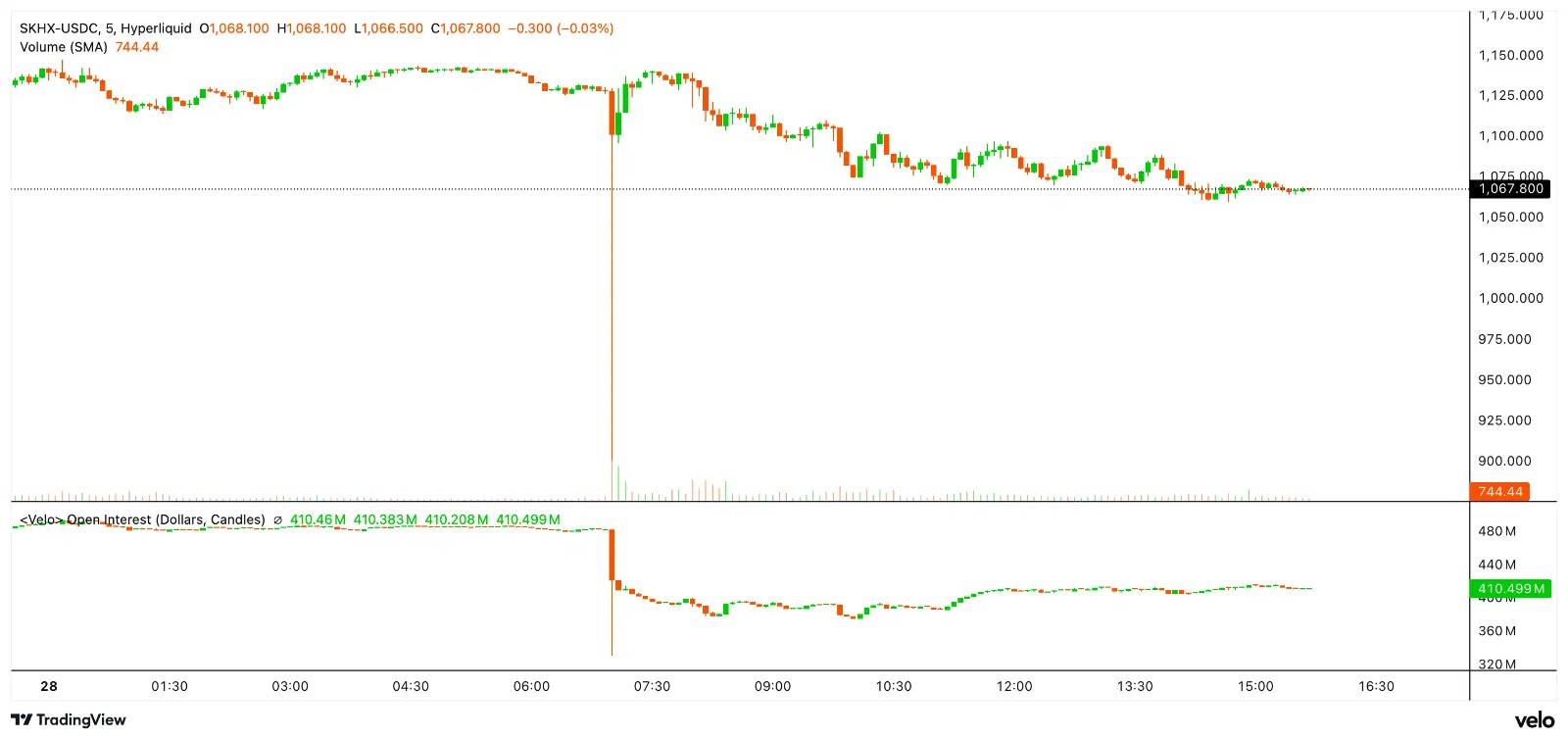
On the morning of July 28, one share of SK Hynix traded in South Korea’s pre-market session at KRW 1,272,000, or about $868. That print was later fed into TradeXYZ’s pricing system, and the SKHX perpetual contract dropped from $1,128.2 to as low as $927 within one minute. Fewer than three minutes later, hundreds of accounts had been taken over by the system. Over the next four hours, liquidation size rose to roughly $80 million.
How a one-share trade appeared in the Korean pre-market
The starting point was Nextrade, or NXT, an alternative trading system that operates outside the Korea Exchange, or KRX.
NXT uses continuous matching in the pre-market. If a bid is higher than an offer, the order is executed immediately. The venue still follows the price-limit structure used for Korean equities, with the upper and lower bands based on the previous KRX closing price at roughly 30%.
SK Hynix had closed the previous day at about KRW 1,816,000. A 30% downside move from that level, after adjusting for the stock’s minimum tick size, placed KRW 1,272,000 near the legal lower bound.
So the trade did not break market rules. The issue was depth. The article says NXT’s pre-market buy side was thin enough that a single low-priced sell order, matched for just one share, was enough to drag the last traded price down to the lower end of the allowed range.
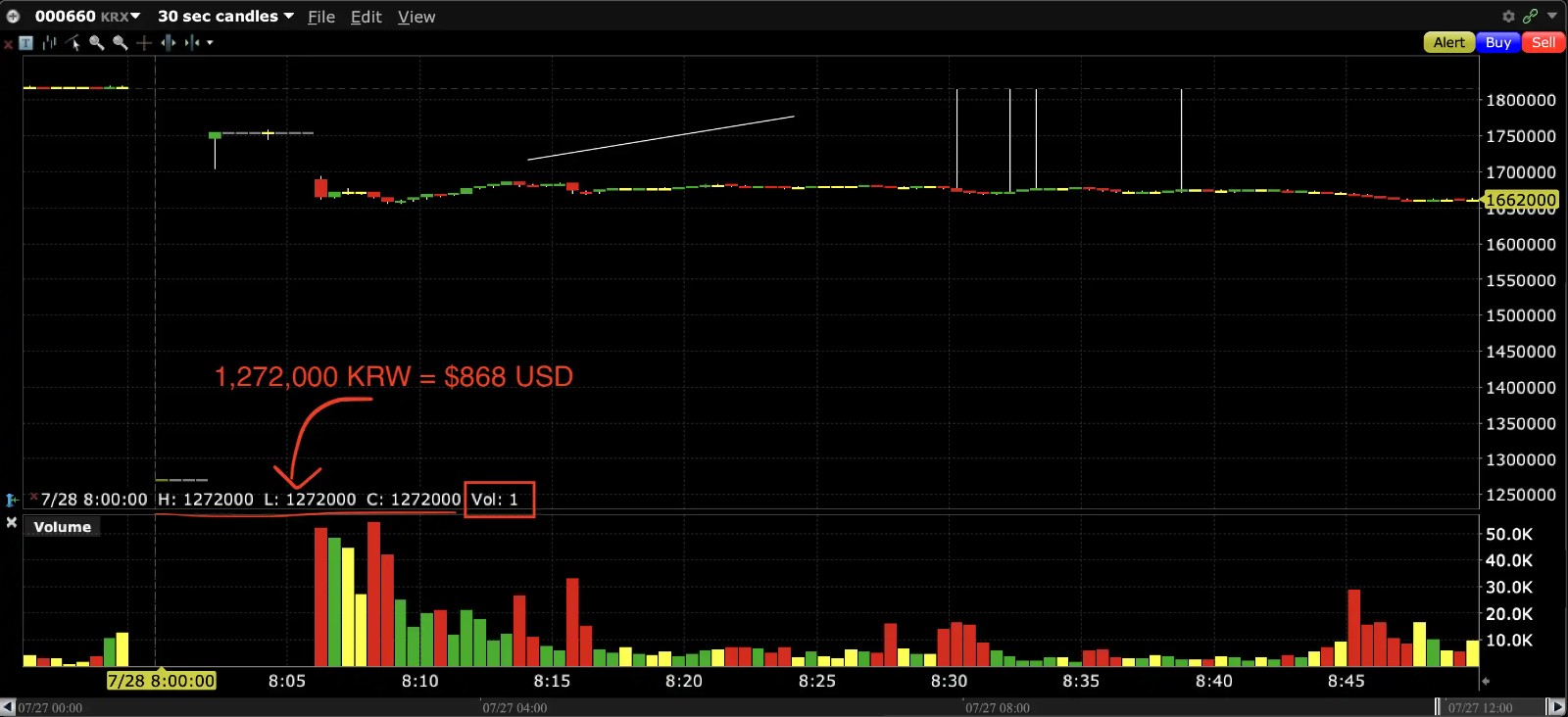
Whether the seller made a mistake, intended to push the price lower, or was simply willing to sell there remains unconfirmed, according to the report. For the liquidation chain that followed, the seller’s intent mattered less than the fact that the trade was real and fell within the permitted price band. That gave external market-data systems a basis to accept it.
How the print moved into the SKHX oracle and mark price
TradeXYZ’s own documentation says SKHX tracks the U.S. dollar value of one common share of SK Hynix. The formula is straightforward: take the KRW price of 000660.KS and divide it by the USDKRW exchange rate to derive the oracle price.
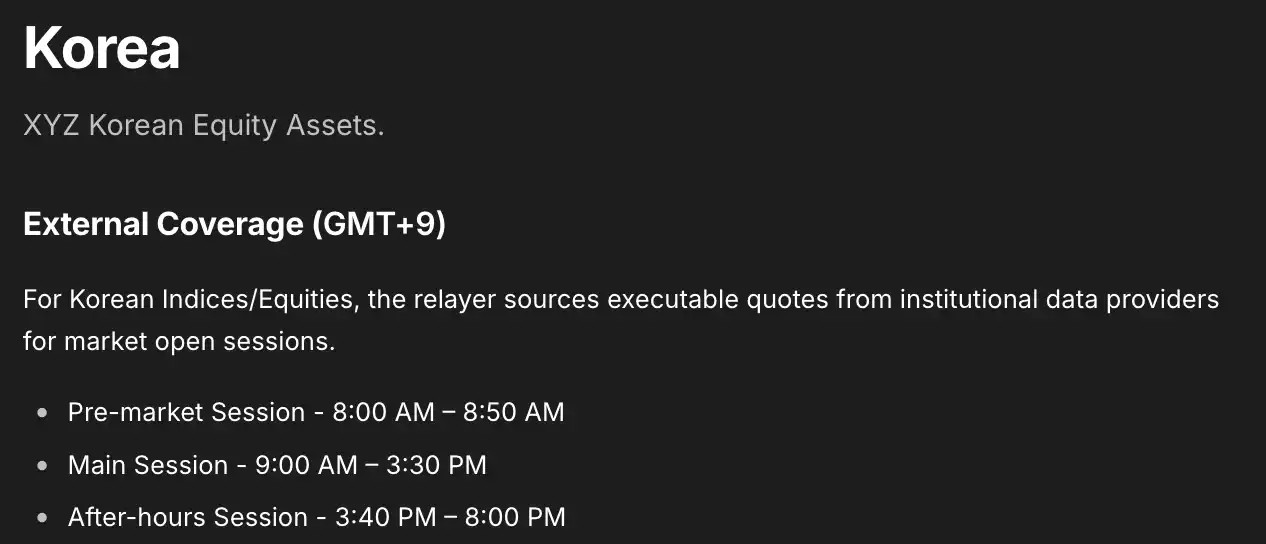
TradeXYZ separates Korean equities into periods that use external oracle feeds and periods that use internal pricing. From 8:00 a.m. to 8:50 a.m. Korea time, corresponding to 7:00 a.m. to 7:50 a.m. in Beijing, the platform uses external pre-market pricing. In other words, once NXT pre-market trading starts, TradeXYZ can receive executable quotes from an institutional data provider and use them as external inputs.
Before 7:00 a.m. Beijing time, SKHX was still in an internal pricing phase, with the oracle moving more gradually based mainly on the impact price of TradeXYZ’s own order book. At 7:00 a.m., the external feed resumed, and the oracle switched back to the outside market on the next update.
That handover happened right when the roughly $868 print was available.
According to on-chain records cited in the article, at 07:00:21.678, TradeXYZ’s oracle update component submitted a refresh to HyperCore showing an external price of $868.17 for SKHX, an oracle price of $908.21, and two mark-price components at $921.96 and $954.98.
The mark price is what users actually see and what the system actually uses. TradeXYZ takes the median of three values: the oracle price; the oracle price plus a 150-second EMA of the perpetual mid-price deviation from the oracle; and the median of best bid, best ask, and last trade from the order book.
That framework was meant to slow the transmission of abnormal prints by introducing order-book information and time smoothing. The weakness exposed here ran deeper: an external reference market can itself be thin and fragile.
During the 7:00 a.m. Beijing minute, SKHX opened at $1,128.2 and fell to a low of $927. Contract volume reached 40,978, with 7,501 trades recorded. The internal-pricing guardrail that limited price discovery to ±10% did not stop the move, because external pricing had already resumed and the system’s anchor had shifted to the new outside reference.
Liquidations moved from traders to a system account
The article breaks the liquidation figures into two views.
Based on HyperInsight’s address-by-address on-chain tally, SKHX liquidation notional reached about $79.398 million in a short period. Open interest fell from $481 million to $331 million, a drop of about $150 million.
The top three liquidated addresses accounted for $14.7754 million combined. Among them, the worst-hit address, beginning with 0x320, saw around $3.957 million liquidated and realized losses of about $2.045 million.
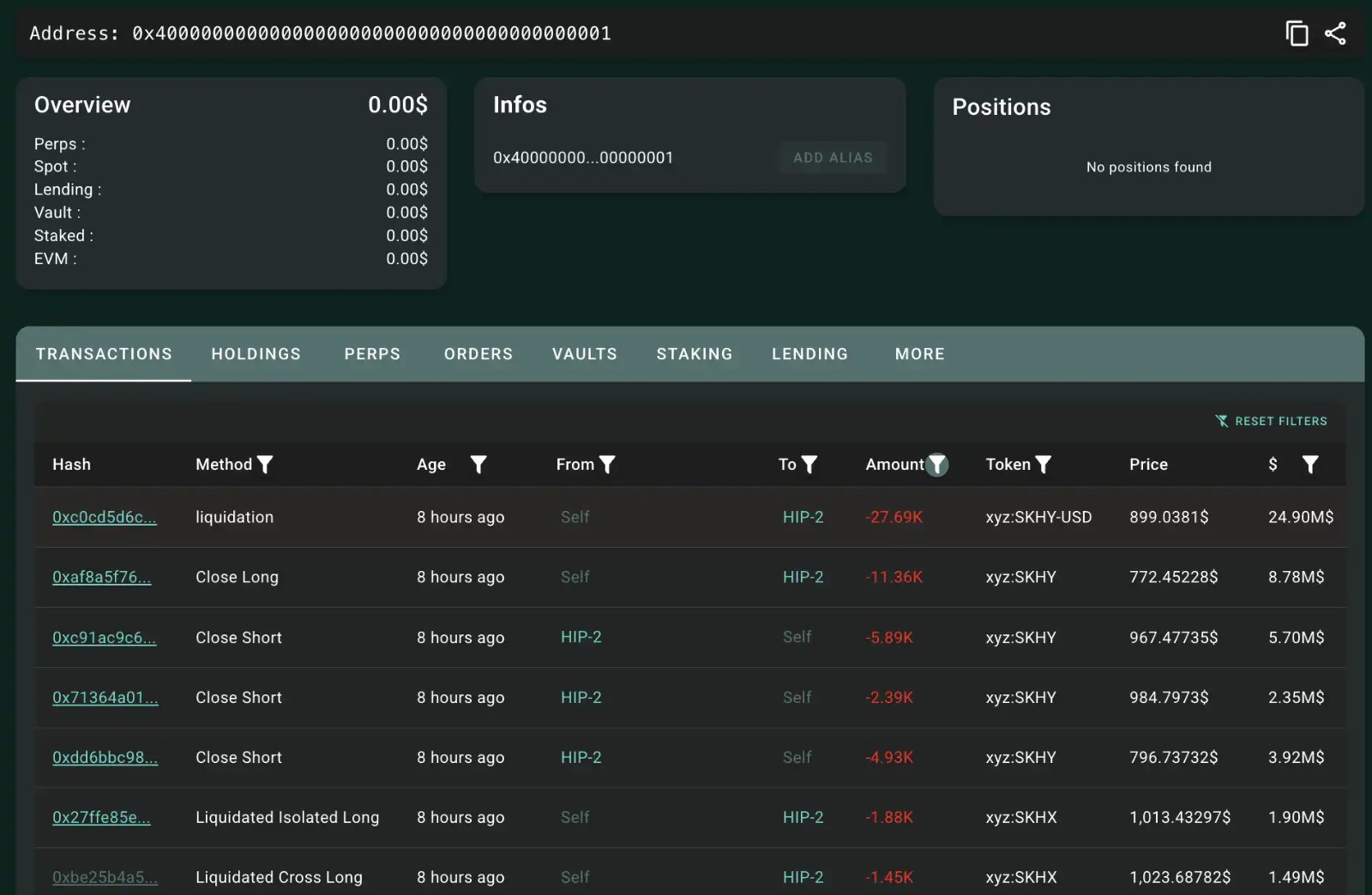
Roughly $26.26 million from the liquidation flow went to a special address: 0x4000000000000000000000000000000000000001.
Between 07:00:21 and 07:00:48, that address took over 406 long accounts, totaling 27,098.687 SKHX contracts at a weighted average price of about $969.05.
The article describes the usual liquidation path this way: forced-close orders are first sent into the order book. If market buyers can absorb the sales, positions are closed in the open market. If the book cannot absorb them fast enough and margin continues to deteriorate, the system has to move the remaining exposure elsewhere. In this case, 0x400...0001 served as the backup receiver and liquidation transfer account. It became long by necessity, not by choice.
That did not end the risk. As the price kept falling, on-chain records began listing 0x400...0001 itself as a liquidated account. A total of 26,560.549 long contracts entered the next liquidation wave from that address, representing about $24.7374 million in matched notional and a realized loss of $1.001 million.
The report also points to a documentation gap. TradeXYZ’s public page still says XYZ assets are not protected by the HLP Liquidator Vault and that there is currently no backup liquidator. Yet on-chain data labels these position transfers as backstop. For that reason, the article says 0x400...0001 should not be directly equated with the HLP vault. A more careful description is that it was a system backstop account invoked by HyperCore during the SKHX event. Public documentation has not explained how the current process relates to the older description.
Binance was hit by the same spot print but escaped most of the damage
The same Korean cash-market trade also affected Binance’s SK Hynix perpetual product, but the result was far lighter.
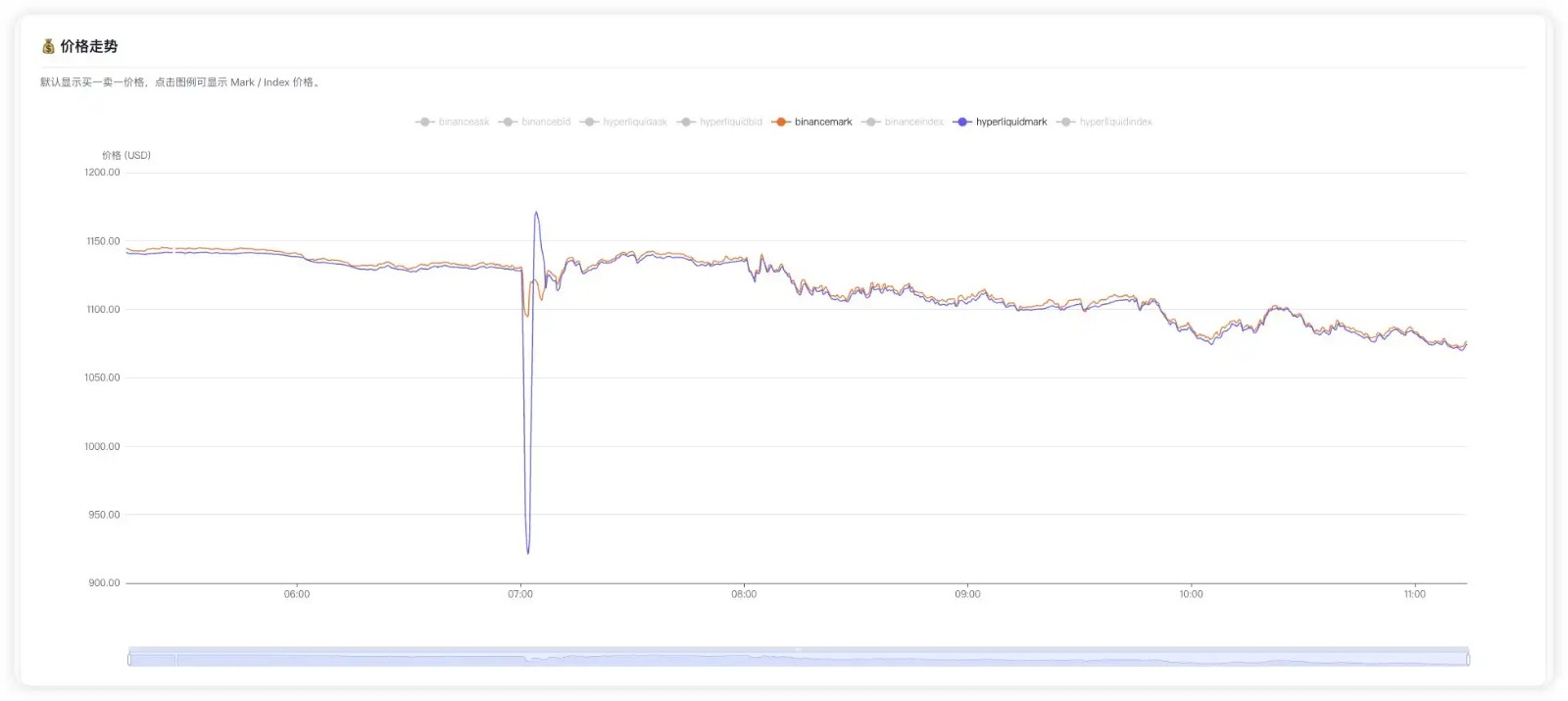
High-frequency trader Boywus compared the two mechanisms directly. At 7:00 a.m. Beijing time, Hyperliquid’s TradeXYZ had already switched into Korean pre-market external pricing. Binance was still using internal pricing at that moment and would not switch to the external market until around 8:00 a.m., near the opening of the Korean main session.
Binance documentation says stock perpetuals use an order-book impact mid-price while the external market is closed and smooth the index with EWMA. One of the stated goals is to reduce opening gaps and forced-liquidation risk during low-liquidity periods.
In the first minute after 7:00 a.m. Beijing time, the SKHYNIXUSDT index moved only from $1,132.49 to $1,130.66.
The article’s comparison is blunt: TradeXYZ accepted earlier price discovery at 7:00 a.m.; Binance gave up that hour of external pricing, lost some timeliness, and avoided sending the $868 print directly into its liquidation engine.
The report argues that this is not about centralized versus decentralized architecture. The difference comes down to when external prices take control, how smooth the transition is, and whether liquidation pricing has separate outlier protection.
Price discovery may have been correct, but liquidation design still came under scrutiny
One view outlined in the article is that TradeXYZ simply reflected the real market. KRW 1,272,000 did trade. The data provider did not misreport it. Each module of the trading system then passed the price on-chain according to pre-set rules. Seen from that angle, compensation is hard to justify under a clear rules-based framework.
But the article’s central point is different: correct price discovery does not automatically mean sound liquidation design.
Traditional markets have long separated the last traded price, the index price, and the fair price used for risk control. A mark price exists to stop one localized trade from deciding the fate of heavily leveraged accounts. In this case, even with medians, EMA smoothing, and update limits in place, the external quote still helped trigger around $80 million in liquidations within a minute. That, the article argues, shows the existing safeguards were not matched to the depth of the reference market.
Adding more quote vendors alone would not solve it either. If multiple data sources are all watching the same NXT pre-market order book, the same one-share low print will enter all of them, and the median will still converge near the same abnormal level. Service providers may be diversified; underlying liquidity is not.
Hyperliquid has already handed oracle definition and operating responsibility for HIP-3 markets to the deployer, the article notes. Liquidation, however, is executed by HyperCore. That means the risk and reputational consequences do not remain confined to the HIP-3 deployer.
The SKHX episode shows the trade-off clearly: earlier and broader price discovery has value, but it also carries a cost.