
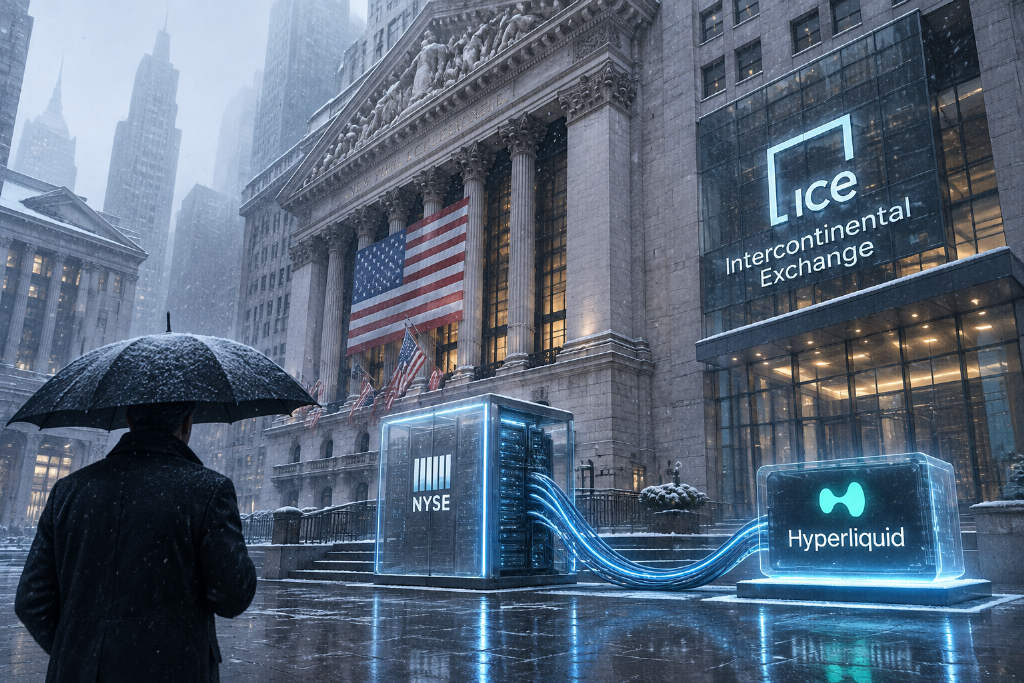
Much of the market reaction to Hyperliquid has focused on HYPE’s price and on the idea that Intercontinental Exchange, or ICE, has delivered one of the biggest institutional endorsements crypto has seen.

Vaidik Mandloi, writing in The Token Dispatch and translated by TechFlow, makes a different point. In his view, the real story is that ICE, the parent of the New York Stock Exchange, is willing to hand off a layer of exchange technology that traditional venues have spent the past 25 years describing as a core moat.
The analysis argues that large exchanges have long told shareholders that proprietary central matching engines were the irreplaceable asset at the center of the business. If that layer can be outsourced to a public blockchain protocol, then the remaining core asset may be something else entirely: licensed access, legal and regulatory standing, and confidence in clearing and performance.
From that perspective, the ICE-Hyperliquid arrangement is not just a product move. The author presents it as an early sign that the business model of traditional exchanges is entering a more serious period of strain.
What exchanges actually sell
The piece looks back to the early 2000s, when electronic matching displaced open outcry trading floors. At the time, many assumed floor specialists would disappear with the old system. What the market missed, the author says, was that the New York Stock Exchange itself functioned in some ways like a specialist. The traders on the floor were not the exchange’s most durable asset. They were among the easiest parts of the system to replace with technology.
Mandloi argues that many crypto participants are making a similar mistake now by assuming that traditional exchanges primarily sell matching technology.
He uses a simple example. When a large pension fund wants to trade crude oil futures, the portfolio manager is not searching the Chicago Mercantile Exchange, or CME, screen for a specific counterparty. In most cases, the manager does not care who the other side is. What matters is that CME stands in the middle as a central counterparty and guarantees clearing. If a counterparty defaults, the default fund absorbs the loss. If that fund is exhausted, the broader backstop of insurance capital and clearing members remains in place.
The article compares that structure to McDonald’s. The company does not need to cook every burger itself to make money. Franchisees do that. The valuable layer is the brand, the franchise rights, and control over the key economic position.
That is where the author places ICE CEO Jeff Sprecher. He notes that Sprecher bought the 200-year-old NYSE in 2013 for $11 billion. In the author’s telling, the attraction was not the trading floor but the market data business that now charges hedge funds around the world for terminal access.
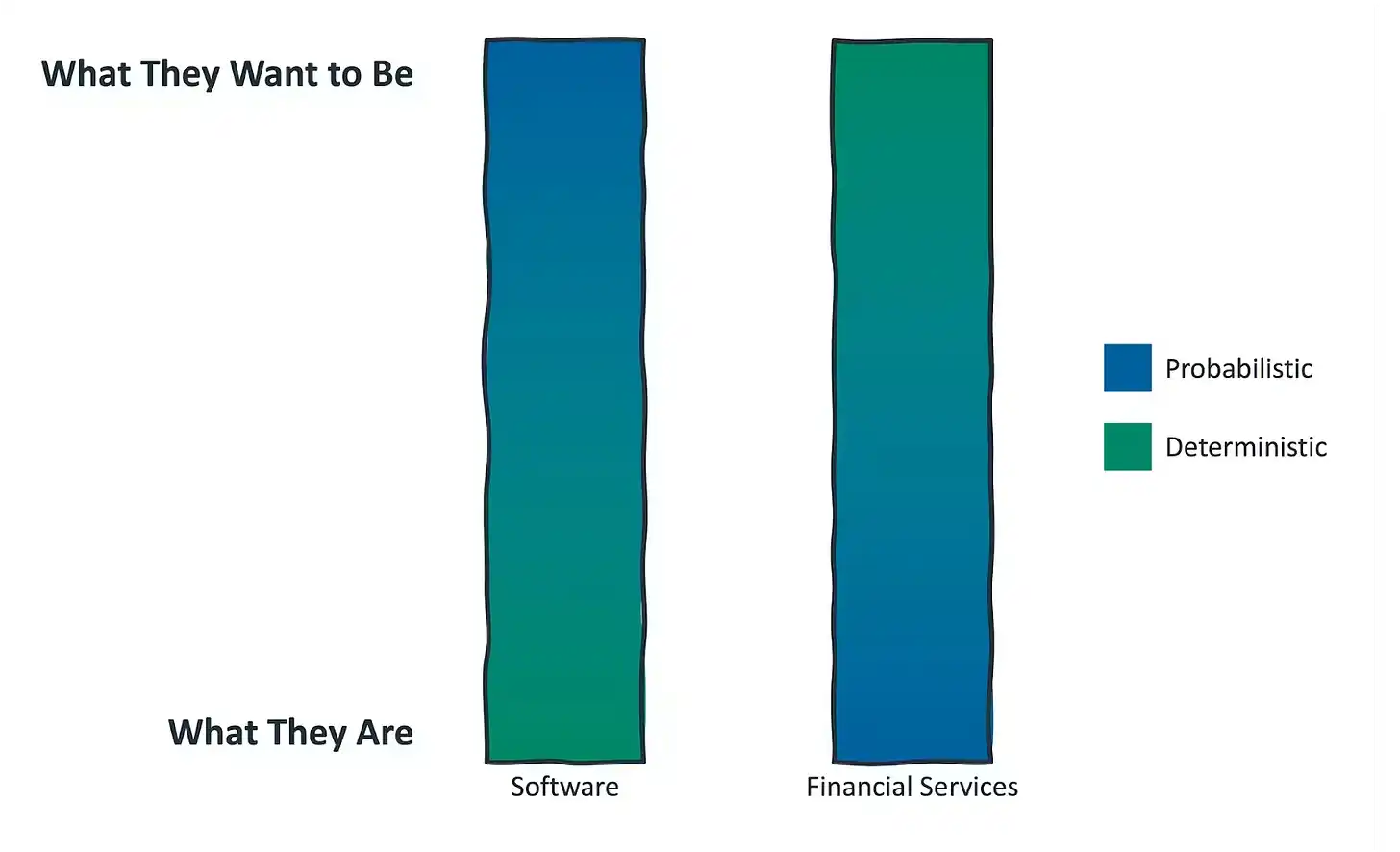
Now, he argues, Sprecher has taken another step by letting a decentralized crypto protocol handle the underlying matching and clearing technology tied to perpetuals.
Why the CME-Eurex history matters here
To support the point, the article revisits the competition between CME and Eurex. In 2004, Eurex set up an exchange in the US and tried to win share in US Treasury futures with a faster and more advanced electronic matching engine. According to the author, that effort failed despite the technology edge because the capital base and clearing capacity of established financial institutions were already deeply embedded in CME’s clearinghouse. Market participants did not want to take migration risk.
That history leads to the central question in the piece. If exchanges have never really sold software alone, but rather compliance, clearing guarantees, and licensed access, why would ICE outsourcing technology to Hyperliquid still unsettle the rest of the industry?
The answer, in the author’s view, is the rise of perpetual swaps.
Perpetuals and the economics of roll yield
The article says the sharpest threat from perpetual swaps is that they rework the revenue logic tied to rolling futures exposure. In traditional futures markets, contracts expire every few months, and traders must keep paying commissions, calendar spreads, and management costs to roll positions into the next contract month.
Mandloi argues that this stream of roll-related revenue is one reason CME has been able to command an equity valuation around 30 times earnings, while traditional brokers trade closer to 15 times. Perpetual swaps, by contrast, use a funding-rate mechanism that removes much of the friction associated with rolling.
He says Sprecher has recognized that he has little choice but to embrace perpetuals. The article puts annual global crypto perpetual volume above $90 trillion and describes that market as a retail-led wave that is moving toward traditional macro assets.
Against that backdrop, the author argues that spending billions of dollars and several years to build a continuous clearing system from scratch, while also fighting through a long regulatory process, makes less sense than plugging into an existing on-chain matching stack.
ICE as an application on top of a protocol
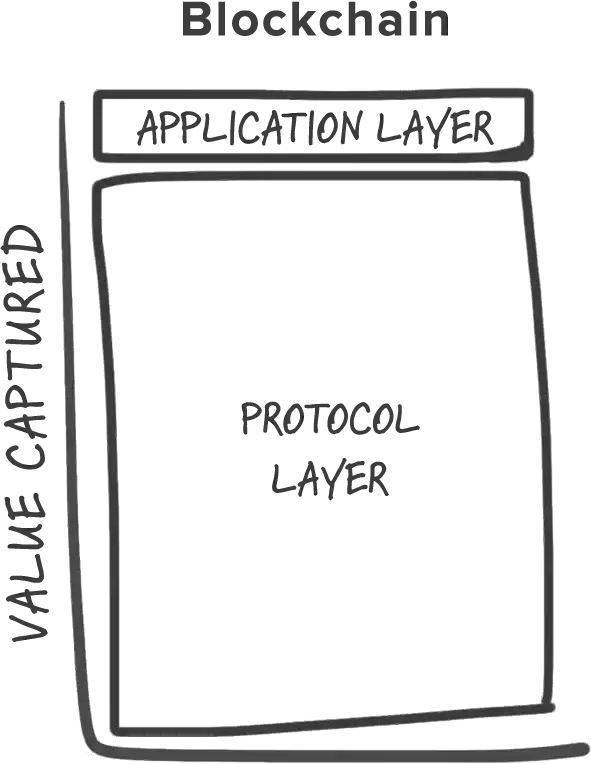
The piece then turns to structure. Hyperliquid, it says, is not a traditional exchange company. It is a decentralized blockchain protocol on top of which anyone can build financial front ends and custom applications without permission.
That creates a notable shift. At the system level, the owner of the NYSE starts to look less like the operator of a closed venue and more like an application running on someone else’s blockchain network.
Mandloi frames this through Joel Monegro’s “fat protocols” thesis, where the protocol layer captures most of the value and the application layer captures much less.
He says Sprecher’s tactical judgment may be right. Traditional exchanges still have enough brand credibility and franchise value to preserve large businesses even if they outsource technology, and peers may eventually have to follow the same path.
But the article argues that the longer-term valuation consequences could be more severe. Markets have been willing to assign exchange groups earnings multiples above 30 partly because they were seen as owners of proprietary, hard-to-replace matching technology. If open crypto protocols show that this layer can be replaced cheaply, that valuation framework may not hold in the same way.
Why the author calls perpetuals a universal primitive
The article also pushes back on the idea that ICE is merely testing a new product. In the author’s framing, perpetual swaps are not just another contract. They are a more general financial primitive.
He writes that decentralized stablecoins such as DAI are, in essence, perpetual contracts. Leveraged margin futures are perpetual contracts as well. Even traditional fixed-income bonds and interest-rate swaps, he argues, can be expressed through the mathematics of continuous funding rates.
The piece ties that claim to Taylor series. Put simply, the author says a general engine capable of settling funding rates at millisecond intervals could, in theory, approximate and synthesize a wide range of financial products used across modern markets.
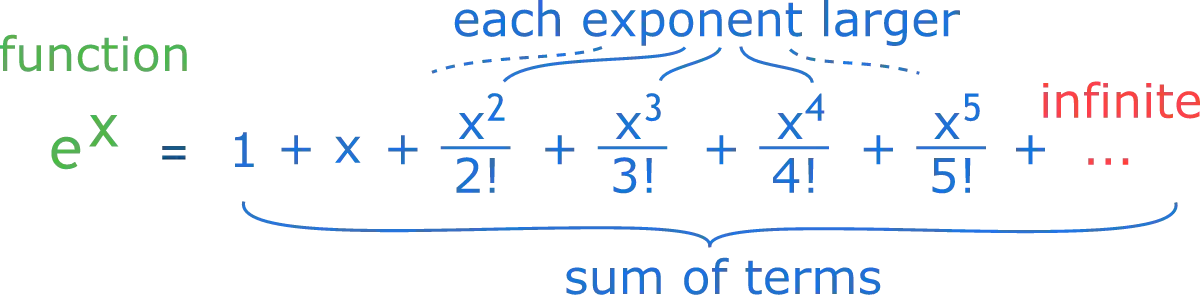
On that reading, a direct ICE connection to Hyperliquid is not just a technology integration. It is a connection to a base network that could one day route and clear a much broader set of traditional financial assets.
CME, Kraken, and the shift in the financial stack
The article singles out CME as a listed exchange group with meaningful exposure if this transition accelerates, because a large share of its high-margin business is tied to the friction costs created by expiring futures contracts. If traders are offered a venue with no expiry, lower funding costs, deep liquidity, and no need to pay repeated roll fees, the author says both institutions and retail traders would have a reason to move positions.
He also points to convergence from both directions. Traditional finance is moving toward crypto protocols, while crypto firms are moving into traditional channels. As one example, the article notes that Kraken recently acquired futures broker NinjaTrader outright.
In that framework, ICE is trying to defend itself by pushing technology downward into a crypto protocol while keeping hold of the top layer: regulatory access and clearing licenses.
The article closes with a split view of Sprecher’s move. Over a five-year horizon, the author sees it as tactically sharp. Over a 15-year horizon, he suggests traditional exchanges may struggle to retain all of the value layers they once controlled.
For now, much of crypto is still watching HYPE’s price. The author’s argument is that Wall Street should be watching something else: one of the world’s largest traditional exchange operators has accepted that matching technology is not the moat it was once said to be, and has started plugging into decentralized clearing infrastructure instead.
That, in this analysis, is the more consequential signal.



