
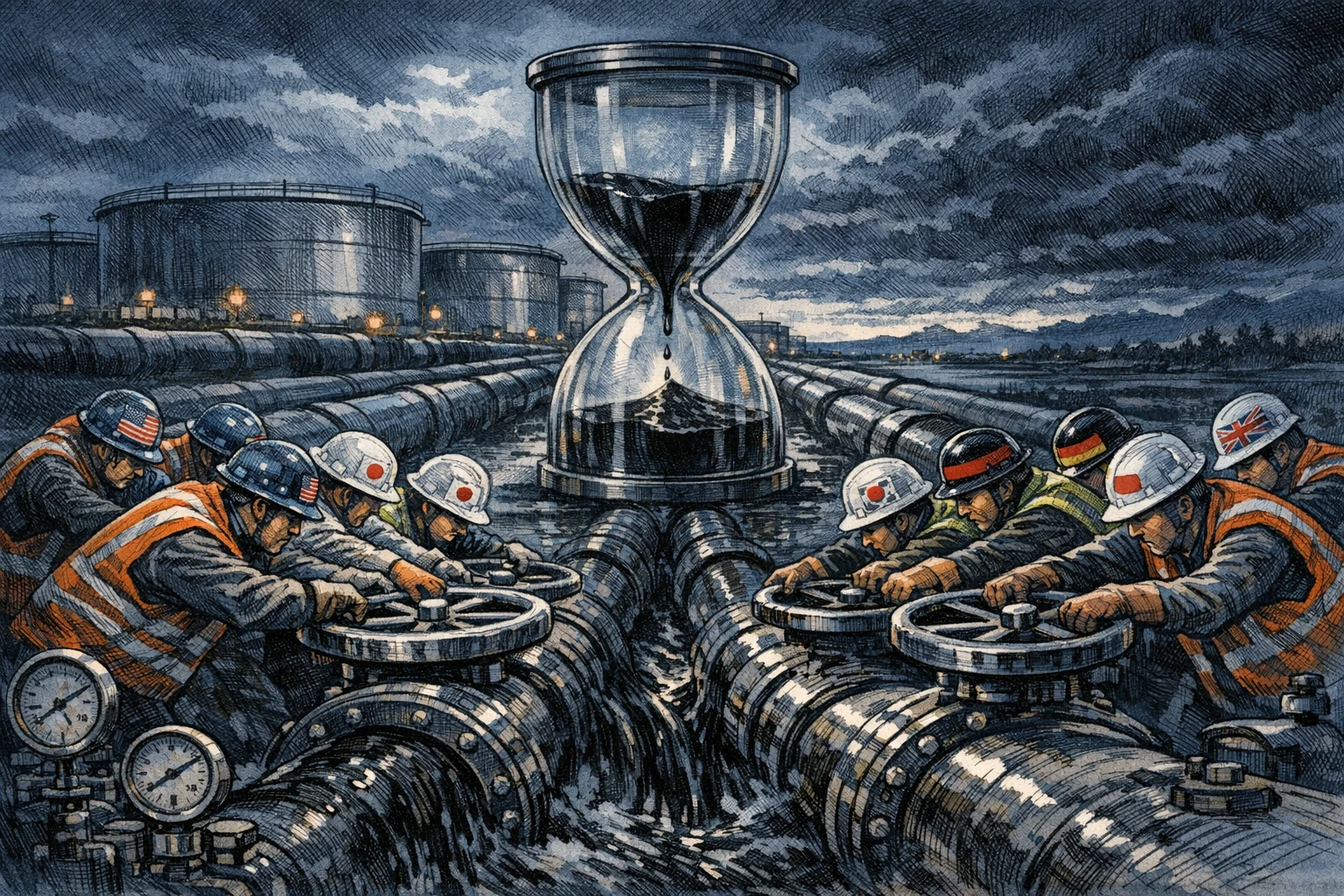
The International Energy Agency (IEA) on March 11 announced that member countries will release a combined 400 million barrels of strategic petroleum reserves to counter supply shocks from the Middle East conflict. The volume is the largest in the agency's history, representing roughly 30% of total member reserves of 1.2 billion barrels, and more than double the amount released during the 2022 Russia-Ukraine conflict.
Country Contributions: U.S. Takes Largest Share
Several countries have disclosed their individual commitments. The United States will contribute 172 million barrels, accounting for nearly 43% of the total, continuing its dominant role in past IEA coordinated releases. Japan will provide about 80 million barrels (equivalent to 45 days of supply), South Korea 22.5 million, Germany roughly 19.5 million, France up to 14.5 million, and the U.K. 13.5 million barrels.
Market Focus: Three Undisclosed Details
For energy traders, the biggest uncertainty revolves around what hasn't been announced: release pace — how many barrels per day? Will they be front-loaded or spread out? Duration — how many months will the release program last? Crude vs. product ratio — releasing crude has a different market impact than releasing refined products like gasoline and diesel. Analysts point out that these three factors often determine the actual price effect more than the headline volume. Until these details are disclosed, the market cannot fully price in the SPR release impact.
Oil Tankers Attacked in Persian Gulf; Brent Nears $98
Adding to supply concerns, two foreign oil tankers carrying Iraqi fuel oil were attacked and set ablaze by unknown sources near Iraq's Umm Qasr port and Basra region, highlighting the fragility of the Persian Gulf supply chain. Brent crude surged to around $98 per barrel in early trading, just shy of the psychological $100 mark.