

Citrini has become one of the research names linking traditional finance, geopolitics, semiconductors and crypto market structure. In February, its report The 2028 Global Intelligence Crisis triggered what was described as a selloff in US software stocks and intensified anxiety around the wave of layoffs in Silicon Valley. In April, Citrini analyst Analyst#3 traveled to the Strait of Hormuz and wrote a field report that drew strong reactions by describing how the strategic chokepoint operates on the ground. More recently, Citrini semiconductor analyst Jukan accurately identified the importance of copper foil within the AI and semiconductor supply chain, helping to drive another round of investment interest.
Behind the research firm is a founder who did not come through a conventional finance track. James van Geelen holds dual degrees in biology and psychology from UCLA, worked as an emergency medical technician and caregiver, founded a healthcare company, and later entered the investing world from a different professional starting point. The contrast between that background and Citrini's current influence is central to the story: the firm is now associated with long-horizon thematic research, tactical macro ideas and high-impact scenario work, while Geelen himself has been described by some followers as a research deity.
How Citrini entered the crypto conversation
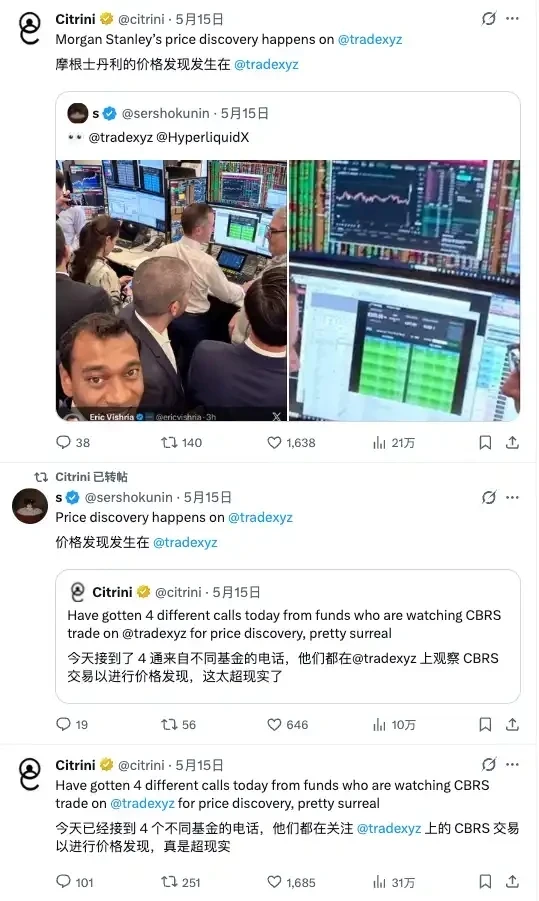
For many in crypto, the first clear moment when Citrini became hard to ignore came in May, shortly before the listing of Cerebras, or CBRS. Citrini posted that fund managers were conducting early price discovery on Trade.xyz, a platform in the Hyperliquid ecosystem. The post was later reposted and confirmed by Trade.xyz founder Shokun. Because Citrini had already gained visibility in traditional finance through The 2028 Global Intelligence Crisis, its recognition of Hyperliquid and Trade.xyz carried weight beyond a single crypto-native discussion.
That post also helped bring more attention to RWA platforms, pre-market US equity contract platforms and on-chain US stock trading venues. In the original discussion, Citrini's stance was framed as part of the force pushing this year's boom in US stock RWA assets. It also served as a warning signal to traditional finance: crypto participants that were once treated as marginal players were now aiming at the large market long dominated by established financial institutions. In that sense, Citrini became a bridge between two communities that often price and interpret the same assets through very different infrastructures.
James van Geelen's route from UCLA and emergency medicine to investing
Geelen, now 33, once appeared to be on a medical path rather than a financial one. Public information shows that he graduated from UCLA with dual degrees in biology and psychology. He also worked in downtown Los Angeles as an emergency medical technician and caregiver. This background, according to the profile, shaped his preference for efficiency and planning. He has summed up that attitude in one direct line: 'If you do not have a plan, you will have a very bad time.' He has also described himself as a genius musician, though the source notes that he has not produced notable works to support that label.
Instead of becoming a doctor in the usual sense, Geelen moved into entrepreneurship. He first founded a healthcare company and sold it to a private equity fund, using that exit to move out of the standard path of elite-school graduate, employee and professional manager. He then went on to build Citrini. In a 2023 appearance on the Odd Lots podcast, he also said that he had co-founded one of the earliest medical cannabis dispensaries in Connecticut. That detail makes his background less like that of a rigid conventional physician and more like that of a founder willing to operate across unusual and regulated fields.
In 2018, after accumulating some starting capital, Geelen began his personal investment career under the name Citrinitas Capital. The source says he captured early opportunities in AI, including Nvidia, and in GLP-1 weight-loss drugs such as Ozempic and Wegovy. In December 2025, according to PitchBook information cited in the article, Citrini completed about 5.05 million dollars in seed financing. The company had only around 10 employees and remained privately held.

The AI report that hit US software stocks
The event that pushed Citrini into a much larger financial audience came in February, when Geelen and Alap Shah, who came from the traditional finance world, co-authored The 2028 Global Intelligence Crisis. They repeatedly stressed that the report was a thought experiment and a hypothetical scenario, not a forecast. Even so, the report's discussion of mass white-collar unemployment, falling consumer spending and economic contraction, referred to as Ghost GDP, triggered fear across capital markets. Delivery, payments and software names sold off sharply.
The market moves listed in the source were broad. IBM recorded its largest one-day decline of 2025 on February 23. American Express and Blackstone each fell more than 8%. The overall software stock sector dropped nearly 5%. DoorDash, Uber, Mastercard, Visa, Capital One and Apollo Global Management Inc. each fell as much as 3% at one point. Multiple US equity sectors were pulled into the selling, and the Dow Jones Industrial Average at one point fell by more than 800 points. Bloomberg and The Wall Street Journal later followed the story. Shah subsequently stated publicly that his investment stance was 'short the disruption, long the beneficiaries': shorting companies they believed would be disrupted by AI while holding semiconductor technology stocks that benefit from AI.

For Citrini, the report became a defining example of how a piece of research distributed through a specialist audience can cross into price action in major public markets. The original article characterizes the result in stark terms: hundreds of billions of dollars in US equity market value were erased over a short period, and a report first framed as a scenario exercise became a catalyst for intense discussion among traders, media organizations and investors.
Hormuz, alchemy and the firm's second-order thinking
On April 6, Analyst#3, Citrini's No. 3 analyst, traveled to the Strait of Hormuz, a key point in the conflict between the United States and Iran. The field report disclosed several on-the-ground observations, including the operating model of what was described as an Iranian 'toll station' in the strait. It also offered a series of conclusions that ran against common intuition: no matter how the situation develops, shipping volume through the strait will gradually rise; Iran does not want to close the Strait of Hormuz; shipping volume will continue to increase; the diplomatic-style toll station operates under a surprisingly orderly passage system; even if ground operations begin, shipping volume through the strait will still continue to increase; and the conflict is not a simple two-sided confrontation, but a multi-party game and a restructuring of the regional pattern.

The name Citrinitas also reflects Geelen's preferred way of looking at transitions. Asked why he chose the company name, he said the inspiration came from George Soros's The Alchemy of Finance. He explained: 'It is actually a stage in alchemy, but what most people do not know is that in this transitional stage, lead begins to turn into gold, but it has not fully become gold yet.' That is also the moment he likes most for action: seeing the birth of gold before others have noticed that the lead is changing.
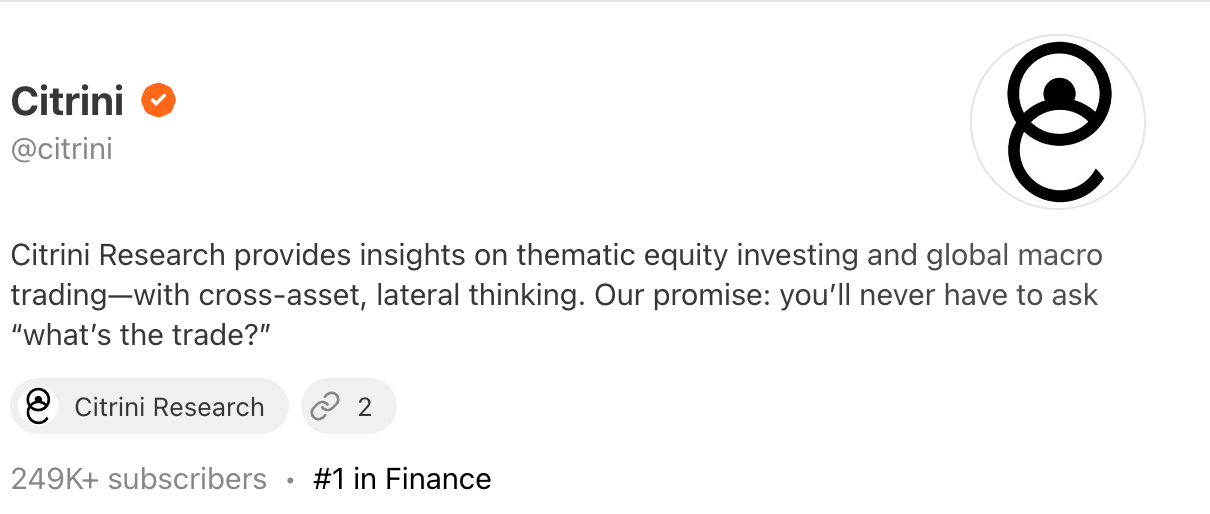
Citrini's investment style is closely connected to Geelen's cross-disciplinary background and his emphasis on second-order thinking. Based on the firm's previous content and public information, Citrini focuses on long-term supertrends, including AI, robotics, energy demand, fiscal policy, geopolitics and modern warfare. It also aims to provide executable baskets of investment references and tactical macro trading ideas. Its judgments lean toward long-term structural change rather than short-term trading. On its Substack homepage, the firm emphasizes practical use with the line: 'You will no longer need to ask, what is the trade?'

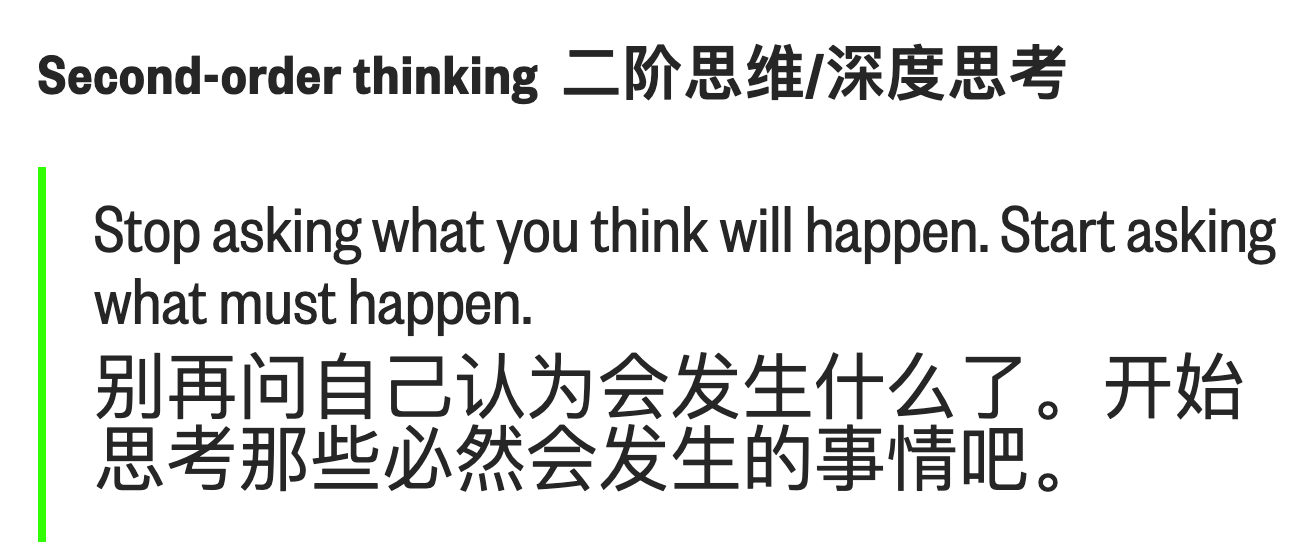
Geelen has described the thought process in another quote: 'Do not always think about what you believe will happen. You should think about the things that must happen. How will the market's reaction change reality? What second-order effects will there be? What are the obstacles that prevent a trend from continuing? And where will capital flow in order to overcome those obstacles?' The source cites several examples of this approach. In March 2023, during the collapse of Silicon Valley Bank, he bought overnight financing rate call options and earned nearly 50 times the return. Last December, before the United States launched military operations in Venezuela, he shared views on investment opportunities in Venezuelan sovereign bonds.
Since the start of this year, Citrini has added several independent analysts, including macro analyst Nick Reece, Korean semiconductor industry analyst @jukan05 and AI chip industry analyst @zephyr_z9. These additions have helped fill gaps in industrial detail, technical processes and changes in industry direction. The organization still operates with a founder-driven model supported by an anonymous elite team, combining Geelen's thematic framework with specialist coverage across sectors that now range from AI and semiconductors to geopolitical chokepoints and crypto-linked financial infrastructure.