
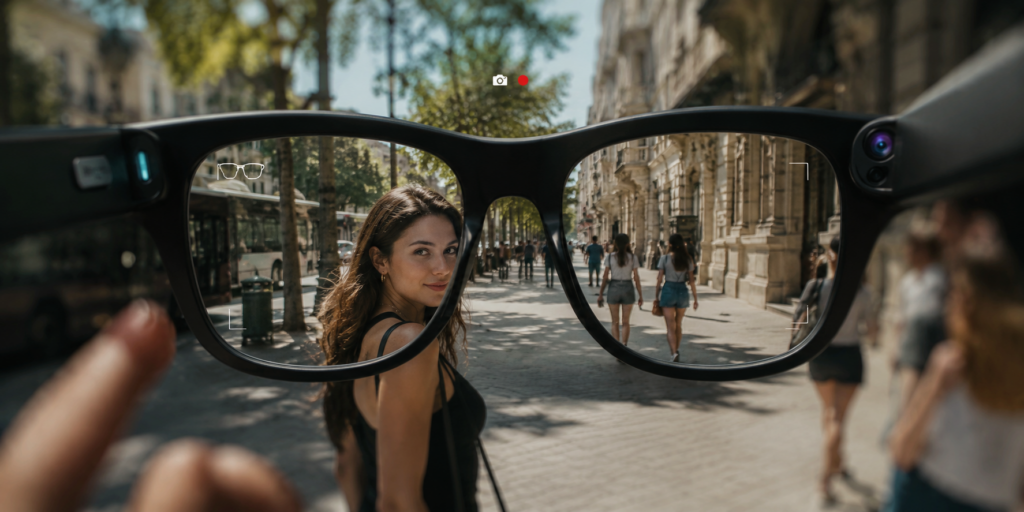
Instagram has taken down two accounts with more than 1 million followers each after Meta confirmed they violated an updated harassment policy. The accounts built large audiences by posting covert “pickup” videos filmed with Ray-Ban Meta smart glasses.
Meta confirms action against covert smart glasses content
Instagram head Adam Mosseri said in an Instagram Stories Q&A that the platform is stepping up enforcement against a specific type of content: people wearing smart glasses, secretly recording strangers in public, and later editing the footage into pickup clips or prank videos.
“We don’t want people secretly recording others, harassing them, and then posting that content to our platform. So we’re using every tool we can to fight this,” Mosseri said.
The two removed accounts followed a similar pattern. They used Ray-Ban Meta glasses to approach unsuspecting women in public, recorded the encounters from start to finish, and edited the reactions into viral short-form content. Other videos removed in the same wave included prank clips showing smart-glasses wearers targeting cashiers and fast-food workers.
Mosseri also said that if content is uploaded at someone else’s expense and amounts to harassment, including the pickup videos the company has seen and heard about, Instagram will remove it.
Removals announced, rules not published
What Instagram has shared so far is the outcome, not the full rulebook. The company has not explained what kind of footage counts as prohibited pickup content, what remains permissible as a street interview, or where the takedown threshold sits.
It also declined to say how many accounts were swept up in this round of enforcement.
Indicator lights do not settle the consent problem
Ray-Ban Meta glasses were designed to fold a camera into an everyday accessory. The frame is only slightly thicker than a normal pair of sunglasses, and recording is meant to be signaled by a small indicator light.
That warning light is more noticeable indoors or in dim settings, but in bright outdoor conditions it can become hard to see. Earlier models could even be undermined by covering the light with a small piece of tape or damaging it by drilling into the area, effectively making the signal meaningless. Meta later added a software fix that disables the camera if the system detects the indicator light has been blocked.
Even so, that does not answer the underlying question of whether strangers want to be recorded in the first place. The logic behind the light assumes passersby will notice what is on someone’s face. In practice, these glasses look close enough to ordinary sunglasses that many people may not realize they are looking at a camera.
The report notes that this is why there has been outside speculation that Apple may give its own smart glasses a more visible camera ring. The idea is simple: make the hardware unmistakable instead of relying on software fixes after the fact.
Account bans do not reach every recording
Critics say removing two accounts addresses the symptom, not the broader issue. Deleting videos does not notify or compensate people who were recorded without knowing it.
There is also a hard platform limit here. Instagram can police only the portion that gets uploaded to Instagram. Footage that was recorded but never posted, uploaded elsewhere, or stored on a device sits outside the reach of Instagram’s harassment rules.
In that sense, this is still an enforcement drive confined to Meta’s own front door.
Sales are climbing while standards remain unclear
At the same time, the number of camera-equipped glasses in circulation is growing quickly. Ray-Ban and Oakley smart glasses sold about 7 million units last year, triple the previous year’s annual sales, and cumulative sales are nearing 9 million units.
A production target of 10 million units a year, originally planned for the end of 2026, is now reportedly under discussion much earlier because demand arrived ahead of schedule. According to the source, the parties are considering lifting that goal to 20 million to 30 million units.
That leaves a widening gap: more devices in the market, but enforcement standards that are still unpublished and still taking shape. Whether account removals can meaningfully resolve the covert-recording dispute around smart glasses remains an open question.