
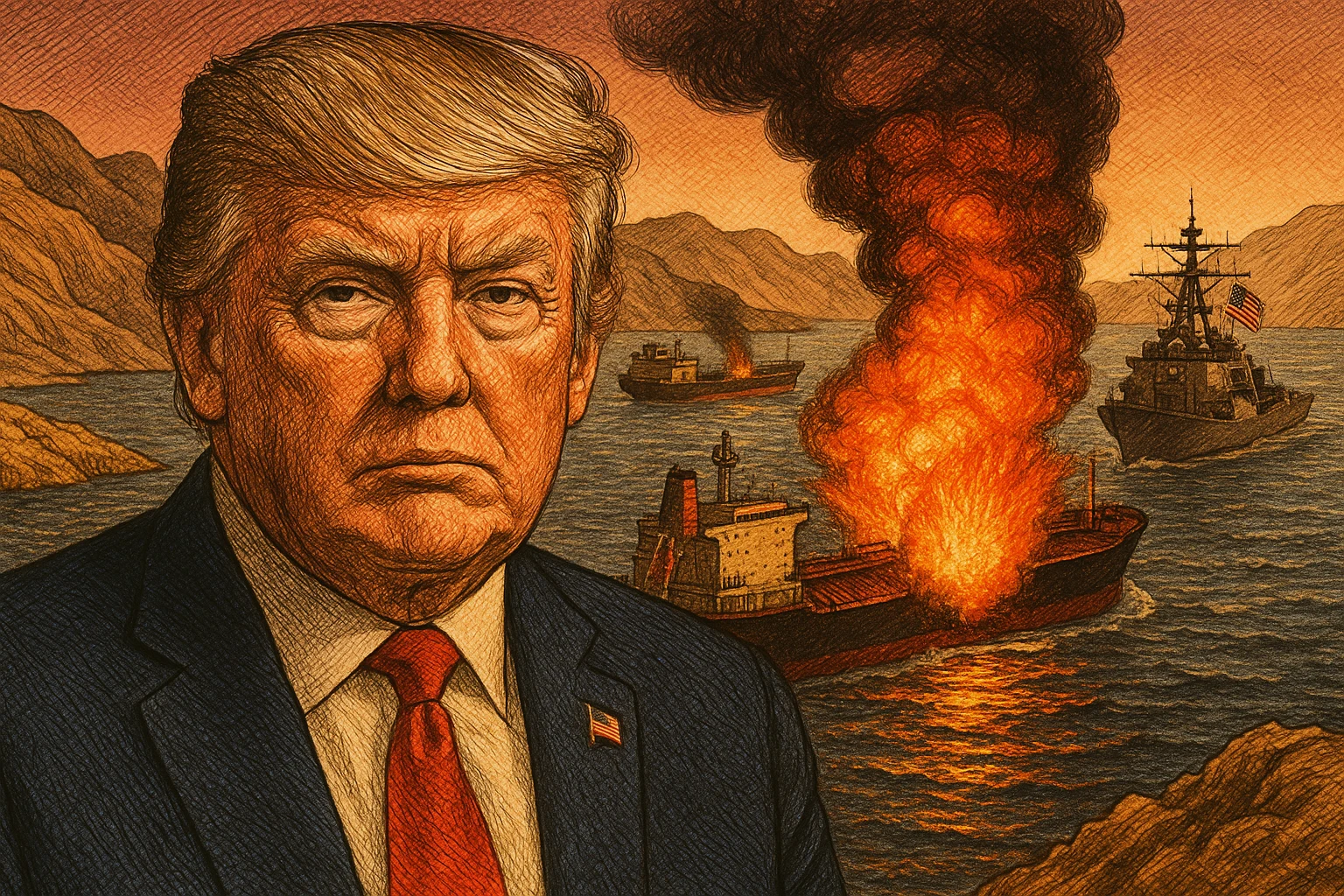
Iran’s Islamic Revolutionary Guard Corps Navy deputy commander, Mohammad Akbarzadeh, said on March 3 that the Strait of Hormuz is now “completely under the control of the Iranian navy.” He also said more than a dozen oil tankers were struck by shells and burned after ignoring navigation warnings. In his account, the strait is in a wartime state, and any vessel attempting to pass could face artillery or drone attacks.
Iranian officials also said tankers, cargo ships, and fishing boats can no longer move through the strait after Tehran announced a navigation ban. Earlier reporting cited in the source said vessel traffic through the passage had fallen by about 70%, with more than 150 ships waiting at anchor outside the area.
Trump says higher oil prices are acceptable for now
U.S. President Donald Trump said Tuesday that he could tolerate oil prices rising “for a period of time” because eliminating what he described as an imminent threat from Iran takes priority. With the conflict showing no sign of easing, uncertainty around energy supply has already lifted gasoline prices in the United States.
Trump also said military operations targeting Iranian naval and air assets had been successful, adding that “almost all targets have been destroyed.” Speaking about Iran’s missile launches, he said: “They launched a lot of missiles, and we are destroying a lot.”
Different explanations emerge over why the U.S. entered the fight
During a White House meeting with German Chancellor Friedrich Merz, Trump told reporters he ordered U.S. forces to join Israel’s attacks on Iran because he believed Iran was about to strike the United States. He said that if Washington had not moved first, “they would have.”
That account differs from comments made Monday by Secretary of State Marco Rubio. Rubio said the U.S. attack was driven by concern that Iran would retaliate against an Israeli operation, not by an immediate threat to the American homeland. The gap between those explanations has raised questions about the transparency of White House decision-making.
Washington weighs naval escorts and insurance backing
According to Politico, citing two people familiar with the matter, the Trump administration is actively considering military protection for tankers crossing the Strait of Hormuz in an effort to ease the energy price shock that followed Iran’s threat to shut the route. One source said oil and gas supplies would receive military support and noted that the strait is critical for crude and LNG shipments, especially from Qatar and Saudi Arabia.
A third source said the U.S. government is also evaluating whether to provide a state guarantee for insurance needed by tankers transiting the strait. The report said that while the waterway is not technically fully closed, marine insurers have sharply increased premiums and some have stopped covering tankers in the region.
Merz backs a hard line on Iran during White House visit
Trump met Merz at the White House on Tuesday, where they discussed the war with Iran and trade issues. After the meeting, Merz said both sides agreed on the goal of getting rid of what he called Iran’s “terrible regime.” Trump added that Germany had allowed U.S. forces to land in certain areas, though Washington had not asked Berlin to send troops.
Crypto market feels the pressure from oil and inflation
The escalation has also weighed on crypto. According to the source material, as of March 3, Bitcoin was trading in the $68,000 to $69,000 range after earlier falling below $63,000 when the conflict broke out, then rebounding toward $68,900. The core market concern is that higher oil prices may lift inflation expectations and push back the timing of Federal Reserve rate cuts.
Brent crude futures have jumped 13% to $82 a barrel, the highest level since July 2024. JPMorgan estimated that if the strait remains blocked for an extended period, oil could rise to $120 to $130. BitMEX co-founder Arthur Hayes took a different view, arguing that a longer conflict would increase pressure on the Fed to cut rates or expand the money supply. Institutional demand has not disappeared: U.S. spot Bitcoin ETFs recently recorded $458 million in net inflows in a single day.