
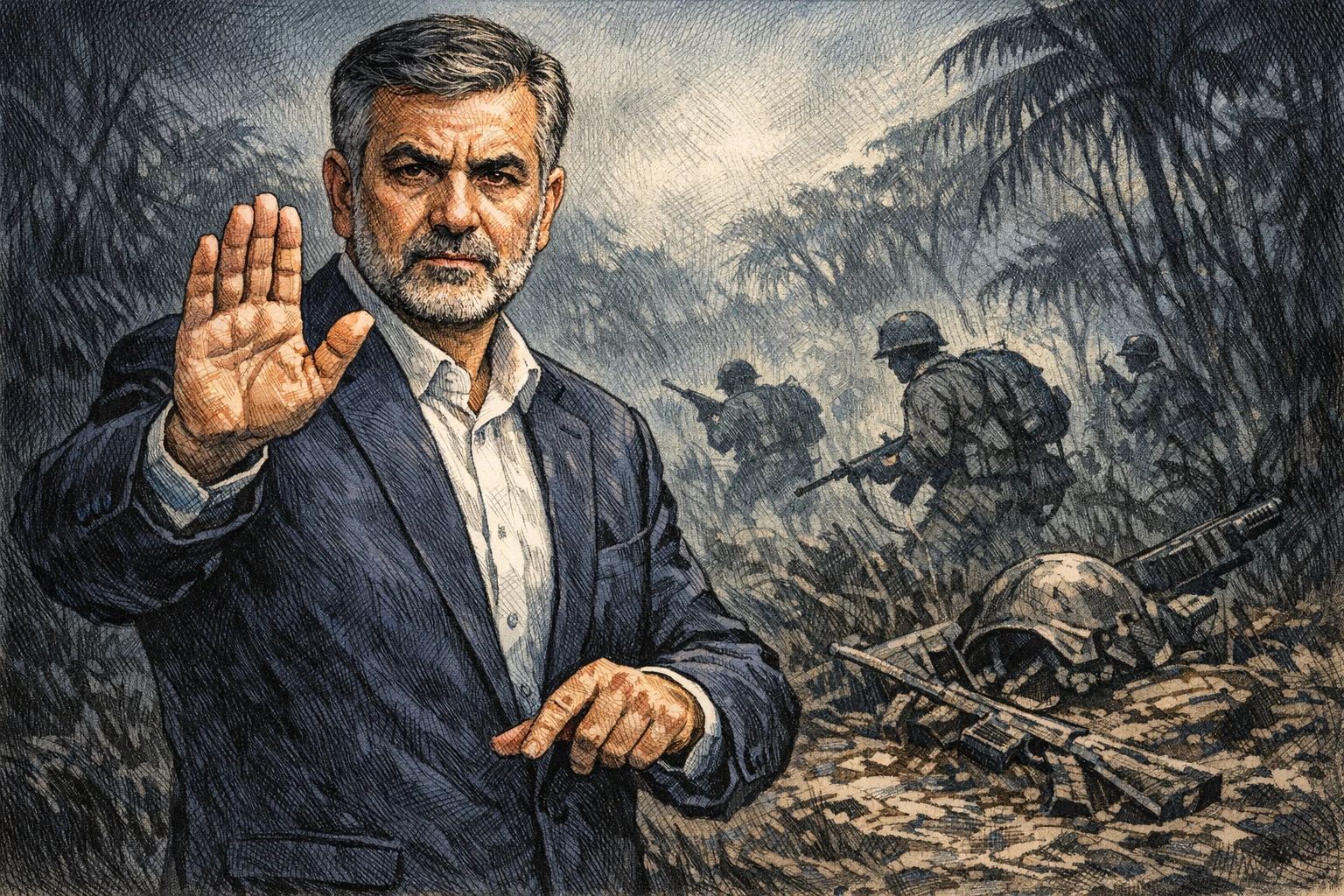
Iranian Deputy Foreign Minister Saeed Khatibzadeh warned in a Sky News interview in Tehran that any US decision to send ground troops into a conflict with Iran would risk turning into another Vietnam. His message to Donald Trump was direct: “Look at what happened in Vietnam.”
Khatibzadeh frames a US ground operation as a long war
Khatibzadeh said American soldiers entering Iranian territory would face a drawn-out war of attrition rather than a limited intervention. He argued that the same actors who could pull the United States into war could also drag it into a quagmire. The comparison put Vietnam at the center of his warning and made clear how Tehran wants Washington to read the cost of escalation.
He also said Iran has both the capacity and the will to sustain a prolonged conflict, adding that “Iran can fight for as long as it takes.” On diplomacy, he said Tehran is not currently centered on a negotiated solution, but it has not fully closed the door either. In his account, it is up to the United States and its allies to present a plan that could end the conflict once and for all.
Netanyahu singled out in the interview
During the interview, Khatibzadeh directly named Israeli Prime Minister Benjamin Netanyahu and said Washington should think carefully before dealing with Iran. He said the US should not listen to people who do not understand Iran and who have long tried to win a war against Iran with American taxpayers’ money and American soldiers’ blood.
He went on to accuse Netanyahu and Israel of pursuing their own calculations and trying to secure victory at the expense of everyone else. The remarks showed Tehran placing responsibility on Israel for pushing the situation toward a more direct military confrontation between the US and Iran.
Tehran comments on Mojtaba Khamenei’s condition
Addressing questions about internal political stability in Iran, Khatibzadeh said new Supreme Leader Mojtaba Khamenei has not yet appeared in public, but is “healthy and in control.” The comment was one of the few direct public responses from Tehran on the issue and was presented as a signal that the country’s top leadership remains stable.