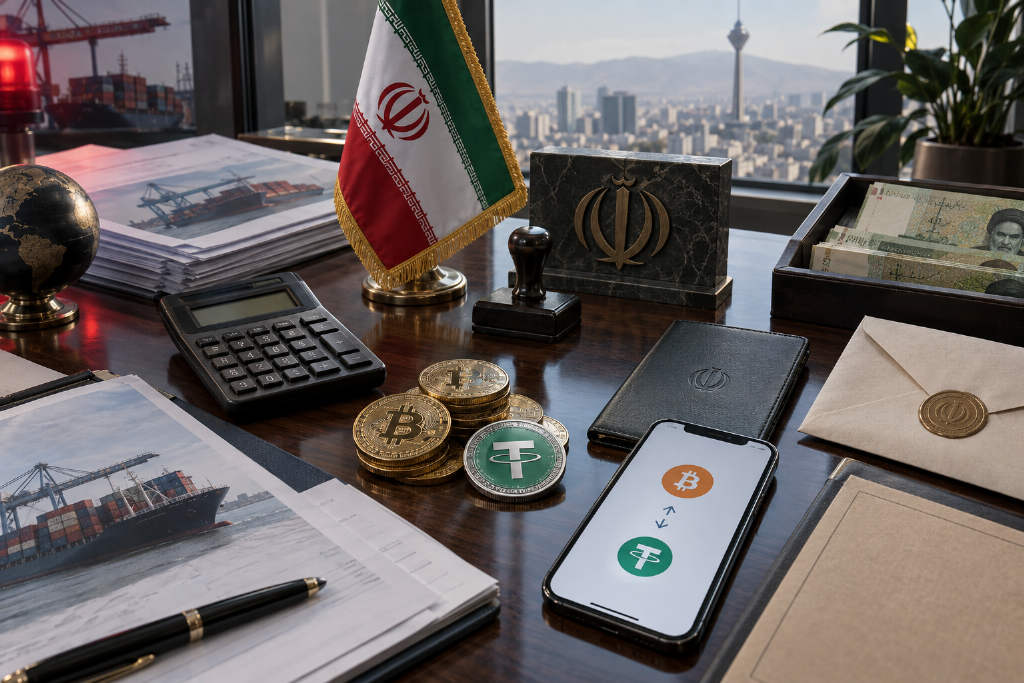
Iran is gradually loosening foreign exchange controls and tacitly permitting businesses to use Tether (USDT) and Bitcoin for cross-border transactions, according to ChainCatcher. People familiar with the matter said the Central Bank of Iran has, in recent months, encouraged companies to repatriate overseas funds through channels including local crypto exchanges. Businesses are also allowed to buy foreign currency on the open market and use export proceeds directly to pay for imports. One executive close to the Iranian establishment said the central bank is no longer asking how funds are moved, and that receiving export payments in crypto has become routine. The report said around $10 billion worth of cryptocurrency flowed through Iran in 2025, while blockchain analytics firm Elliptic estimated the country accounted for about 4.5% of global Bitcoin mining activity. The report also said Iran still has more than $100 billion in undeclared foreign and domestic income, and over 20,000 individuals and companies have failed to repatriate about €94 billion in export earnings. Tether previously froze roughly $344 million in wallet assets linked to Iran’s central bank, and the U.S. Treasury has warned that digital asset dealings involving Iran may carry sanctions risk.
Iran is gradually loosening foreign exchange controls and tacitly allowing businesses to use Tether (USDT) and Bitcoin for cross-border trade, according to ChainCatcher.
People familiar with the matter said the Central Bank of Iran has in recent months encouraged companies to bring overseas funds back into the country through channels including local cryptocurrency exchanges. Businesses can also exchange foreign currency on the open market and use export proceeds directly to pay for imported goods.
One corporate executive close to the Iranian establishment said the central bank is not currently asking how money is transferred, and that receiving export payments in cryptocurrency has become routine.
Data cited in the report showed that about $10 billion worth of cryptocurrency flowed through Iran in 2025. Blockchain analytics firm Elliptic estimated that Iran accounts for about 4.5% of global Bitcoin mining activity.
Iran still has more than $100 billion in undeclared overseas and domestic income, according to the report. More than 20,000 individuals and companies have also failed to meet obligations to return roughly €94 billion in export earnings.
Tether previously froze about $344 million in wallet assets linked to Iran’s central bank. The U.S. Treasury has also warned that digital asset transactions involving Iran may expose participants to sanctions risk.
This article was originally published by Bit.Fan. For more cryptocurrency news and market insights, visit www.bit.fan. Disclaimer:
The market information, project data, and third-party content displayed on this platform are for industry information sharing only and do not constitute any form of investment advice or return commitment.
Cryptocurrency trading carries high risks. Users should fully assess their risk tolerance and make independent decisions. All profits, losses, and legal responsibilities are borne by the users themselves.