
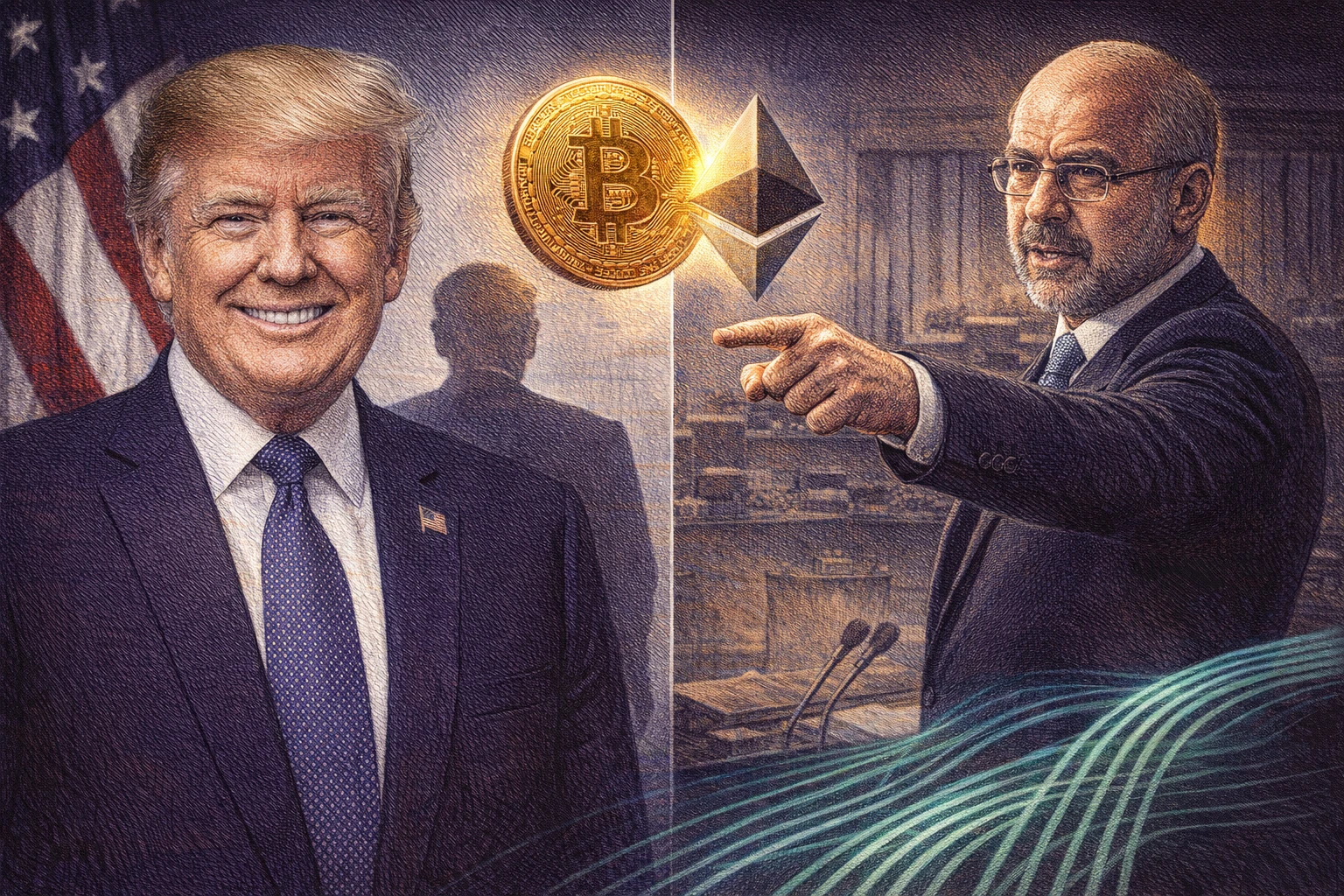
Iran's Parliament Speaker Mohammad Bagher Ghalibaf posted on X on March 30, accusing the Trump administration of using market statements as "insider profit-taking traps" and advising investors to trade against them. Barron's and MarketWatch confirmed the account's authenticity, and the post quickly spread through the crypto community.
The market largely validated his claim: S&P 500 futures dipped then recovered; Bitcoin stabilized near $66,000 and bounced back to close at $67,600, up 1.3% for the day. Ethereum gained 3.1% to $2,070, and SOL rose 1.9% to $84.09.
One Week Earlier: Trump Claims Talks, Iran Denies, BTC Spikes Then Falls
On March 24, Trump said at a Memphis rally that his administration was "in substantive negotiations" with Iran, giving a five-day window. BTC shot to $71,794, a recent high. Ghalibaf denied the talks outright, calling the reports "fabricated news" and accusing the U.S. of manipulating financial and energy markets. BTC quickly dropped back below $70,000.
Anomalous trades preceded the event: $580 million in crude oil futures flowed in, and S&P 500 futures saw $1.5 billion in position changes. Short-position liquidations totaled $340 million in 24 hours, with Bybit recording a single liquidation of $9.8 million. Weekly closes were weak: BTC -1.3%, XRP -1.2%, SOL -2.2%. The geopolitical premium failed to sustain momentum.
Same Figure, Different Stage: Pushing Crypto as a National Strategy
Ghalibaf appeared at Iran's first International Blockchain Summit, deBlock, pivoting from political taunts to strategic planning. He said: "Cryptocurrencies offer new ways to do business and pay for trade. They can support independent nations." He aims to make Iran a "regional, even global hub for blockchain technology and digital trade," stating plainly: "Crypto assets are a necessity for Iran's future economy."
Referencing the 7th National Development Plan's target of 10% digital economy share, he argued the goal is unattainable without embracing crypto. He called for a shared cryptocurrency under the BRICS framework to strengthen members' economic independence. On regulation, he said: "Regulation without strategy can lead to instability and capital flight."
Sanctions-Era Crypto Ecosystem: $7.8 Billion, Mining Power Equal to Two Nuclear Plants
Iran's crypto market was valued at $7.8 billion in 2025. During December 2025 protests, BTC withdrawals surged 262%, reflecting collapsing confidence in the rial. The black market exchange rate hit 1.4 million rials per dollar—a 20,000-fold devaluation over 35 years. Crypto has become the only credible store of value for many.
Bitcoin mining consumes approximately 2,000 MW, equivalent to the output of two Bushehr nuclear plants. Cheap energy combined with capital controls has made Iran a major global mining hub; rigs have never truly stopped despite regulatory swings.
Viewed together, Ghalibaf's two moves form a coherent picture: labeling Trump's market signals as "manipulation tools" is not just diplomatic rhetoric—it sends a message to both Iranians and the global audience that the dollar-based system can be decoded, circumvented, and even exploited. Crypto serves as the physical carrier of this counter-logic: no SWIFT, no U.S. Treasury oversight, freely transferable among BRICS partners. This is not a technocrat's individual initiative; it is a state-level financial alternative forced by sanctions.