
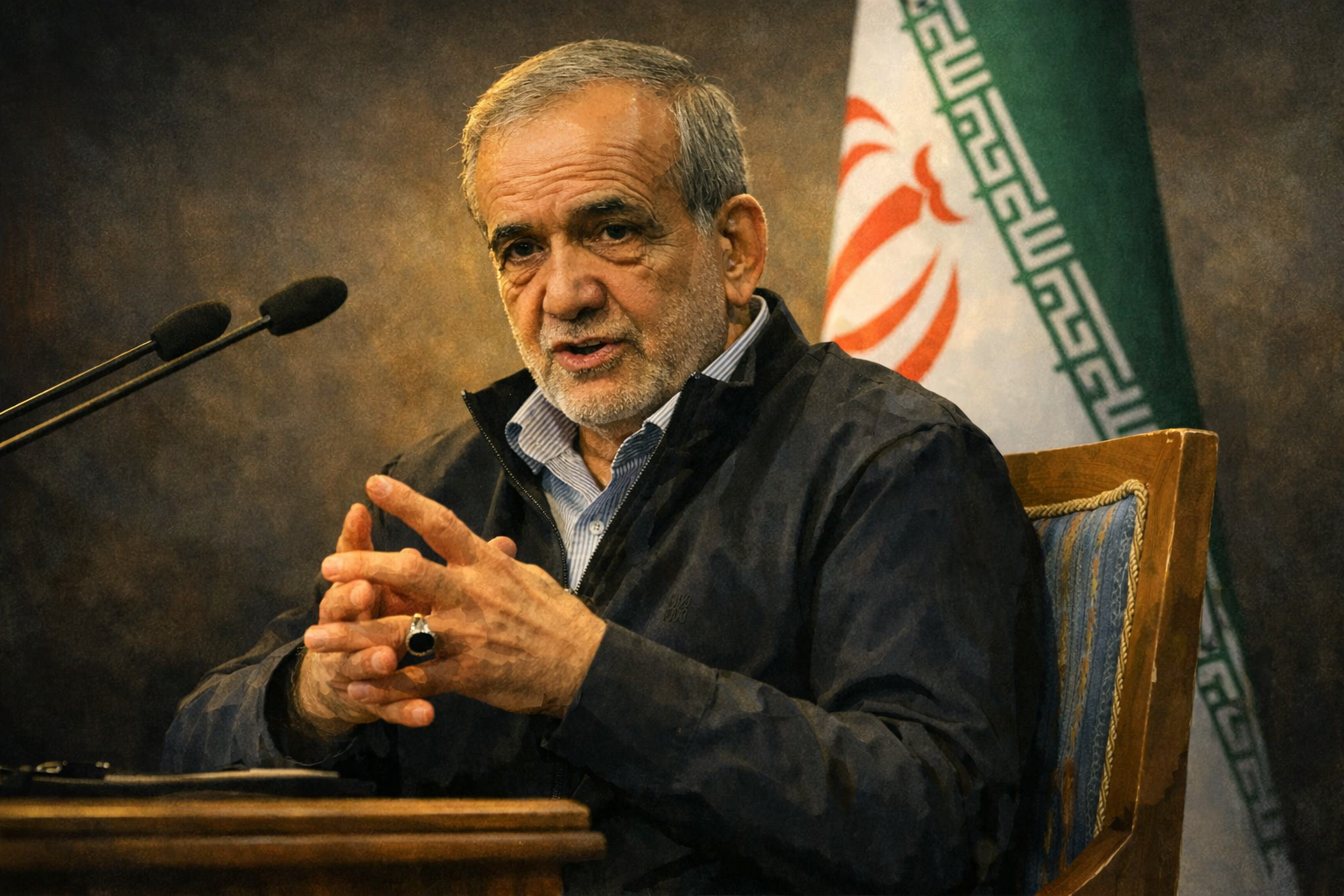
Iranian President Masoud Pezeshkian used a March 7 state television address to publicly apologize to Middle Eastern neighboring countries that had been attacked by Iran, a move described as highly unusual in Iran’s political history. In BBC’s reading, the apology likely carries more than one purpose, tying together regional de-escalation, domestic power management, and external signaling.
A signal aimed at containing regional spillover
BBC said the first and most immediate purpose was to keep the conflict from widening. If Tehran continues pushing nearby states into open opposition, Iran risks deeper isolation across the region. The apology was therefore more than symbolic. It was a direct message that Iran did not want the fighting to spread further.
Markets were watching the same story through oil. The report said U.S. crude posted its biggest weekly gain since 1982, jumping 34.5%, while Brent crude moved above $93. That matters well beyond energy pricing, because sustained oil strength could feed inflation expectations again and shut the market’s expected June rate-cut window in the United States.
The timing also reflects Iran’s leadership transition
BBC’s second explanation focused on Iran’s internal situation. After the death of Supreme Leader Khamenei, top decision-making authority shifted to a temporary committee, leaving the country in a sensitive transition period. In that setting, Pezeshkian’s apology was seen as a tactical move meant to steady conditions and buy time until a new leadership arrangement is settled.
That line is not universally accepted inside Iran. Hardliners, according to the report, have already criticized the remarks as “too weak.” The reaction shows that debate over Iran’s future direction is still active and sharp. A rare apology abroad can also be a contested move at home.
A pragmatic image for possible talks with the West
The third motive identified by BBC was diplomatic positioning. The apology may mark the beginning of a political recalibration inside Iran, with Pezeshkian trying to present himself as a more practical figure and a counterpart the West could see as more open to negotiation. The goal, in this reading, is to create room for future diplomatic contacts.
That does not mean Iran has abandoned confrontation in its public messaging. The report noted that Donald Trump wrote on Truth Social that Iran had “apologized” and demanded total surrender, while some analysts expected a ceasefire around March 12. Pezeshkian, for his part, left no doubt that limits remain: he described Washington’s demand for unconditional surrender as a “fantasy that should be taken to the grave.” The apology was real, but so was the hard edge around it.