
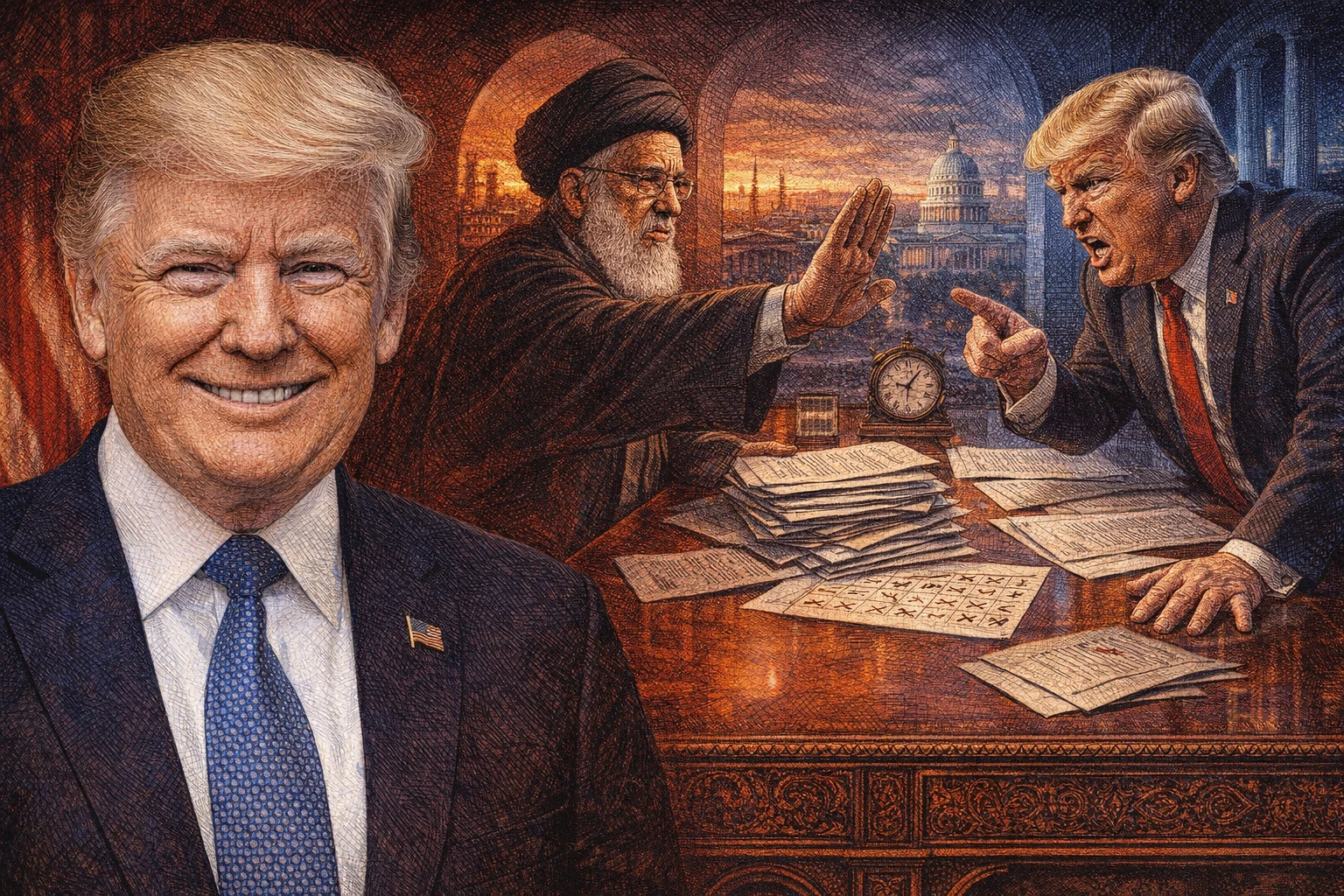
Iran has rejected a 15-point peace framework delivered by the United States through Pakistan, with senior Iranian officials calling it one-sided and unacceptable within a day of receiving it. The report says President Donald Trump then set a final deadline of April 7 and threatened strikes on Iranian power plants and bridges. Reuters separately reported that Pakistan has now sent a new two-stage proposal to both sides, while Iran has only said it is reviewing the text and does not accept deadlines or pressure.
The leaked framework centers on nuclear sites, missiles, and Hormuz
According to western sources cited by Israel’s Channel 12, and comments from White House press secretary Karoline Leavitt that parts of the leaked version were accurate, the proposal calls for Iran to dismantle the nuclear facilities at Natanz, Isfahan, and Fordow, halt all domestic uranium enrichment, transfer enriched material to the International Atomic Energy Agency, and make a permanent commitment not to develop nuclear weapons. In exchange, Washington offered support for civilian nuclear development at Bushehr.
The framework also seeks restrictions on Iran’s military capabilities. That includes reducing ballistic missile stockpiles and range limits, ending support for proxy groups including Hezbollah and the Houthis, and stopping attacks on regional energy infrastructure. Another central demand is the immediate reopening of the Strait of Hormuz, with a 30-day ceasefire to come first and broader details to be settled afterward. On the US side, the terms reportedly include lifting sanctions on Iran and ending the UN Security Council snapback mechanism.
Tehran says the terms amount to disarmament
Iranian officials told Reuters the list effectively asks Tehran to give up its self-defense capacity in exchange for vague promises on sanctions relief. The report says Iran’s bottom line is a “complete end” to the war, not a limited ceasefire. Iran’s diplomatic establishment described the proposal as maximalist and unreasonable.
Over the past 10 days, the US and Iran have held indirect contacts through Pakistan, Egypt, and Turkey, but no meaningful breakthrough has emerged. Pakistani Prime Minister Shehbaz Sharif has been in touch with both sides, though the effort appears limited to relaying positions and trying to keep channels open.
Repeated deadline extensions weaken the pressure campaign
The report outlines a pattern in Trump’s deadline setting. A 48-hour ultimatum was issued on March 26 and later extended. Another deadline was set on April 6, then moved again to April 7 on the same day. At the same time, prediction market Polymarket shows a 99% chance on whether Trump will use force against Iran in 2026, while the odds of a ceasefire between the US and Iran before the end of April stand at about 35%.
Put side by side, those figures show that markets are assigning a much higher probability to military action than to a near-term truce. In the source report’s reading, a prolonged conflict is increasingly being treated as the base case.
Oil above $100 as markets price disruption, not full closure
Oil has climbed above $100 a barrel, up roughly 40% to 45% since the conflict began. OPEC+ has agreed to increase output, but several key members are themselves exposed to conflict risk, leaving markets to reassess the gap between announced production plans and actual deliveries.
In equities, the S&P 500 fell 1.7%. The report notes that the drop remains relatively mild compared with the move in crude, suggesting markets are still pricing a scenario of disruption without a complete shutdown of traffic through Hormuz.
Reuters says Pakistan’s new plan is under review
Reuters reported on the 6th that Pakistan has drafted a framework tentatively referred to as the Islamabad Accord and passed it to both Washington and Tehran. The plan has two stages: an immediate ceasefire and reopening of the Strait of Hormuz, followed by a final agreement within 15 to 20 days. That final package would include an Iranian commitment not to develop nuclear weapons in exchange for sanctions relief and the release of frozen assets.
According to the report, Pakistan’s army chief Asim Munir stayed in contact through the night with US Vice President Vance, envoy Witkoff, and Iranian Foreign Minister Araqchi. Iran has not accepted the proposal. Its public position is limited to saying that the text is being reviewed and that deadlines or coercion will not be accepted.
The source material says the new proposal overlaps heavily with the earlier 15-point framework, especially on reopening Hormuz before broader terms are settled. The main difference is presentation: Pakistan, not Washington alone, is carrying the message. Whether that change is enough to move the talks remains unclear.