
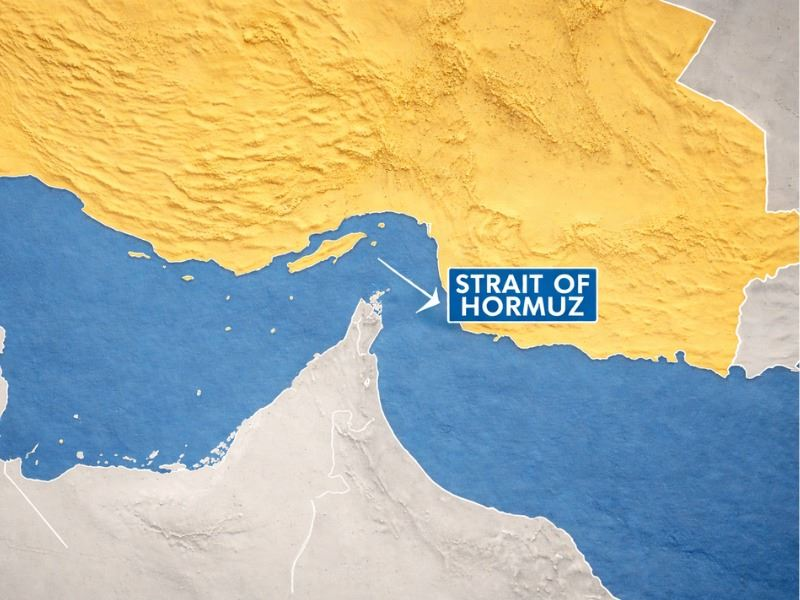
An Iranian Islamic Revolutionary Guard Corps commander said the Strait of Hormuz has been closed and warned that any ship attempting to pass could be “set on fire” by Iran. The statement, cited by @DeItaone, came after recent military action against Iran by the U.S. and Israel and quickly pushed the waterway back into focus.
Tensions rise around a critical energy corridor
According to the report, the commander said Iran had placed the strait under blockade and was prepared to take extreme action against ships it considered to be in violation, including direct attacks. The wording was blunt. Attention shifted at once to one of the most important shipping lanes for global energy trade.
The Strait of Hormuz handles a major share of the world’s energy flows. The source says roughly 20% of global oil supply per day, along with large volumes of natural gas, passes through the corridor. If traffic is disrupted, the effect would not be limited to the region. Oil, gas and shipping costs could all come under pressure.
Shipping traffic drops as tankers halt or reroute
The material also says shipping data already shows a sharp decline in vessel traffic through the strait. Multiple oil tankers and cargo ships have reportedly paused voyages, turned back or chosen alternate routes to avoid the growing risk. For shipping operators, the issue is no longer theoretical. Route safety and insurance costs are already part of the calculation.
Market analysis cited in the source says the development could lift global oil prices, raise marine insurance expenses and trigger knock-on effects across energy supply chains. International attention is now fixed on whether the U.S. and allied naval forces will intervene, and whether Iran will escalate its actions beyond the current warning.