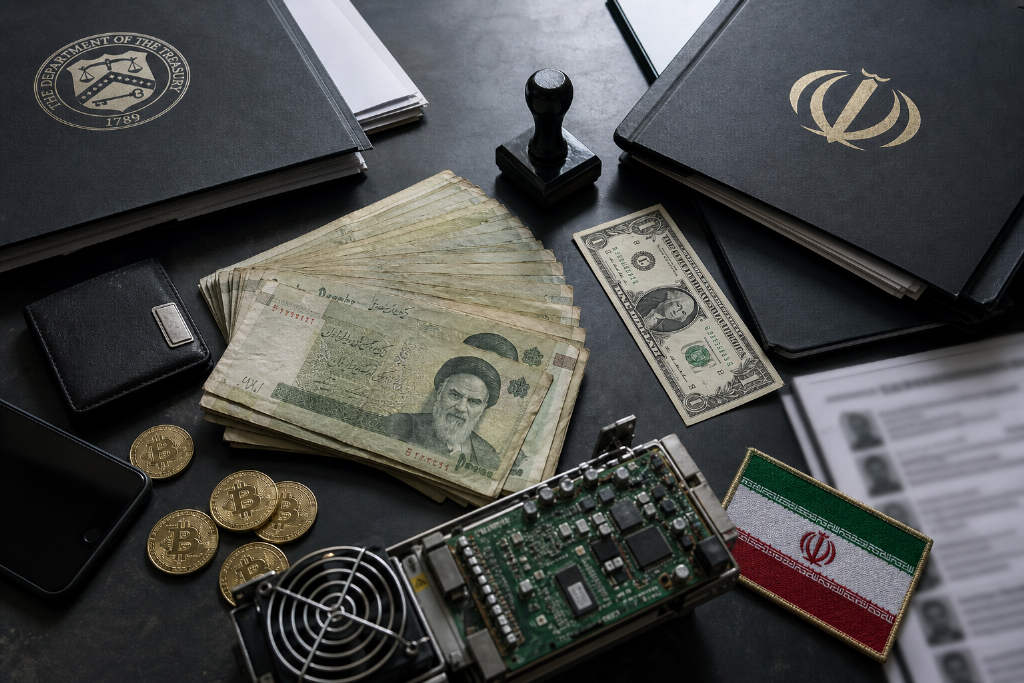
Iran’s rial fell to a record low this week, with the open-market exchange rate slipping to about 2.02 million rials per U.S. dollar, versus roughly 1.53 million in the first quarter. At the same time, the U.S. government launched what the source described as an "economic outcast" action, adding more than 60 entities to the Treasury blacklist and, for the first time, treating digital assets as a sanctionable area.
The report said state-run farms linked to Iran’s Islamic Revolutionary Guard Corps, or IRGC, control about 65% of Iran’s Bitcoin mining capacity. Since 2019, Iranian miners have accounted for around 3% to 7% of global Bitcoin hash rate, with mined BTC valued at about $1.35 billion to $3.15 billion at different points. Iran legalized Bitcoin mining in 2019, allowing licensed operators to use industrial electricity priced at about $0.004 per kilowatt-hour and to sell mined tokens to the Central Bank of Iran.
Chainalysis estimated that wallets linked to the IRGC received more than $3 billion in the fourth quarter of 2025, while Elliptic said the Central Bank of Iran holds at least $507 million in USDT. The U.S. Treasury sanctioned Nobitex, Wallex, Bitpin and Ramzinex in June. Nobitex previously handled more than half of Iran’s digital asset inflows, and in April the Treasury seized nearly $500 million in crypto assets tied to Iran.
Iran’s rial fell to a record low this week, with the open-market rate sliding to about 2.02 million rials per U.S. dollar, compared with roughly 1.53 million in the first quarter.
At the same time, the U.S. government launched what the source called an "economic outcast" action, adding more than 60 entities to the Treasury blacklist and, for the first time, placing digital assets within a sanctionable category.
Bitcoin mining exposure in Iran
According to ChainCatcher, state-run farms linked to Iran’s Islamic Revolutionary Guard Corps, or IRGC, control about 65% of the country’s Bitcoin mining capacity. Since 2019, Iranian miners have represented around 3% to 7% of global Bitcoin hash rate, and the Bitcoin mined in that period has been valued at about $1.35 billion to $3.15 billion at different stages.
Iran legalized Bitcoin mining in 2019. Licensed operators are allowed to use industrial electricity priced at about $0.004 per kilowatt-hour and must sell mined tokens to the Central Bank of Iran.
On-chain estimates and Treasury actions
Chainalysis estimated that wallets linked to the IRGC received more than $3 billion in the fourth quarter of 2025. Elliptic said the Central Bank of Iran holds at least $507 million in USDT.
The U.S. Treasury sanctioned Nobitex, Wallex, Bitpin and Ramzinex in June. Nobitex previously handled more than half of Iran’s digital asset inflows. In April, the Treasury seized nearly $500 million in crypto assets tied to Iran.
This article was originally published by Bit.Fan. For more cryptocurrency news and market insights, visit www.bit.fan. Disclaimer:
The market information, project data, and third-party content displayed on this platform are for industry information sharing only and do not constitute any form of investment advice or return commitment.
Cryptocurrency trading carries high risks. Users should fully assess their risk tolerance and make independent decisions. All profits, losses, and legal responsibilities are borne by the users themselves.