
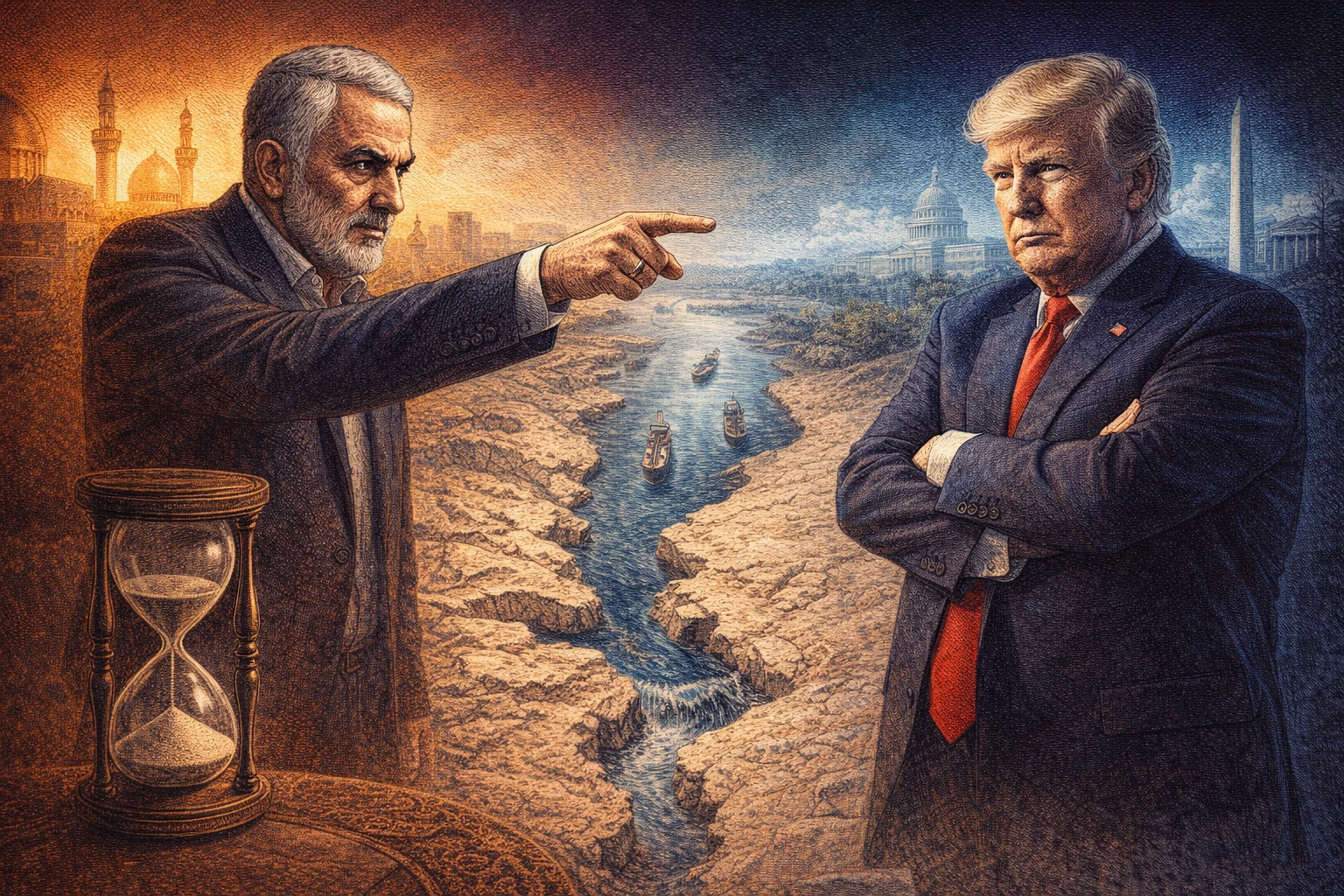
Iran's top foreign affairs advisor, Ali Akbar Velayati, publicly warned that if the US makes another mistake, the Resistance Front will block the Bab el-Mandeb Strait, severing global energy and trade routes. This is a direct response to Trump's threat to bomb Iranian infrastructure by April 7, placing a maritime chokepoint carrying 12% of the world's oil at unprecedented risk of closure.
Oil prices have already climbed to around $109 per barrel. JPMorgan estimates that if the Strait of Hormuz remains closed, prices could spike to $120-130 in the short term, and in extreme cases hit $150. Iran's second card could make the situation even more volatile.
Trump's 48-Hour Ultimatum Ignites Tensions
On April 5, Trump posted again demanding Iran open the Strait of Hormuz, threatening that April 7 would be "Iran's power plant day and bridge day" — implying massive bombing of Iran's infrastructure if demands were not met.
With the 48-hour deadline approaching, both sides are escalating. Polymarket prediction markets now assign a 99% probability to a US invasion of Iran by the end of April, with real money betting on the crisis trajectory.
Iran Fires Back: Bab el-Mandeb as Second Lock
In response, Velayati posted on social media the same day: "Today, the unified command of the Resistance Front regards the Bab el-Mandeb Strait just like the Strait of Hormuz. If the White House makes another stupid mistake, it will soon realize that with one move, global energy and trade flows would be cut."
Iranian Parliament Speaker Mohammad Bagher Ghalibaf also posed a pointed question on X: "How much oil, LNG, wheat, rice, and fertilizer passes through the Bab el-Mandeb every day?" The question was not geography — it was a message to the world about what blockade costs.
Two Chokepoints Simultaneously Blocked
The Strait of Hormuz lies between Iran and Oman, the sole export route for Persian Gulf oil. The Bab el-Mandeb Strait, between Yemen and Djibouti, connects the Red Sea and the Gulf of Aden, a vital passage from the Atlantic and Mediterranean to the Indian Ocean. In simple terms: one is the "gate" of the Persian Gulf, the other is the "corridor" of the Red Sea. If both are blocked, Middle Eastern oil goes nowhere. The Bab el-Mandeb carries about 12% of global oil shipments annually. Two simultaneous closures would dwarf the impact of a single blockade.
The strait now lies within the control of Yemen's Houthi rebels, a key member of Iran's Resistance Front. The core logic of the standoff is clear: Trump tries to force concessions with military threats; Iran counters with the threat of cutting global energy arteries. Both are nuclear-level intimidation — actually pulling the trigger would hurt not just the opponent, but the entire world.
Wikipedia has already created a "2026 Strait of Hormuz crisis" page — events have escalated to the point where even the encyclopedia deems immediate archiving necessary.