
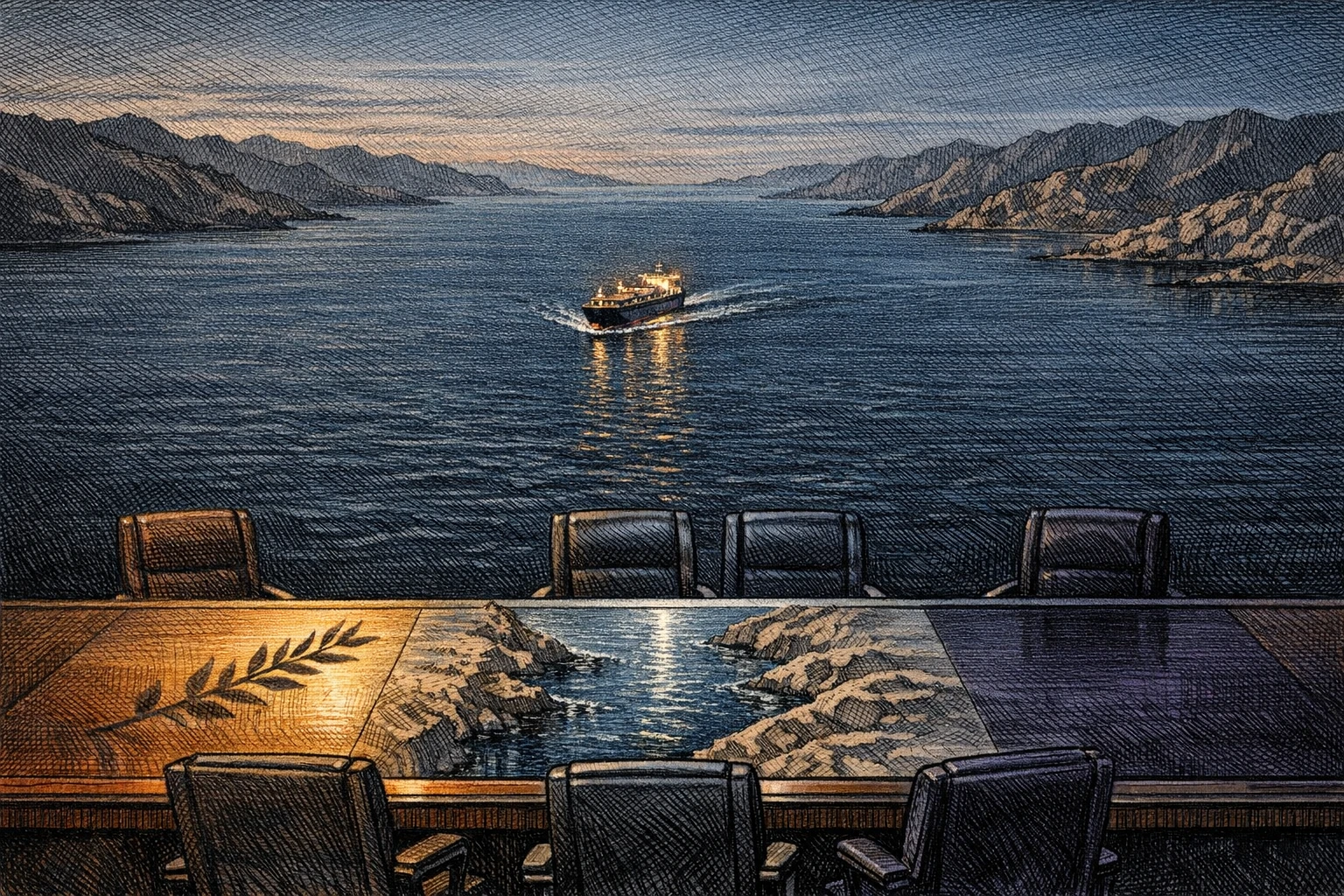
On April 26, the third week of the Strait of Hormuz blockade, just two vessels transited the waterway — one cargo ship leaving the Persian Gulf and one tanker entering from the Gulf of Oman. Normal daily traffic exceeds 100 ships, meaning flow dropped below 2% of typical levels. US officials acknowledged data gaps due to vessels turning off Automatic Identification Systems, so the actual number may differ slightly.
President Trump told Fox News the war would 'end soon' and the US would win, adding 'If Iran wants to negotiate, they can call us — hope they are smart.' That same day, Trump phoned UK Prime Minister Keir Starmer, stressing the 'urgent need to restore Hormuz shipping.' Starmer warned the blockade has stranded numerous crew members and will have 'severe consequences' for the global economy and British cost of living — the first Western admission that the blockade is backfiring on domestic inflation.
Iran's public response was defiant: the strait 'will not return to its previous state under any circumstances.' But backchannel talks continued. Citing Iranian sources, CCTV reported that Tehran has floated a three-phase negotiation plan through intermediaries. Phase one: fully end the war and obtain security guarantees that the US and Israel will not attack Iran or Lebanon again. Only after phase one is agreed can both sides move to phase two, focusing on a management mechanism for the Strait of Hormuz. Nuclear issues are relegated to phase three, with a clear red line: no participation in nuclear talks until the first two phases are implemented. Axios, citing US officials and two informed sources, confirmed Iran aims to tackle the strait blockade first and defer nuclear negotiations, likely to bypass internal disagreements over nuclear concessions.
Al Jazeera quoted a diplomatic source saying recent events have strengthened the consensus that a 'permanent end to hostilities' is needed. A framework is emerging that would include Persian Gulf states, which insist on being part of any final deal — they do not want a repeat of the 2015 JCPOA, from which Gulf neighbors like Saudi Arabia and the UAE were excluded. Pakistan continues mediation efforts, with a second round of talks still possible, though details remain unclear.
Three US officials told Axios Trump plans to convene a Situation Room meeting on Iran on Monday (April 28) to assess the negotiation stalemate and possible military steps. The meeting will involve senior national security and foreign policy officials.
The Strait of Hormuz handles about 20% of global oil trade, and the blockade has sent energy markets into turmoil. Bitcoin dropped from $73,000 to $71,000 on the day of the blockade announcement, later recovering to $76,000-$78,000. But US Bitcoin miners face a more acute crisis: energy cost spikes have pushed the cost of mining one Bitcoin to $85,000-$90,000, exceeding the current market price and putting many miners in the red. Reports also indicate Iran's Islamic Revolutionary Guard Corps is charging transit fees from some vessels, accepting payment in yuan or stablecoins — a sign of Tehran's growing reliance on de-dollarized payment channels under sanctions.
Monday's Situation Room meeting will be the next key inflection point for US-Iran dynamics.